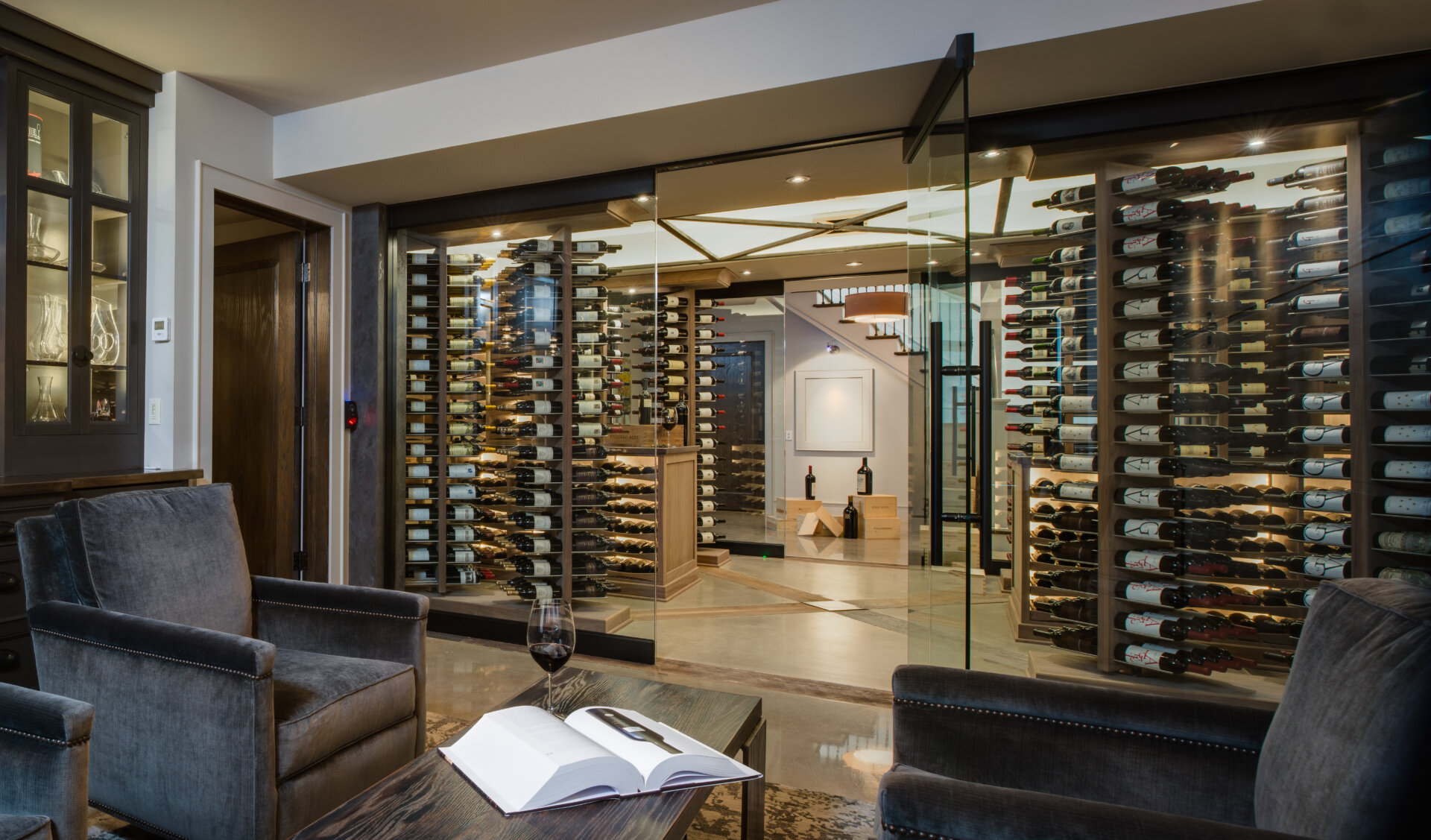
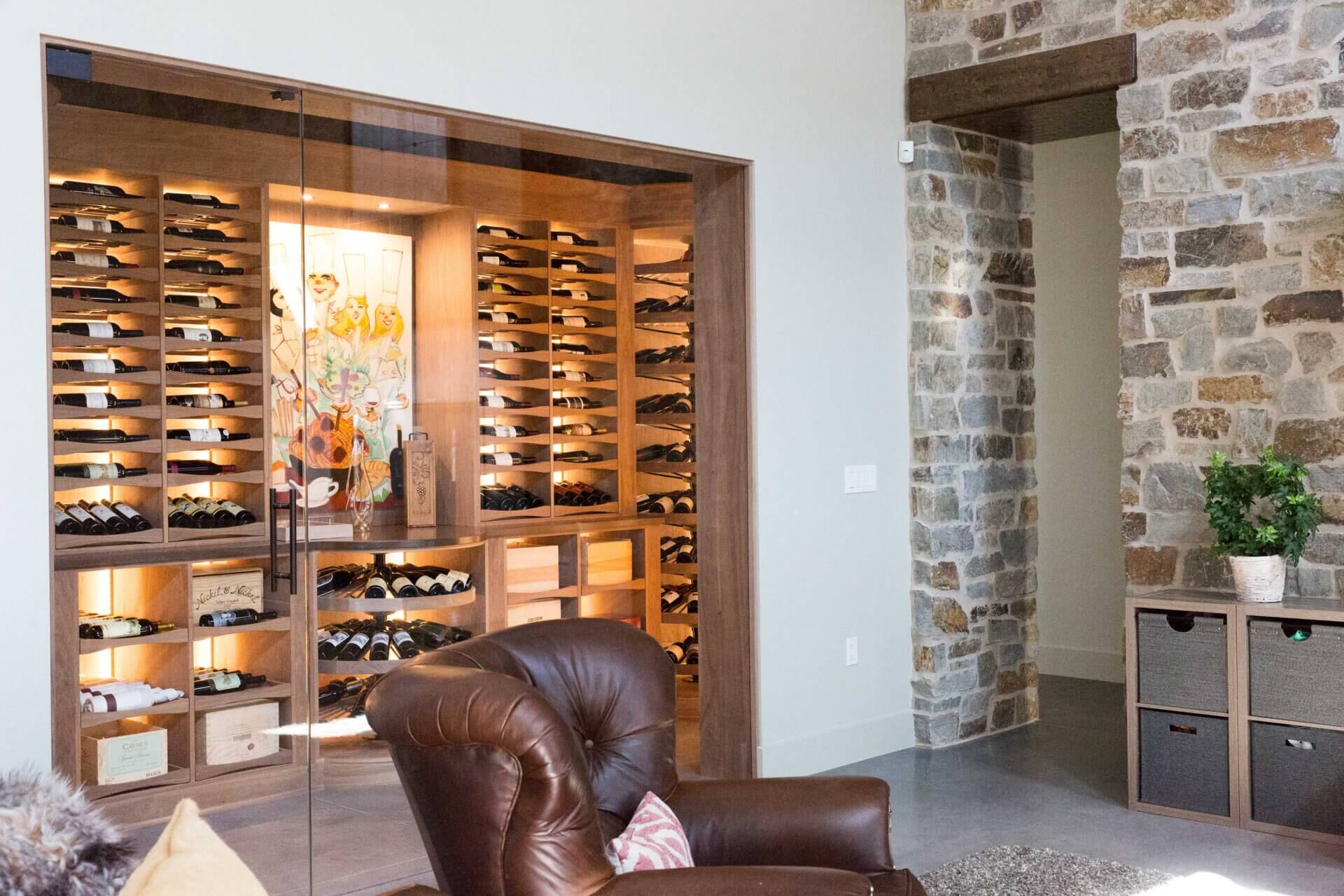
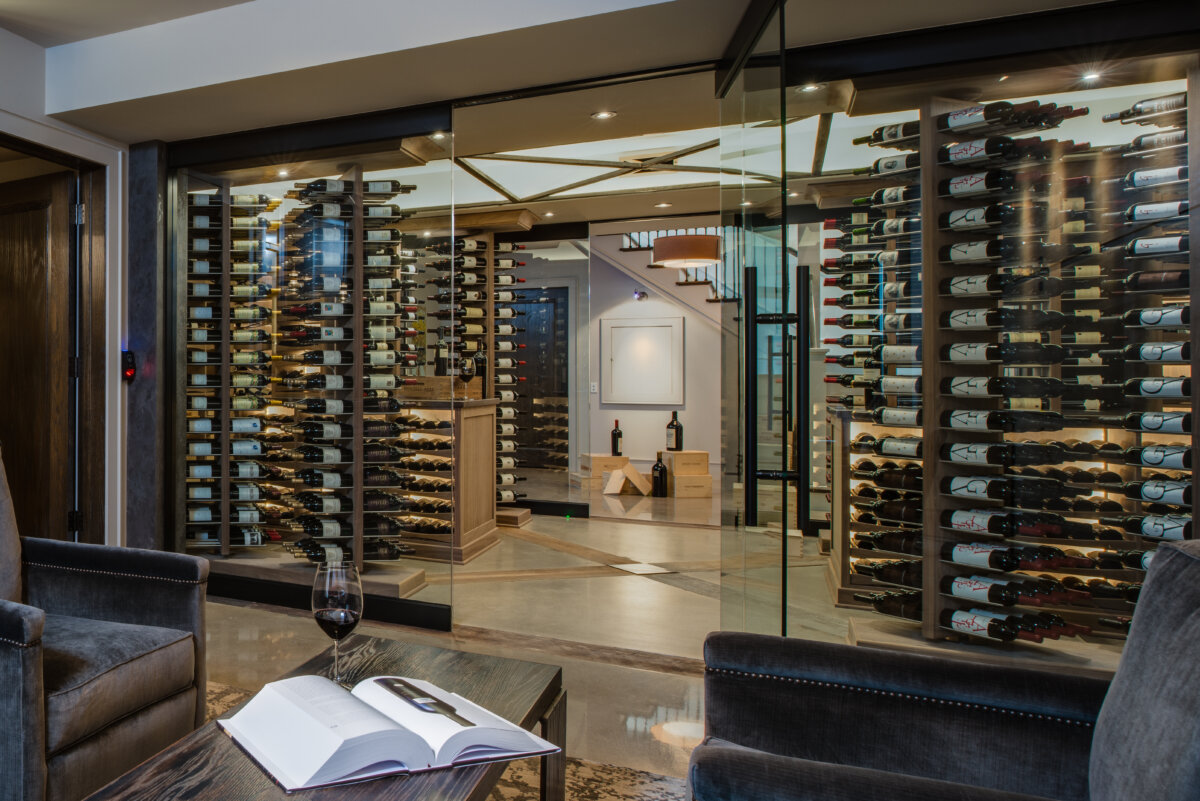
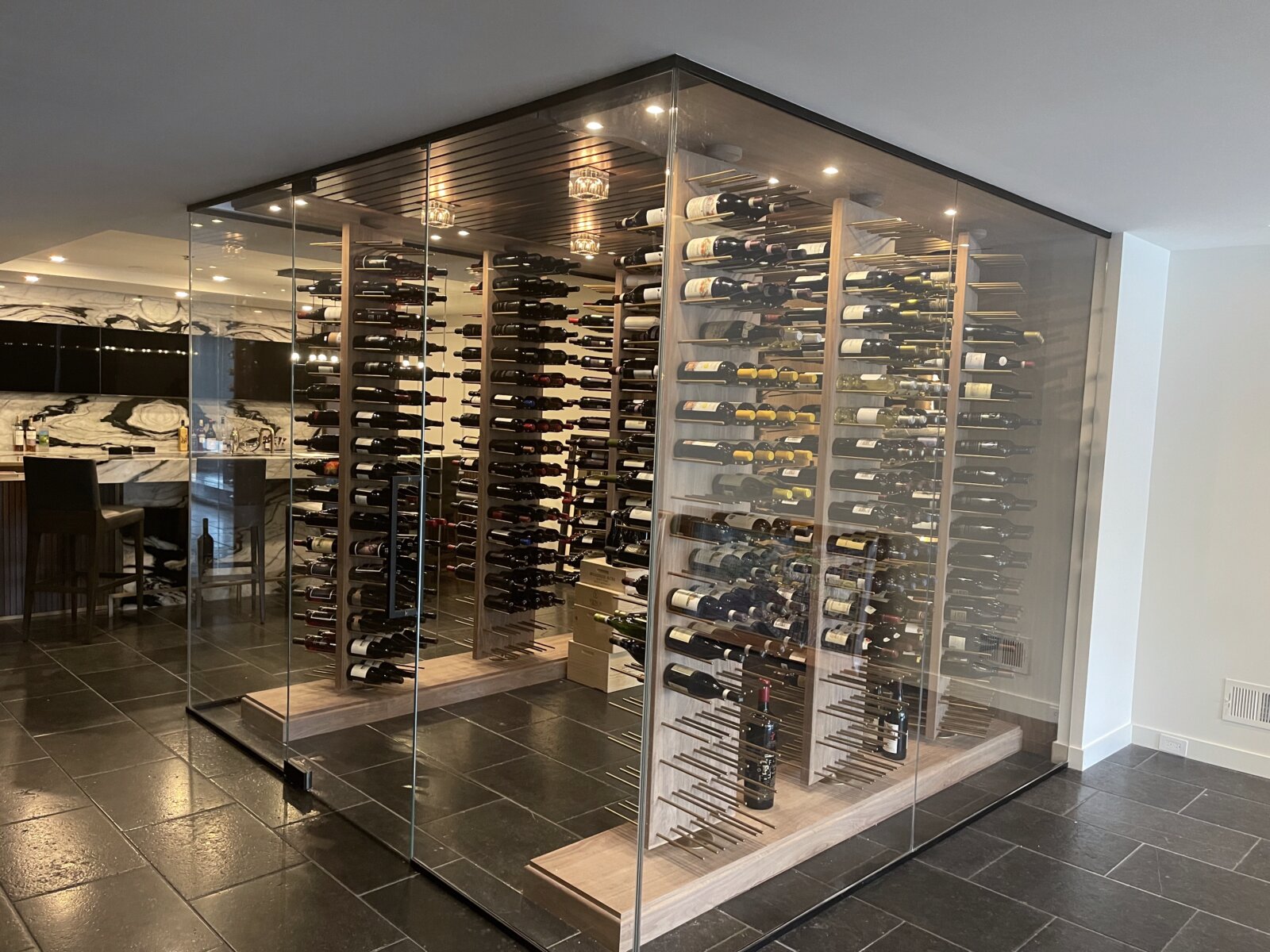
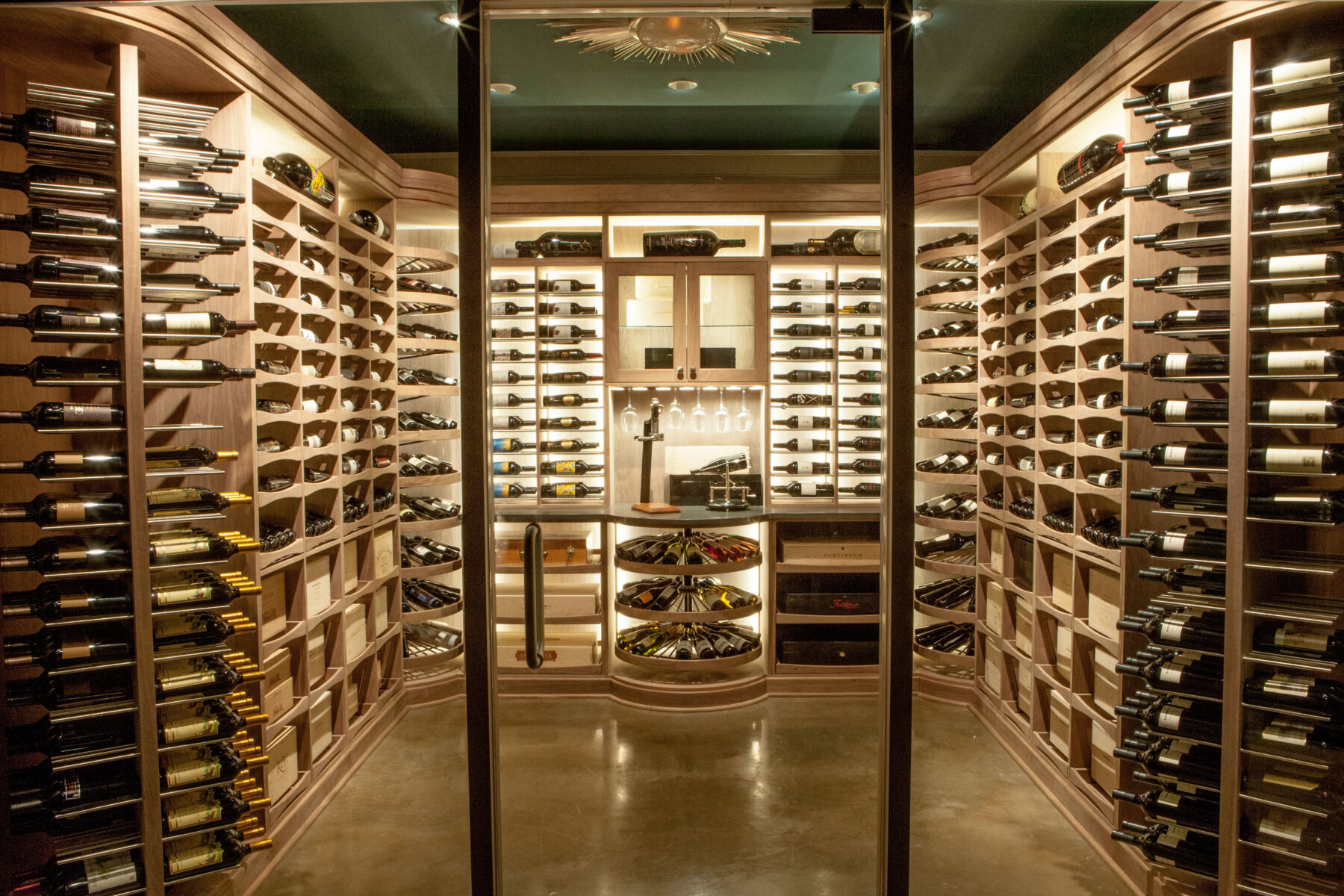
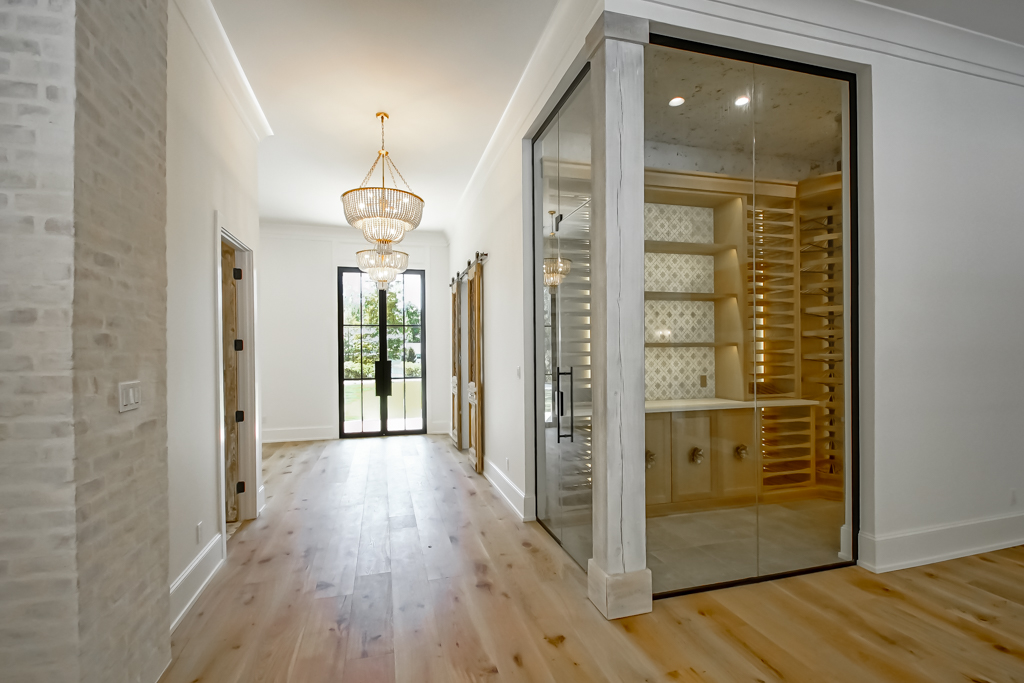
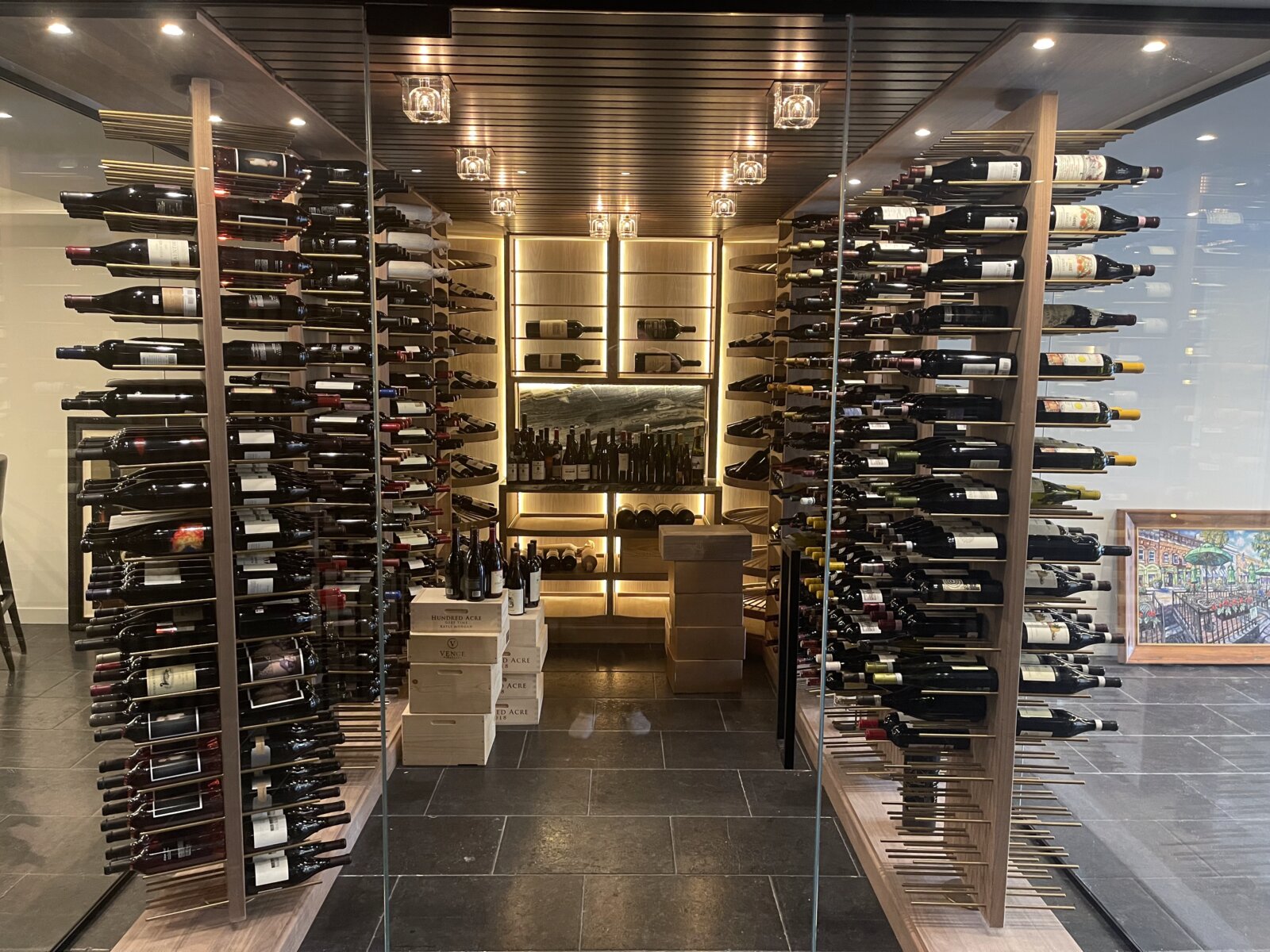
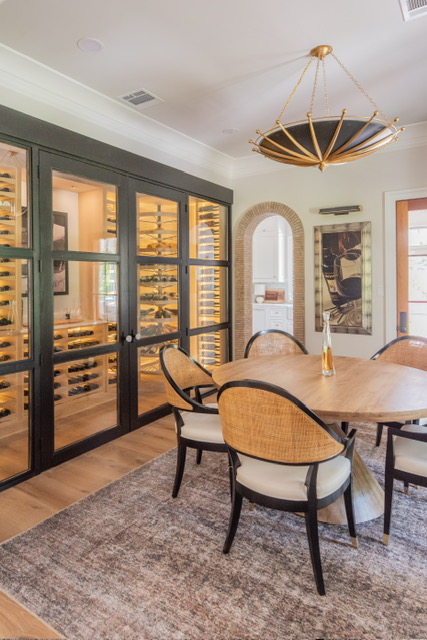
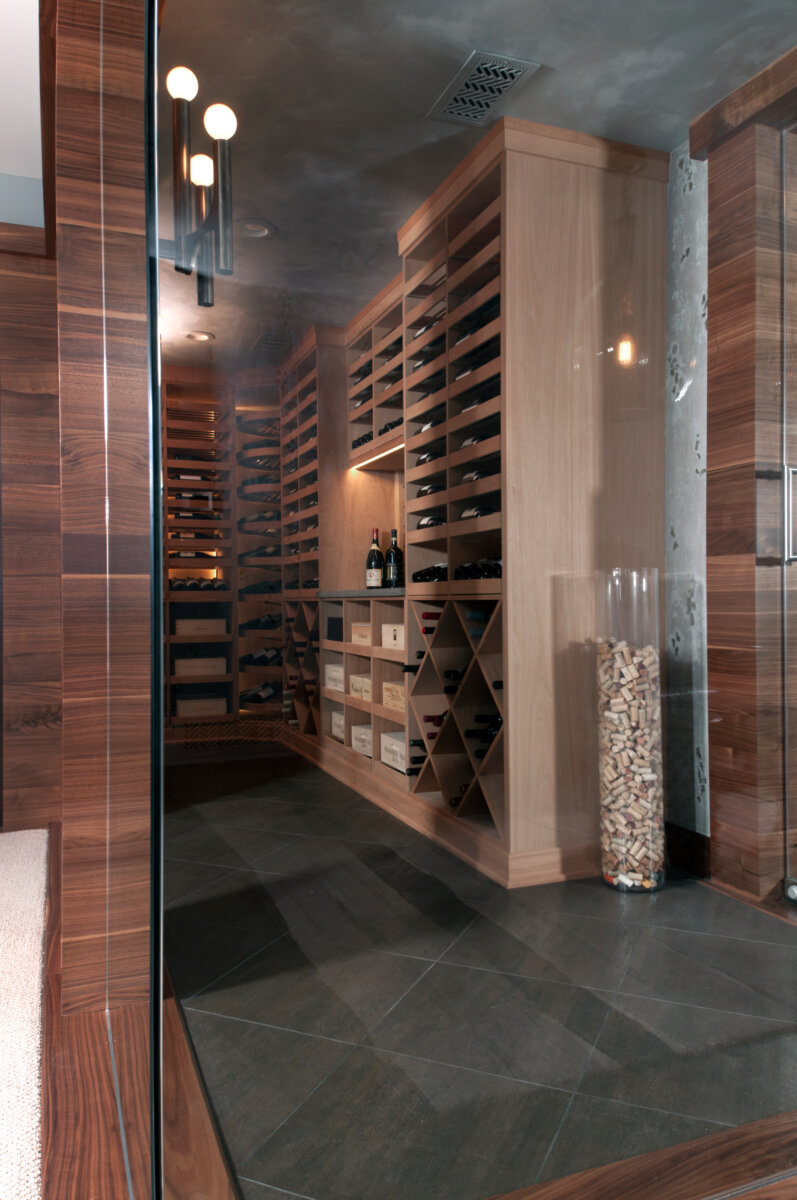
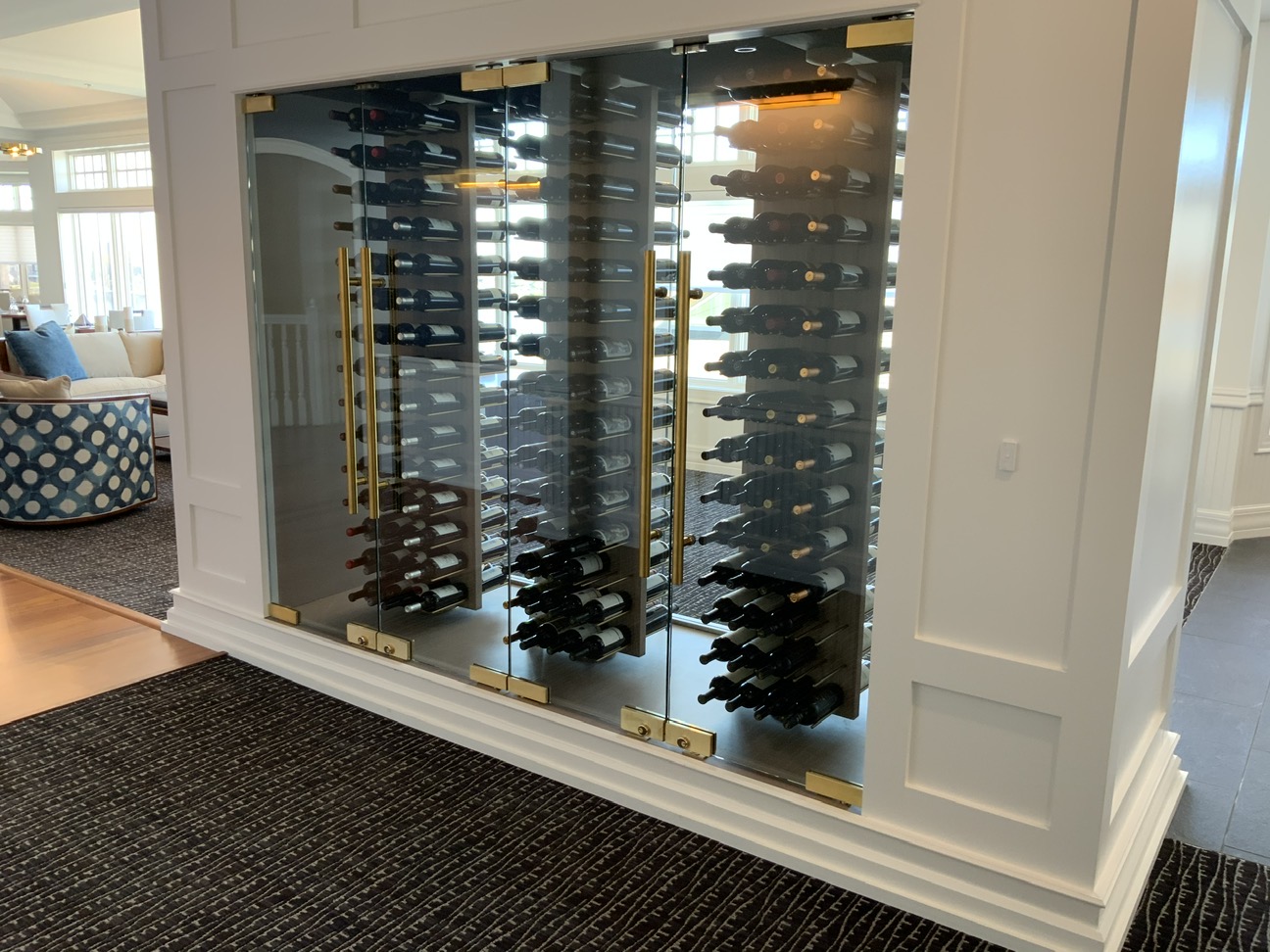
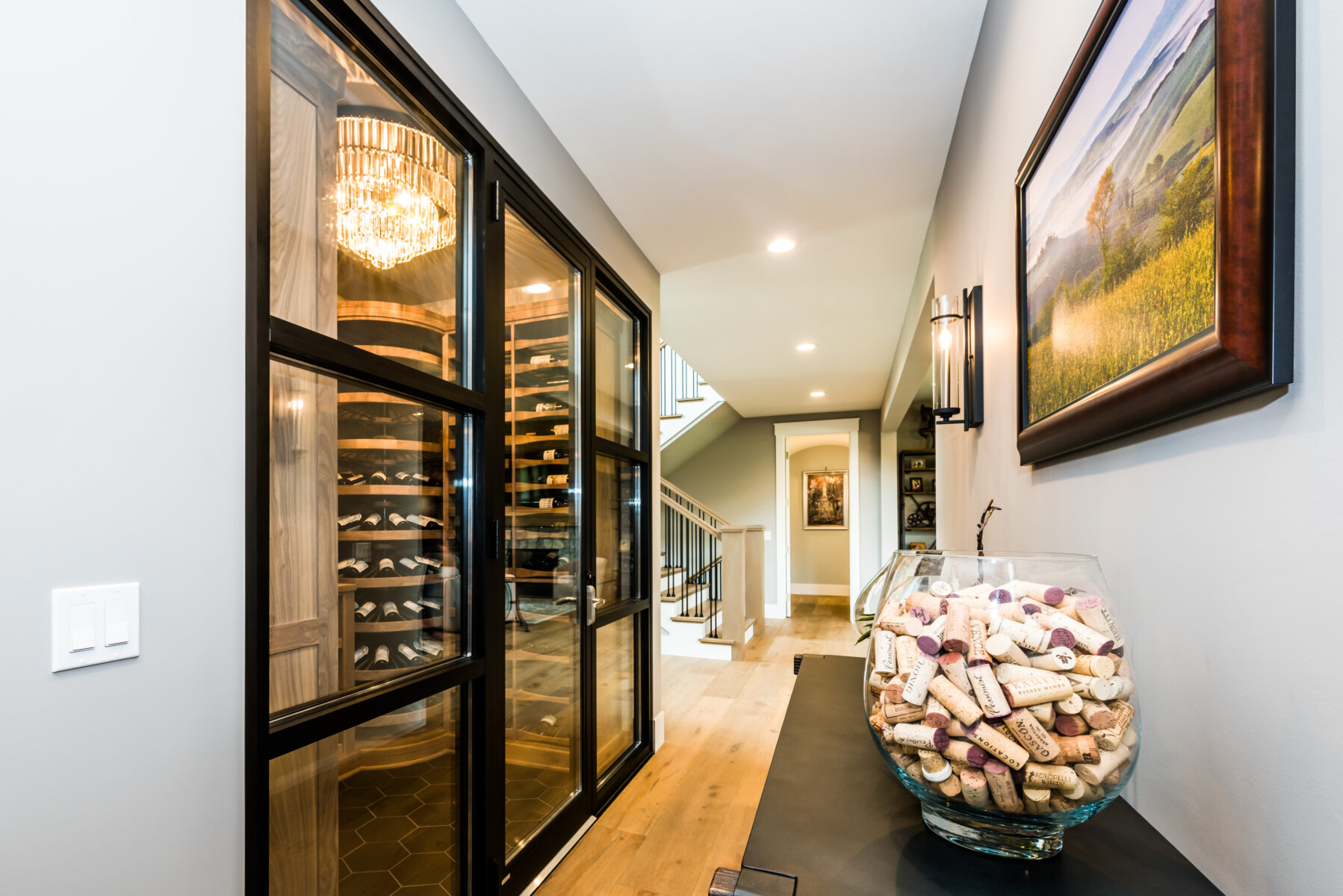
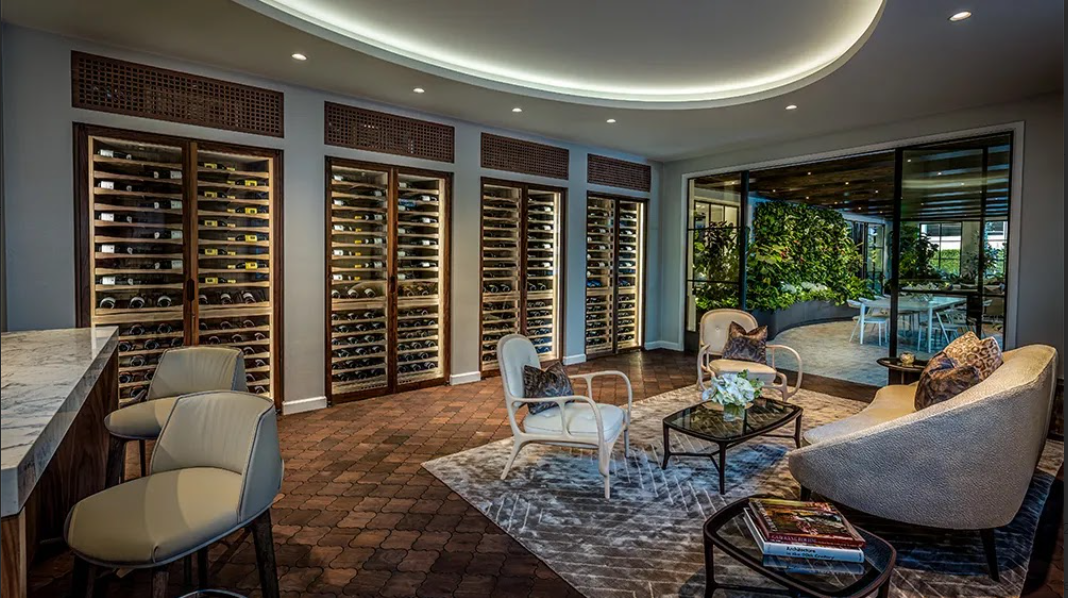
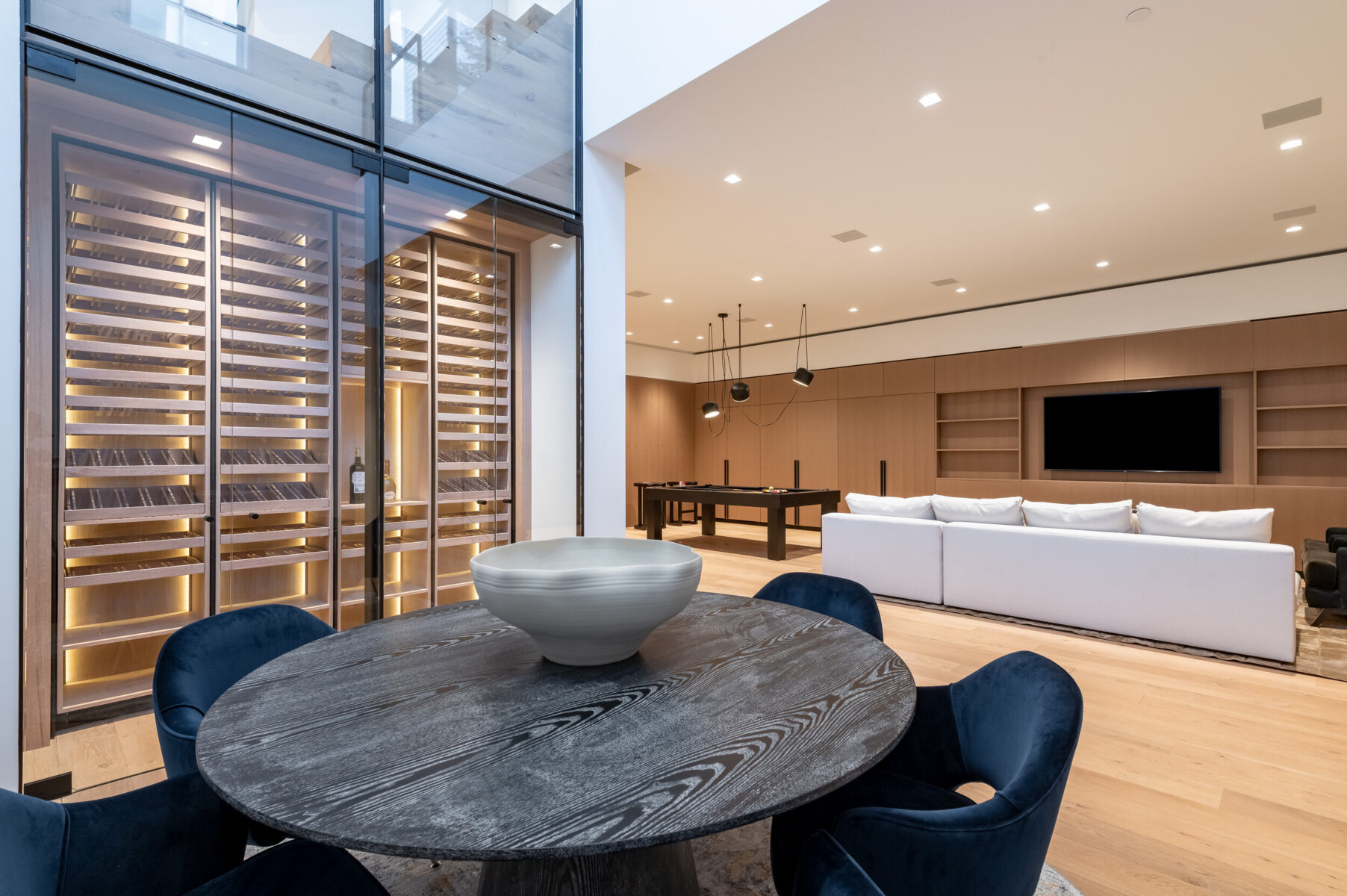
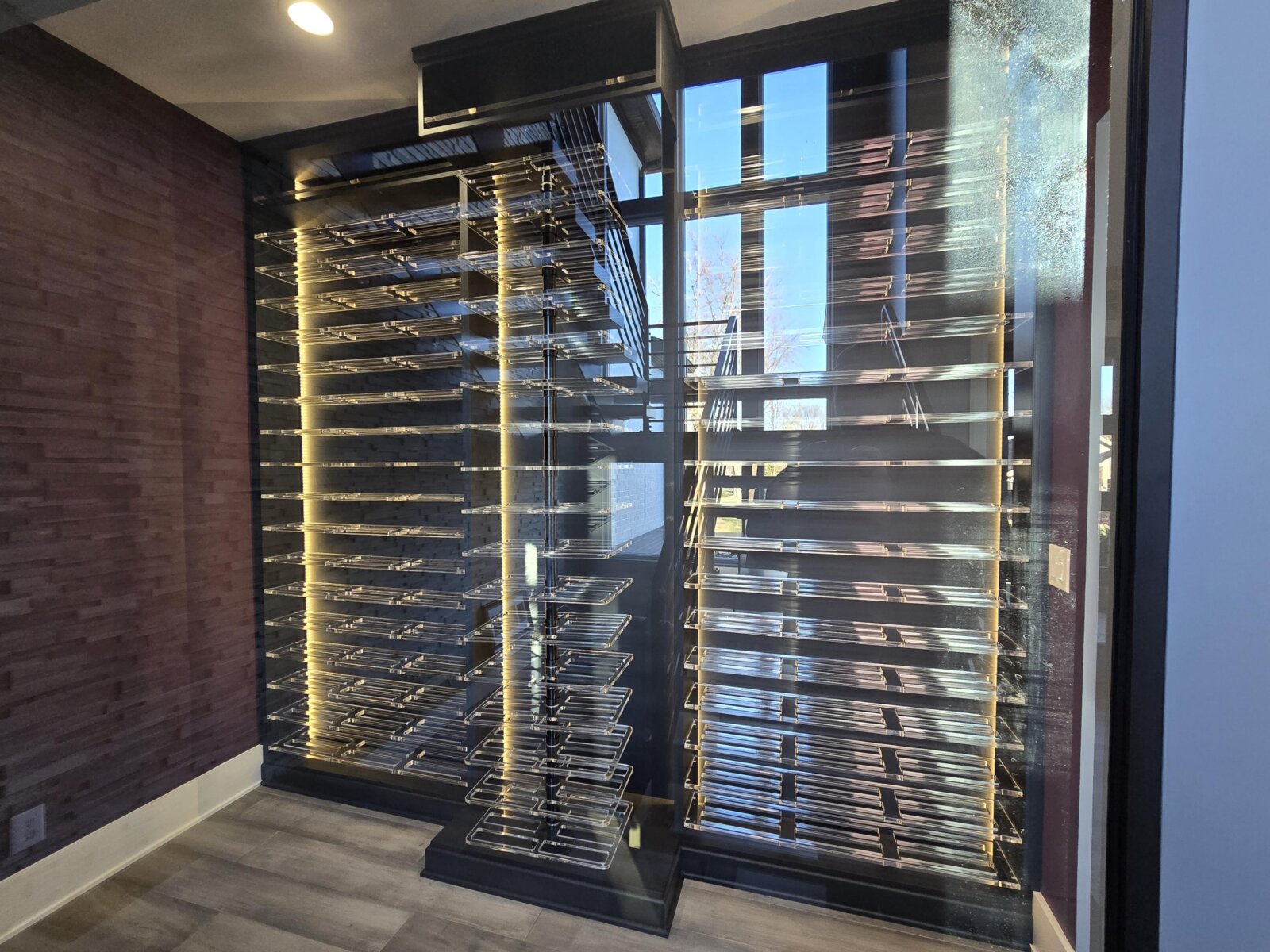
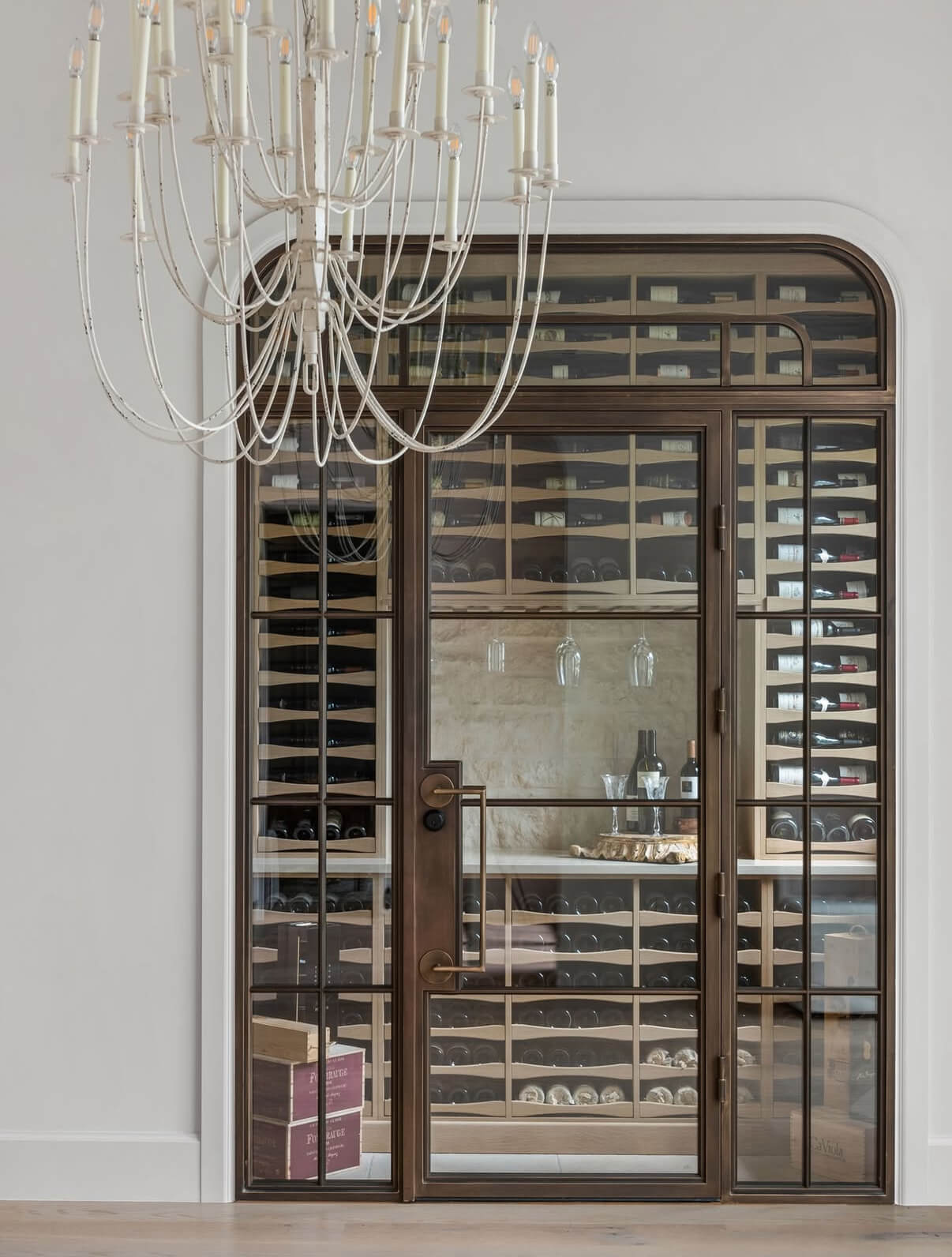
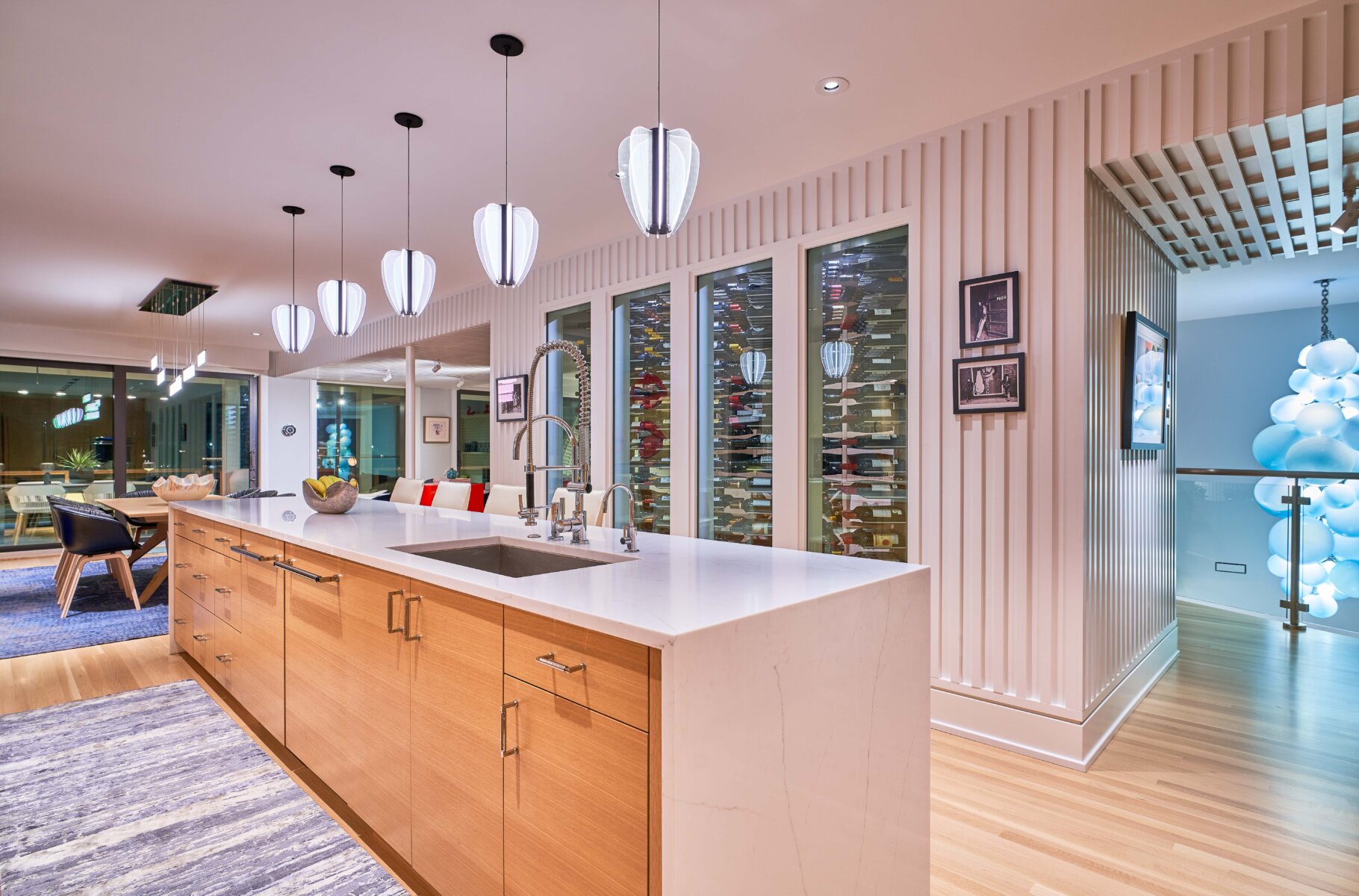
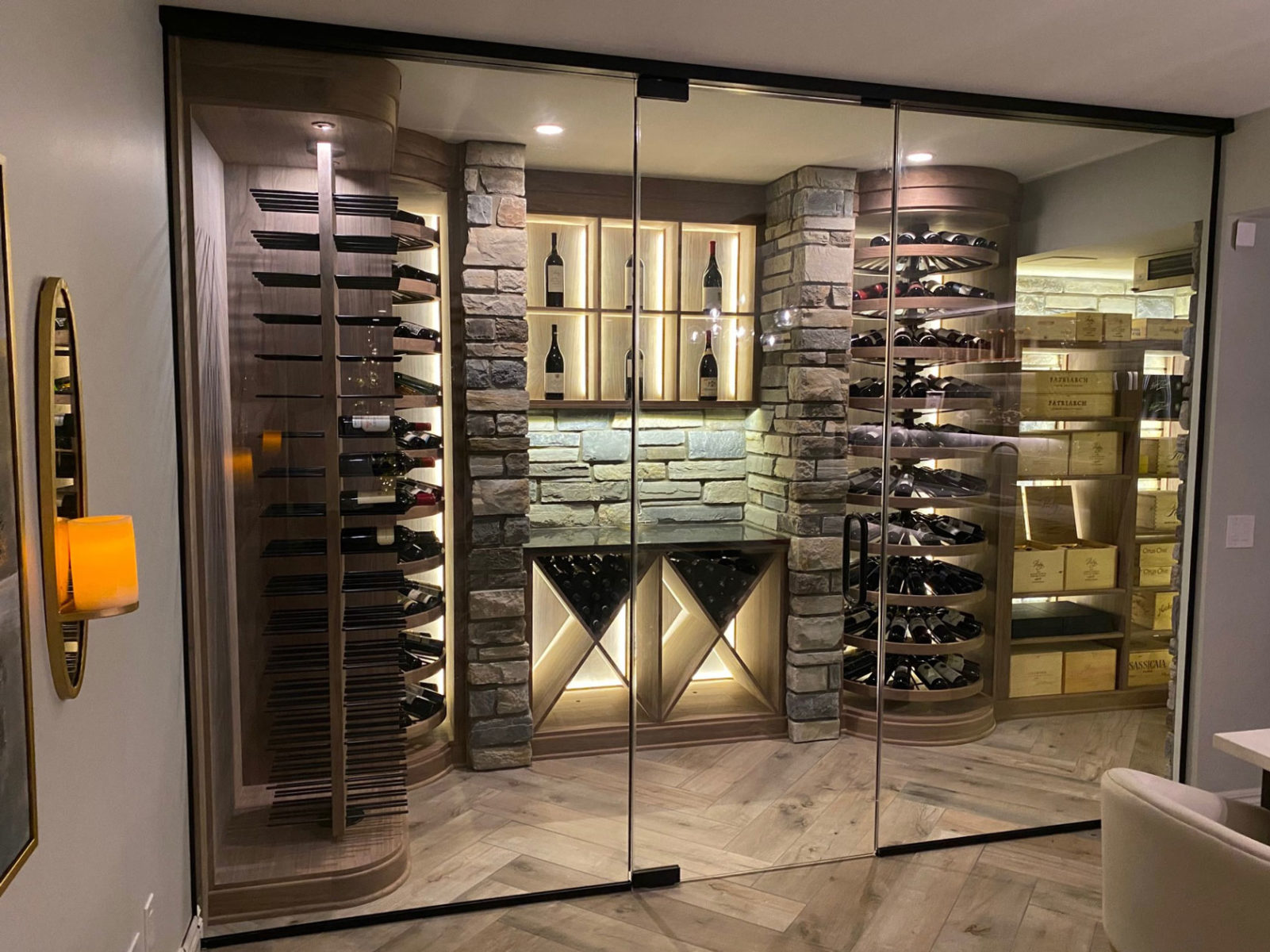
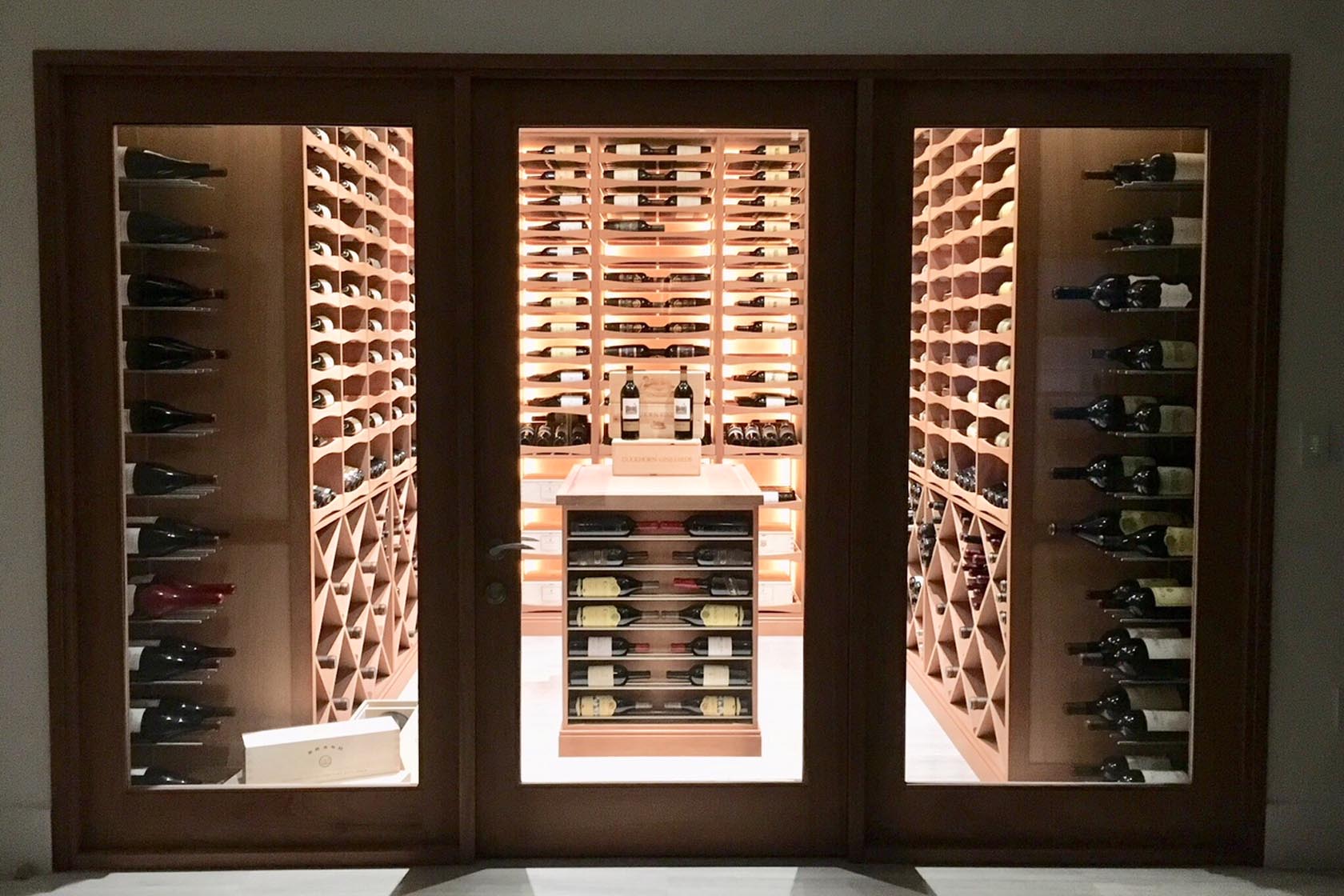
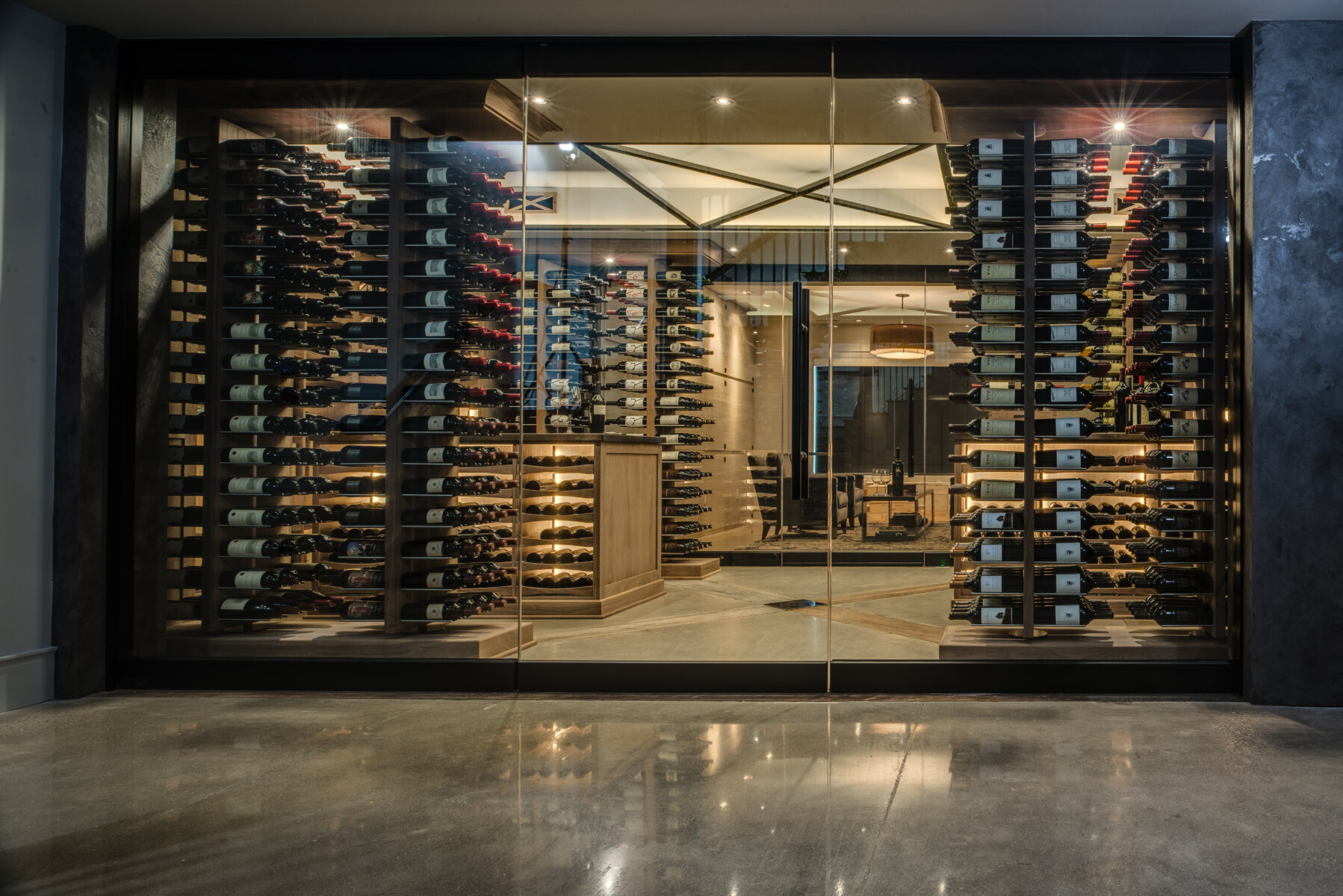
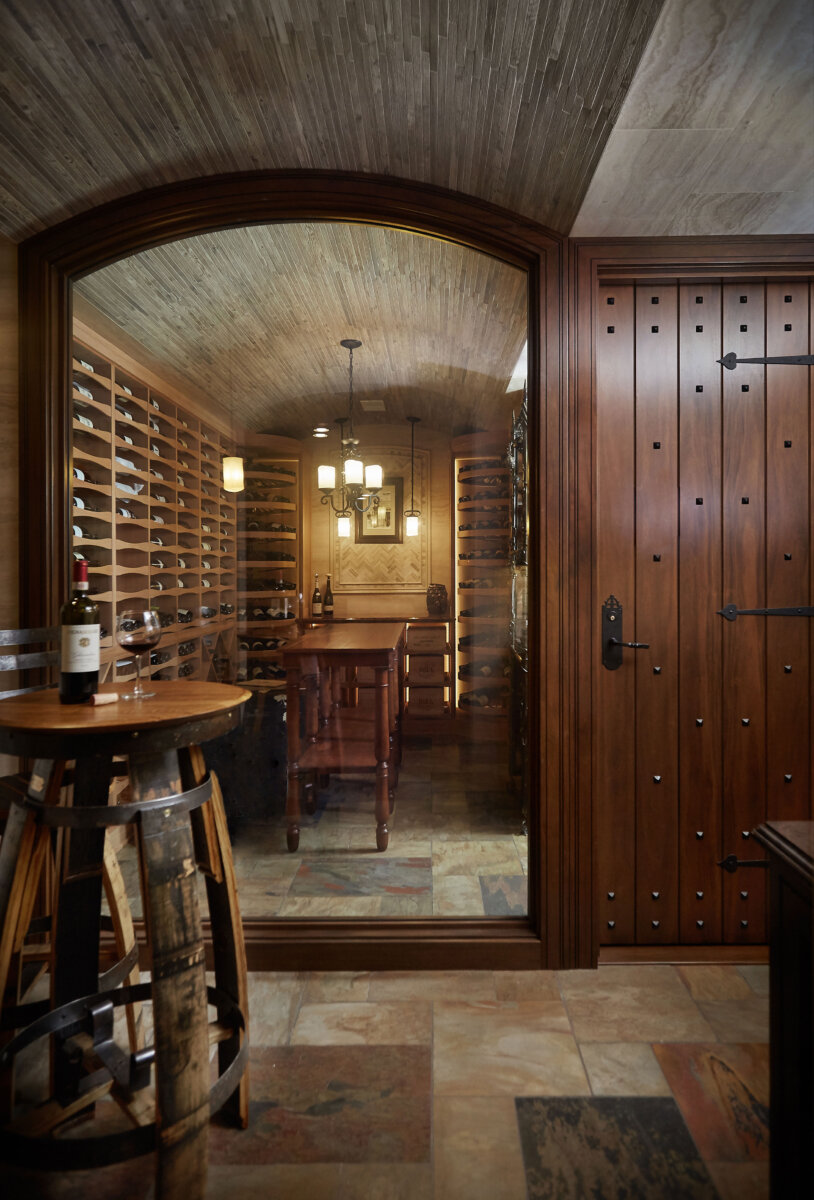
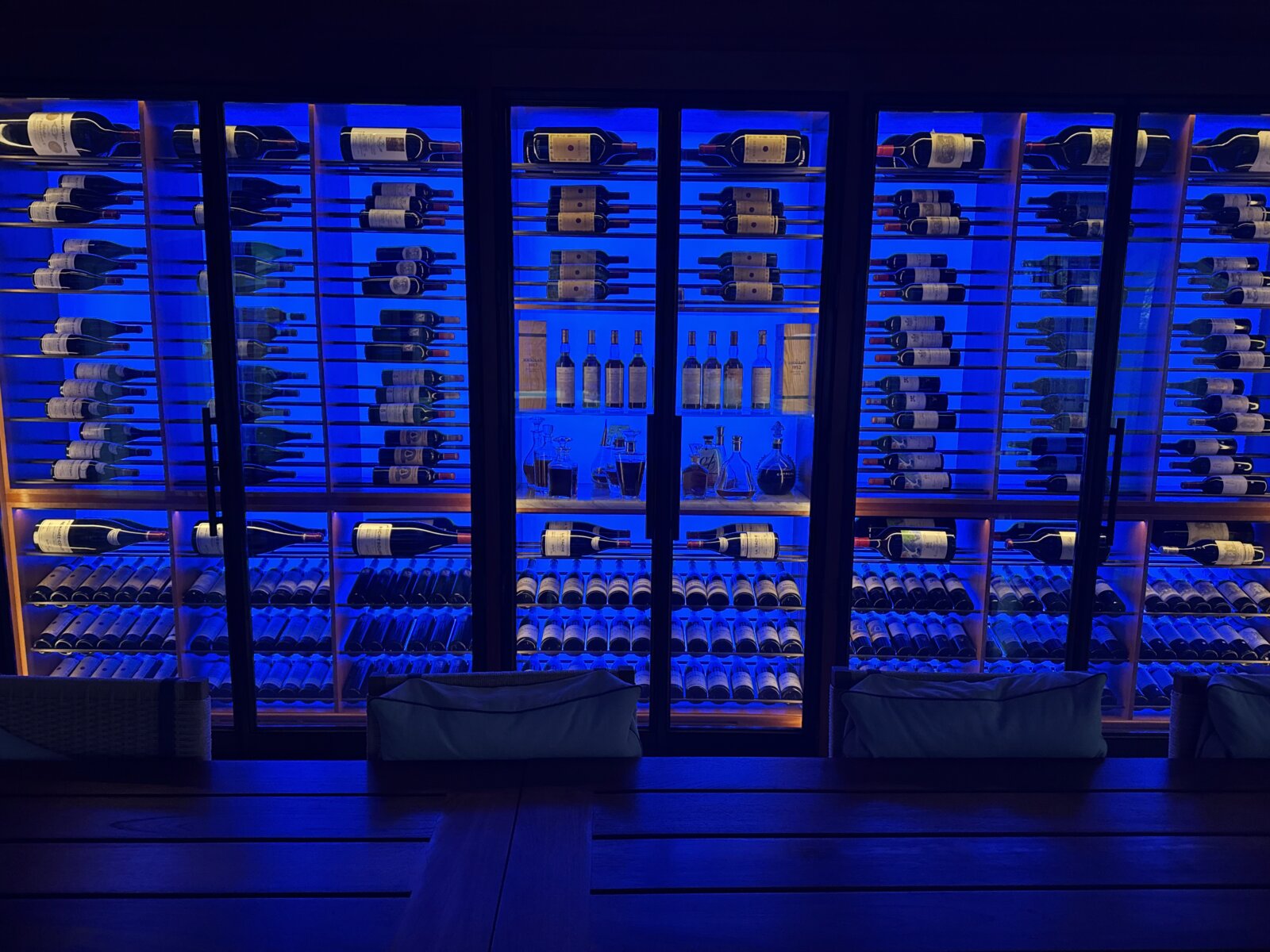
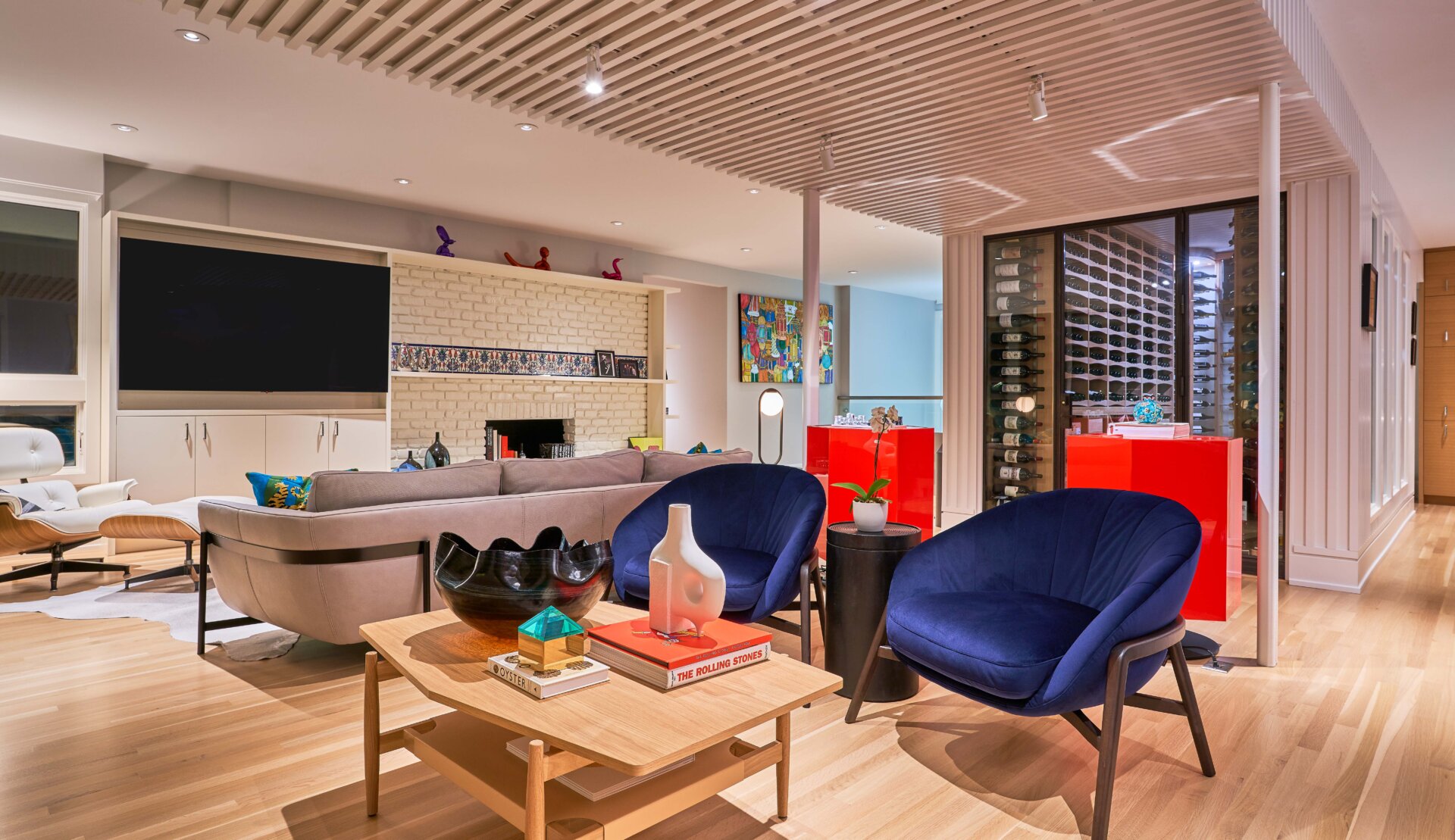
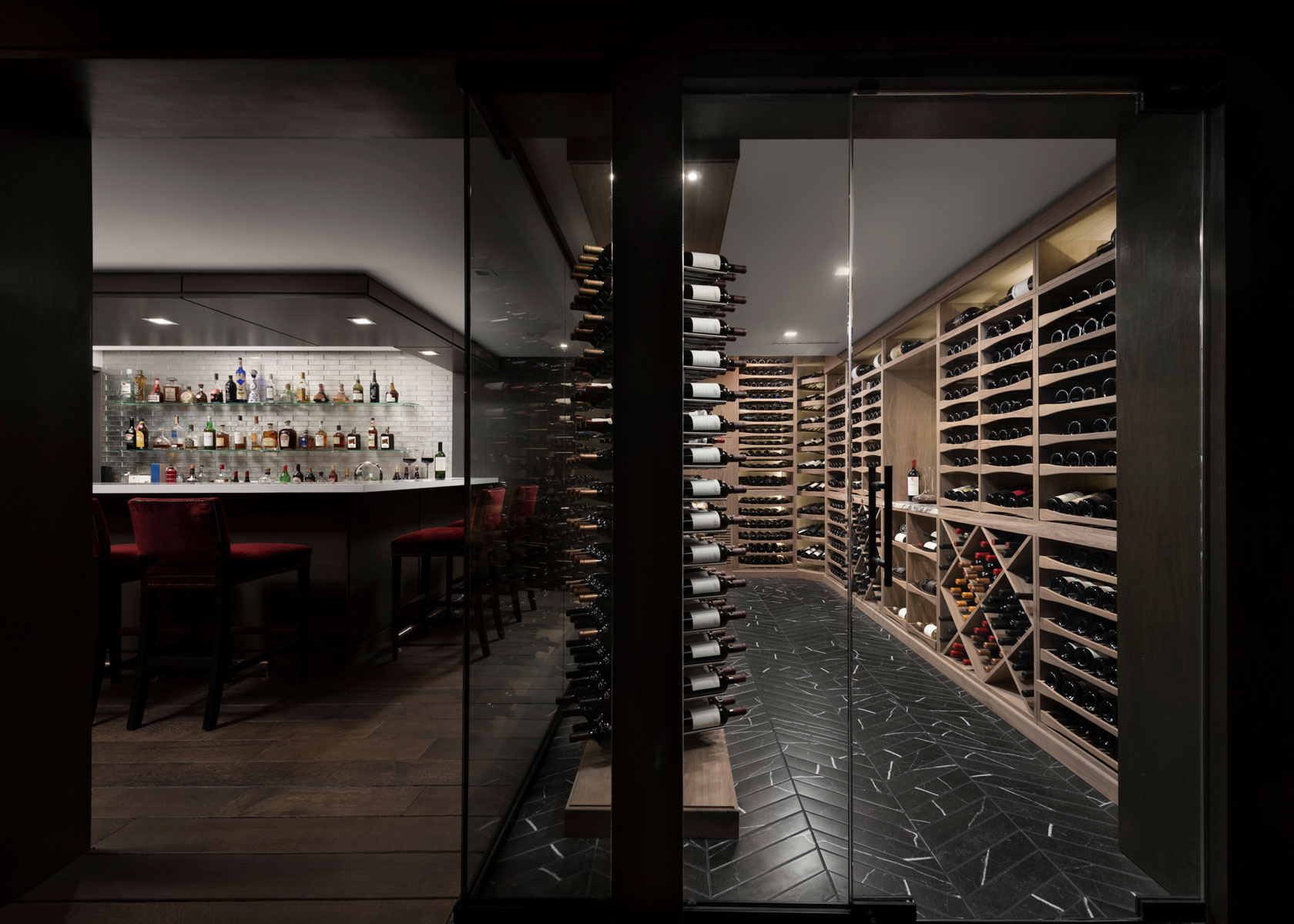
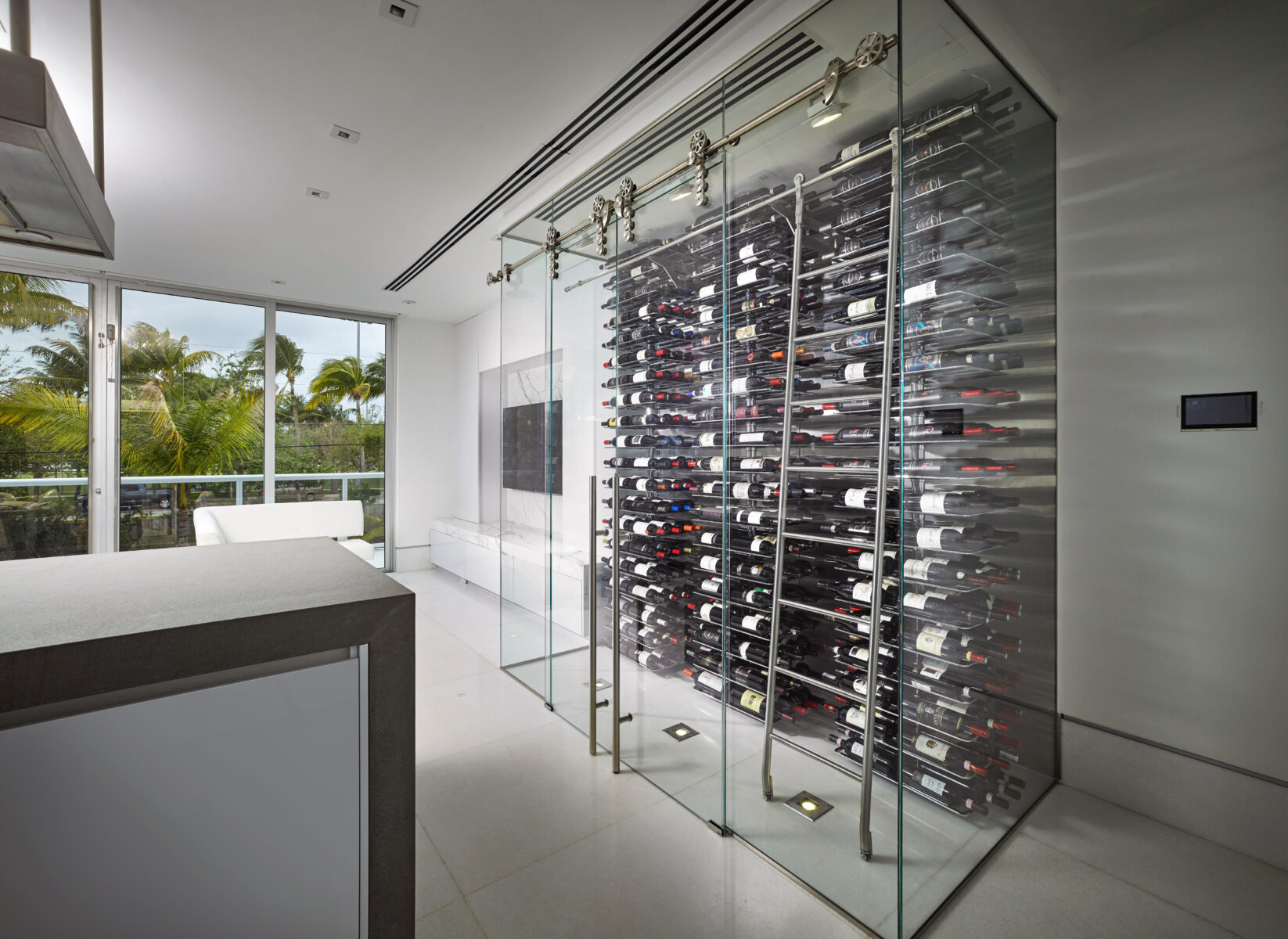
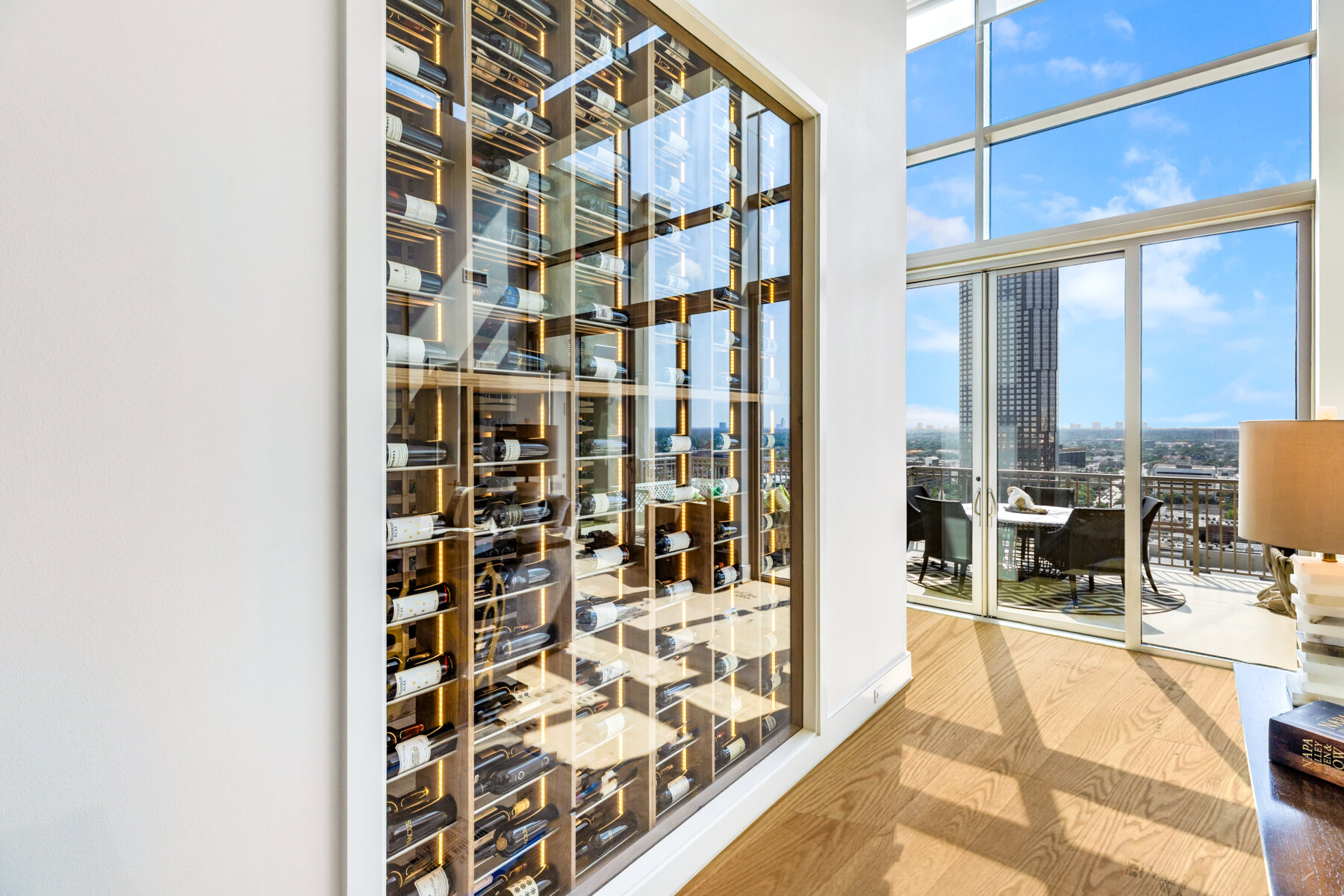
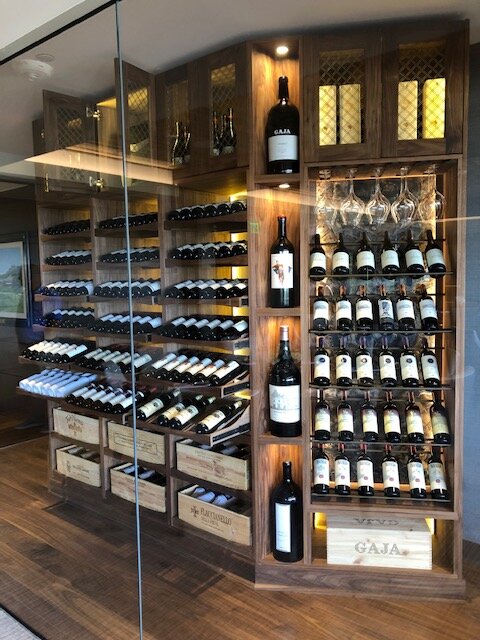
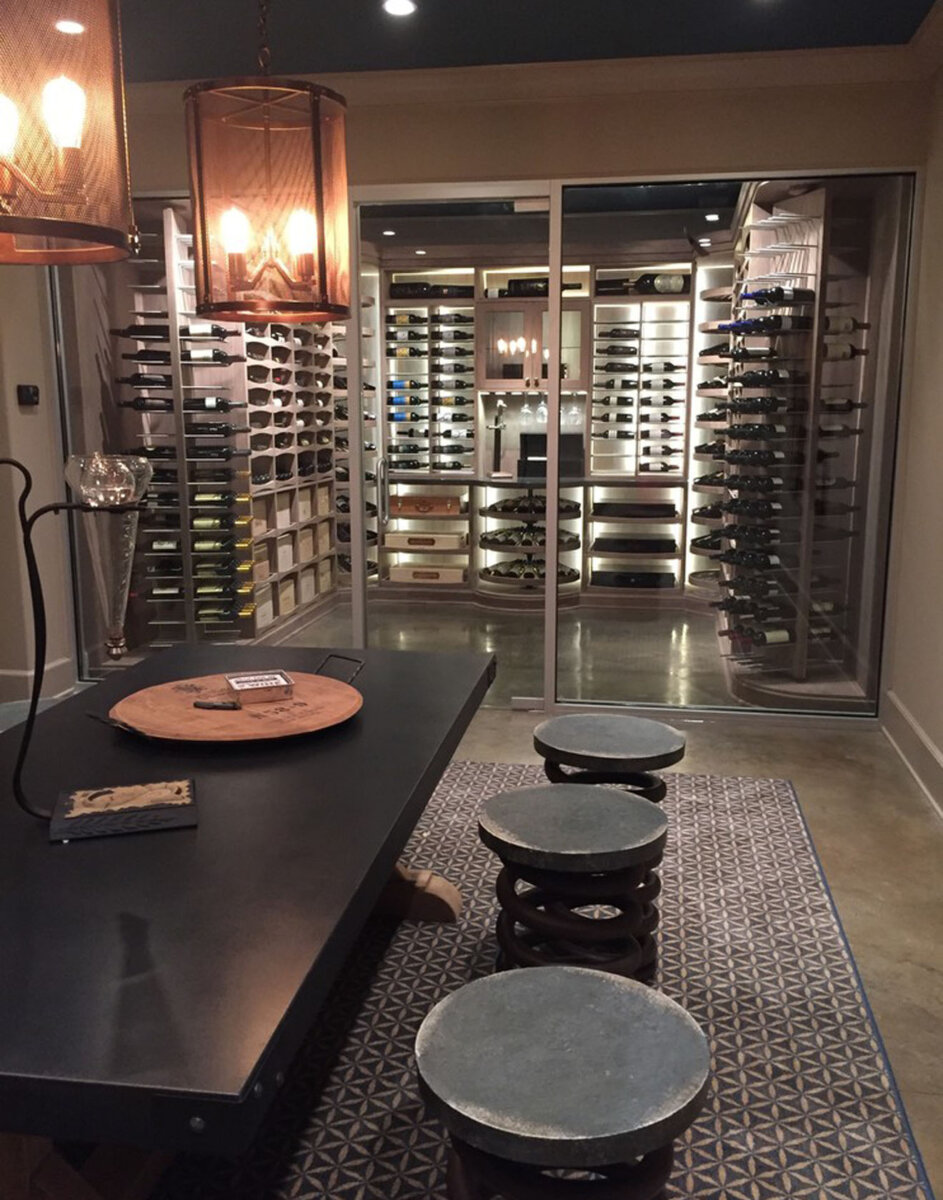
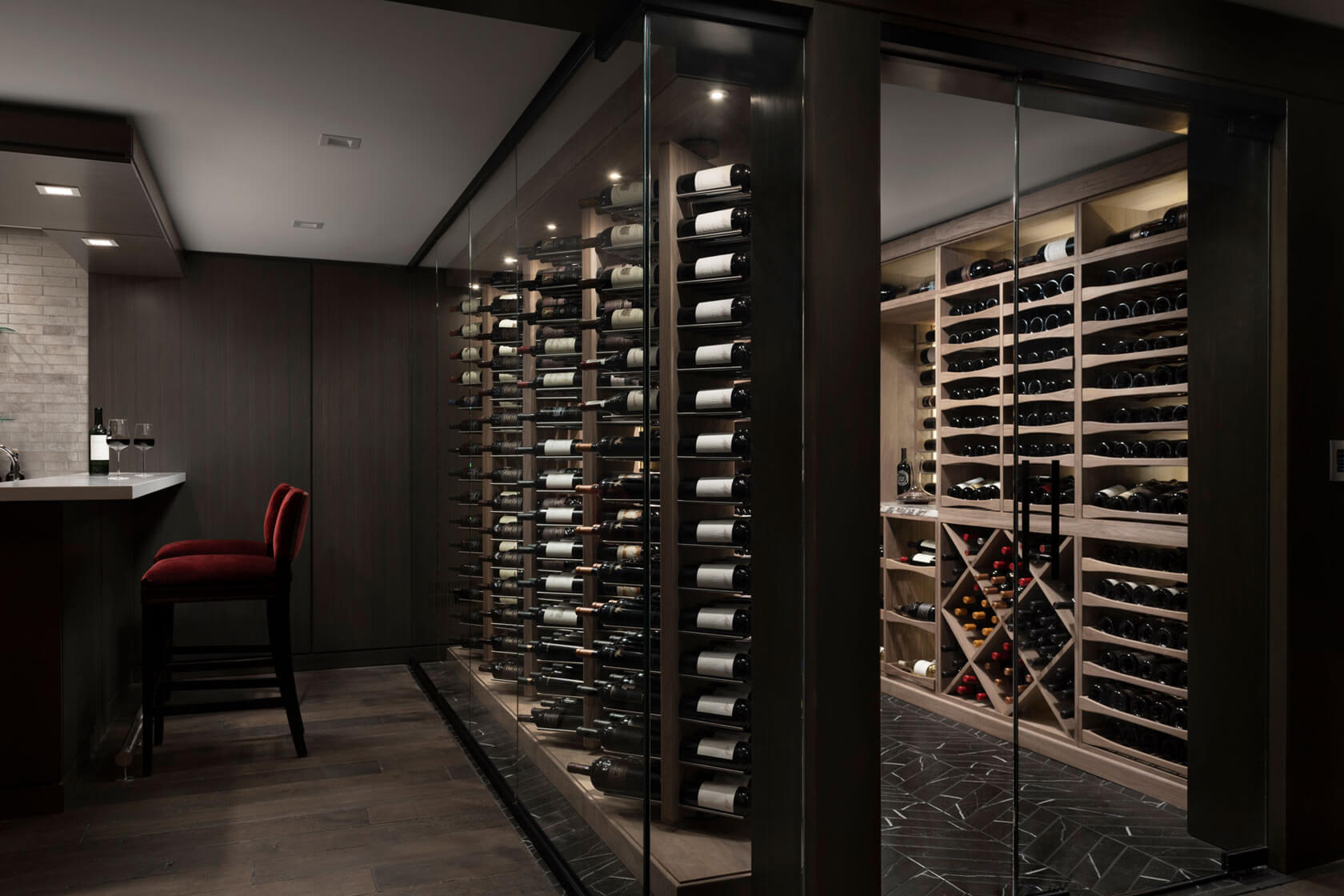
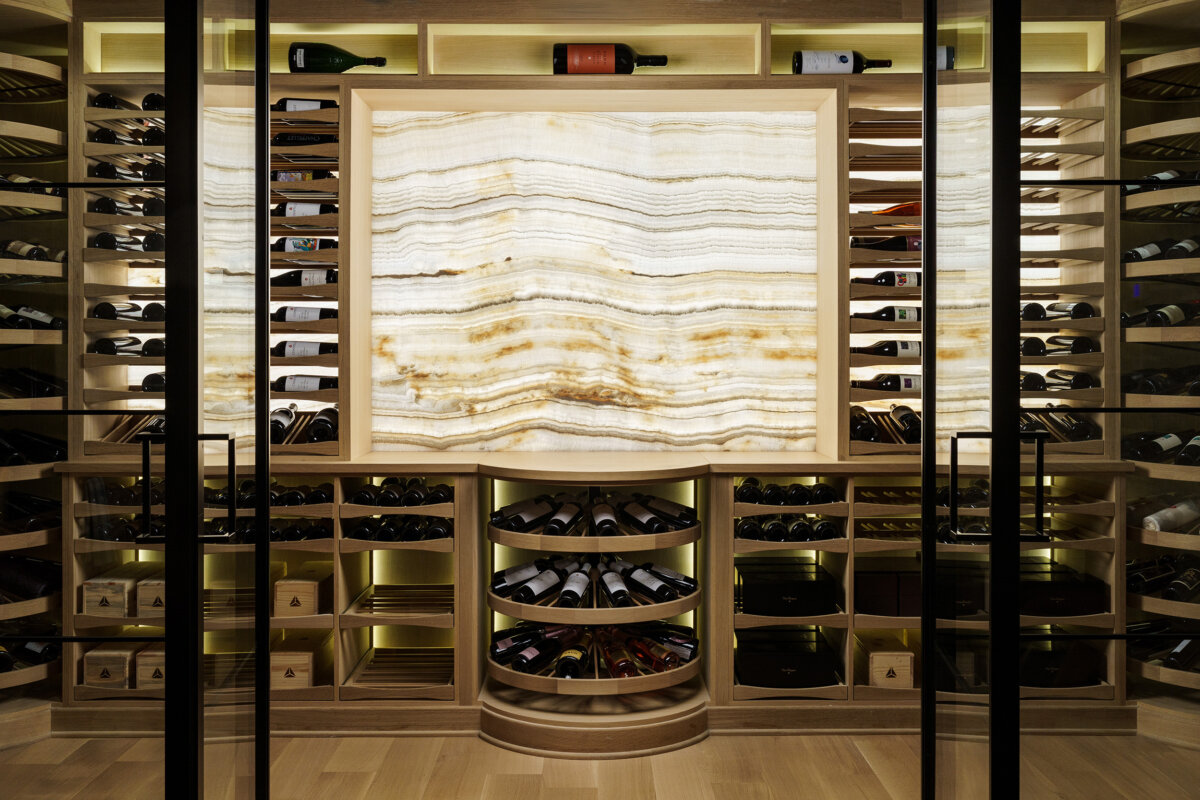
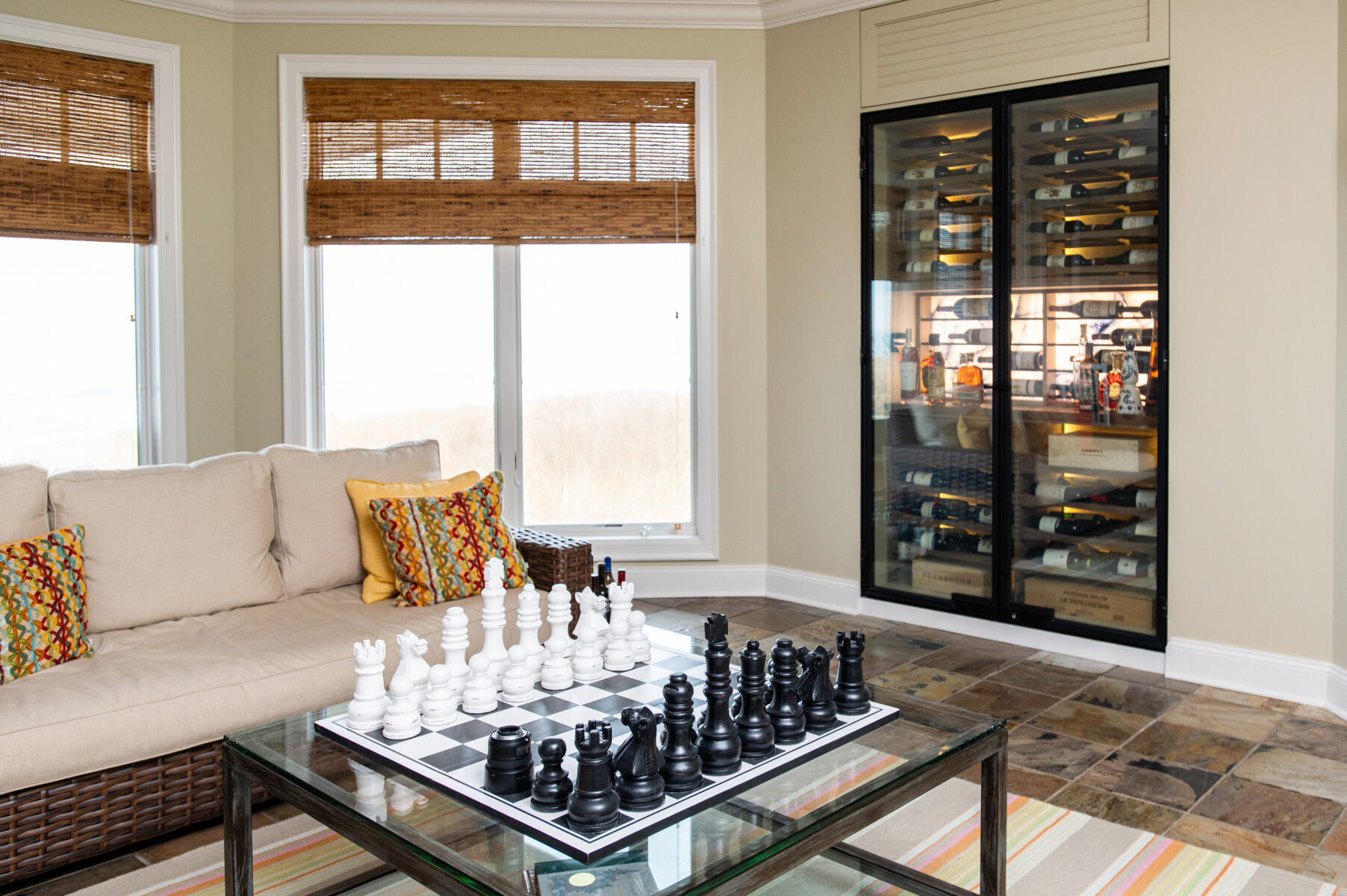
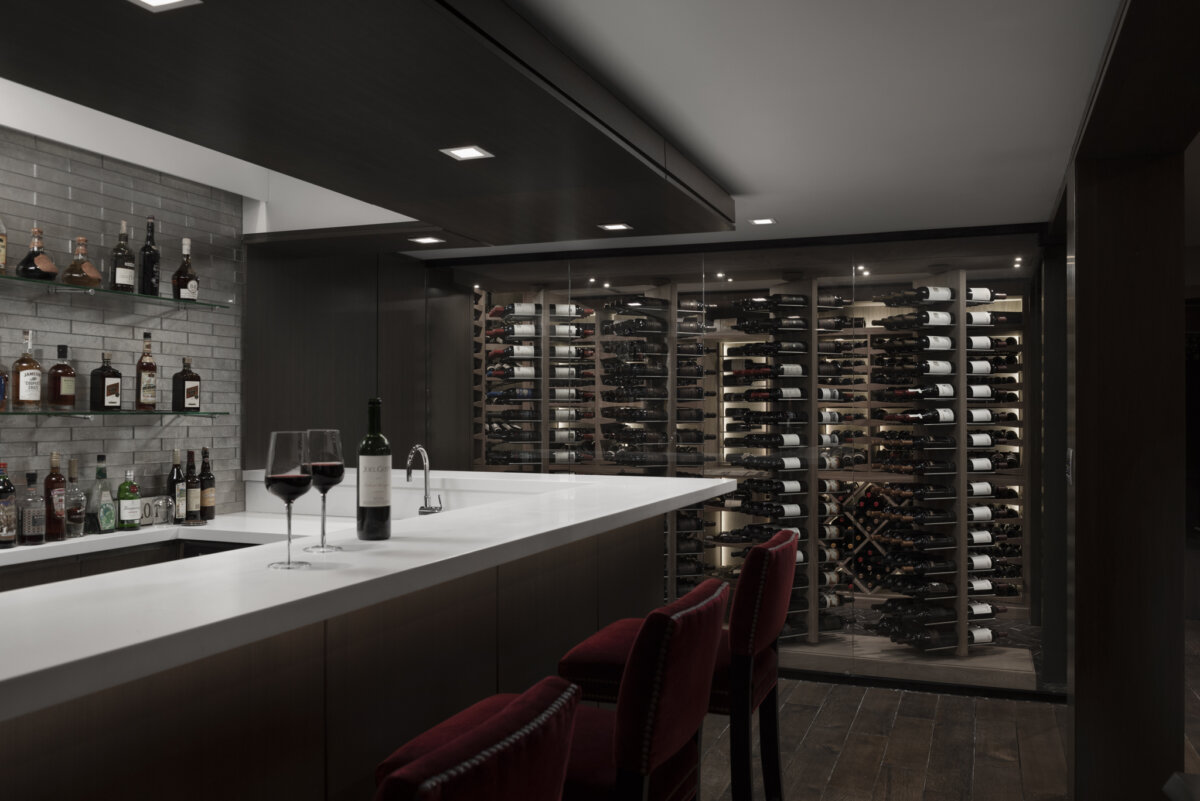
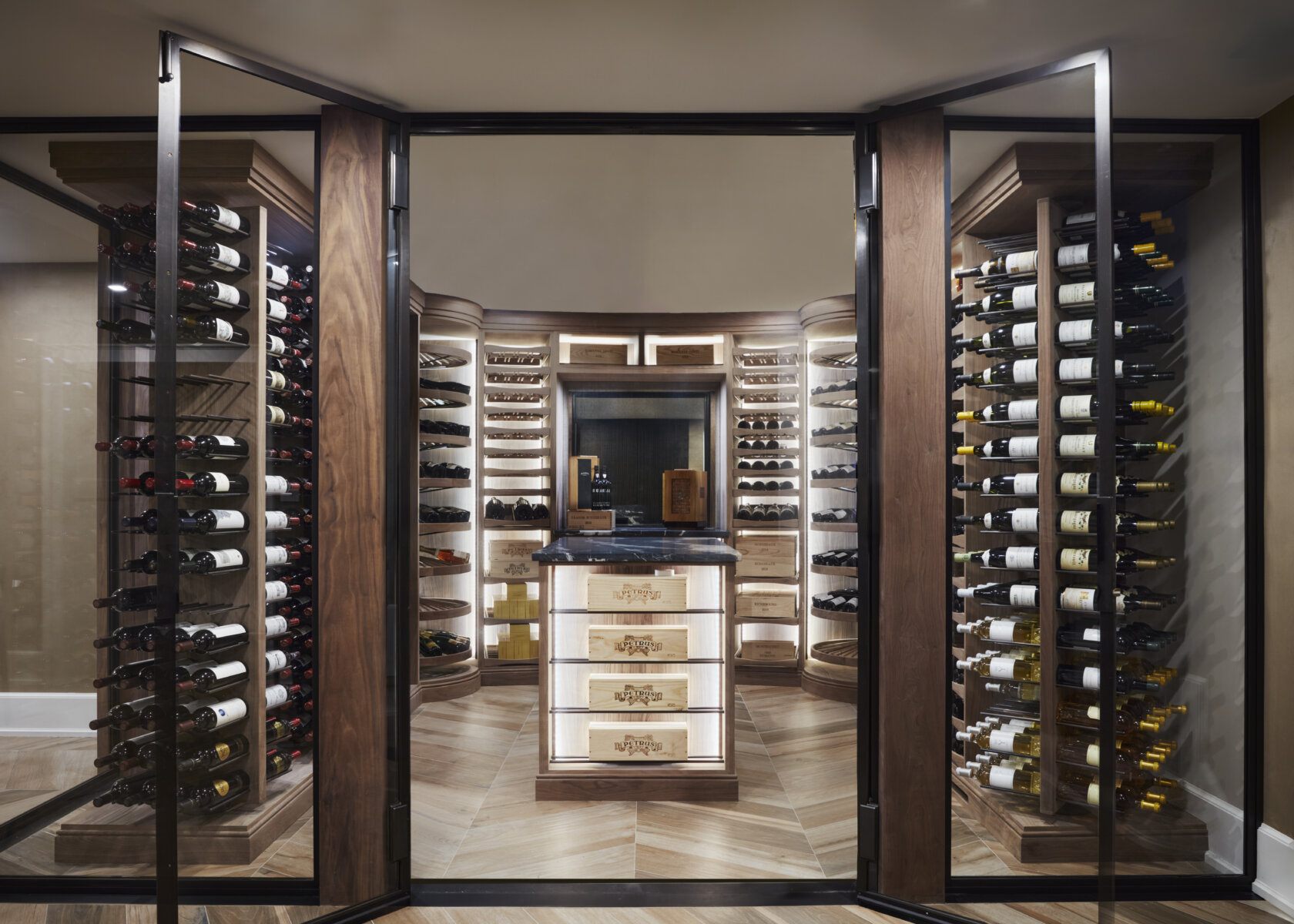
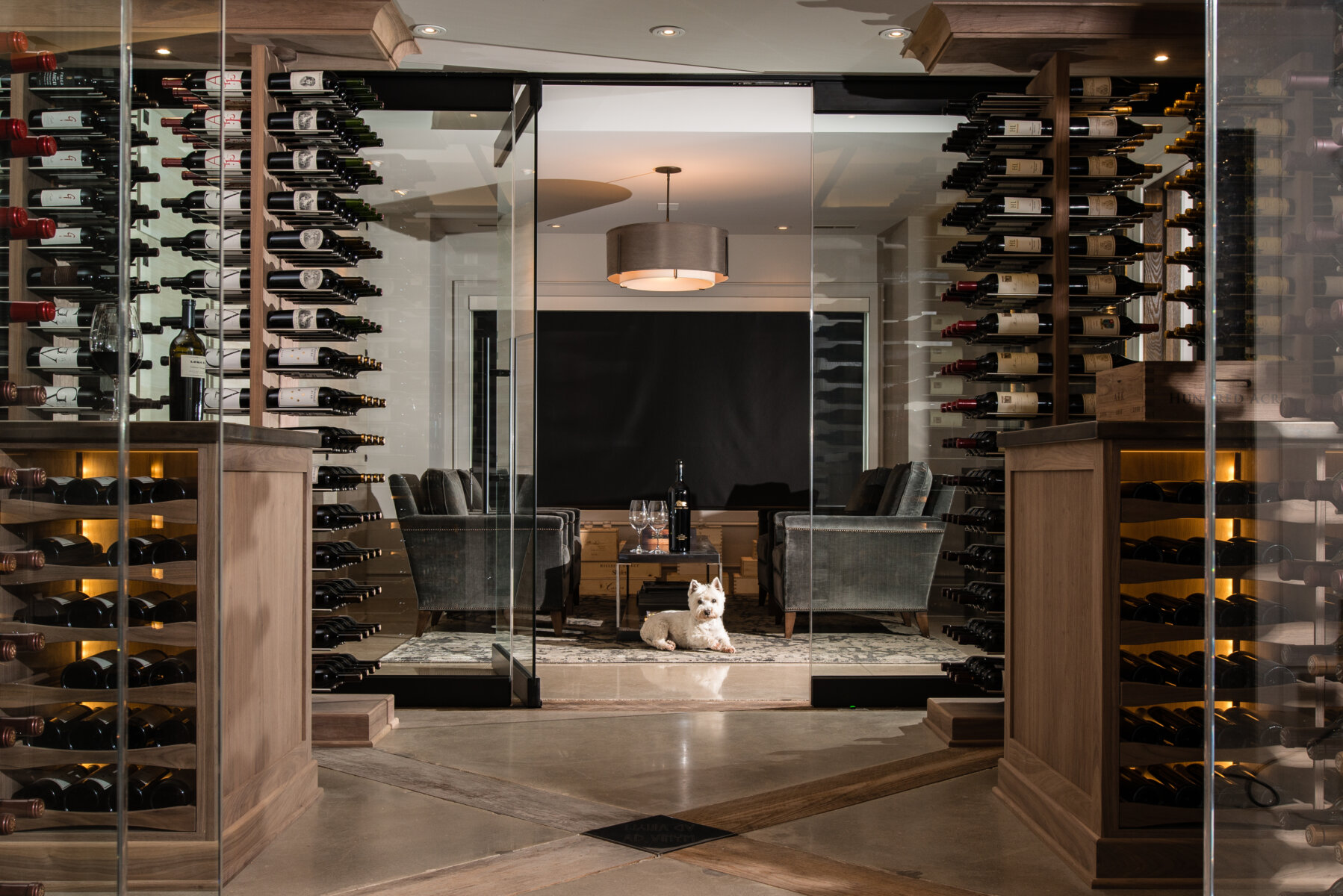
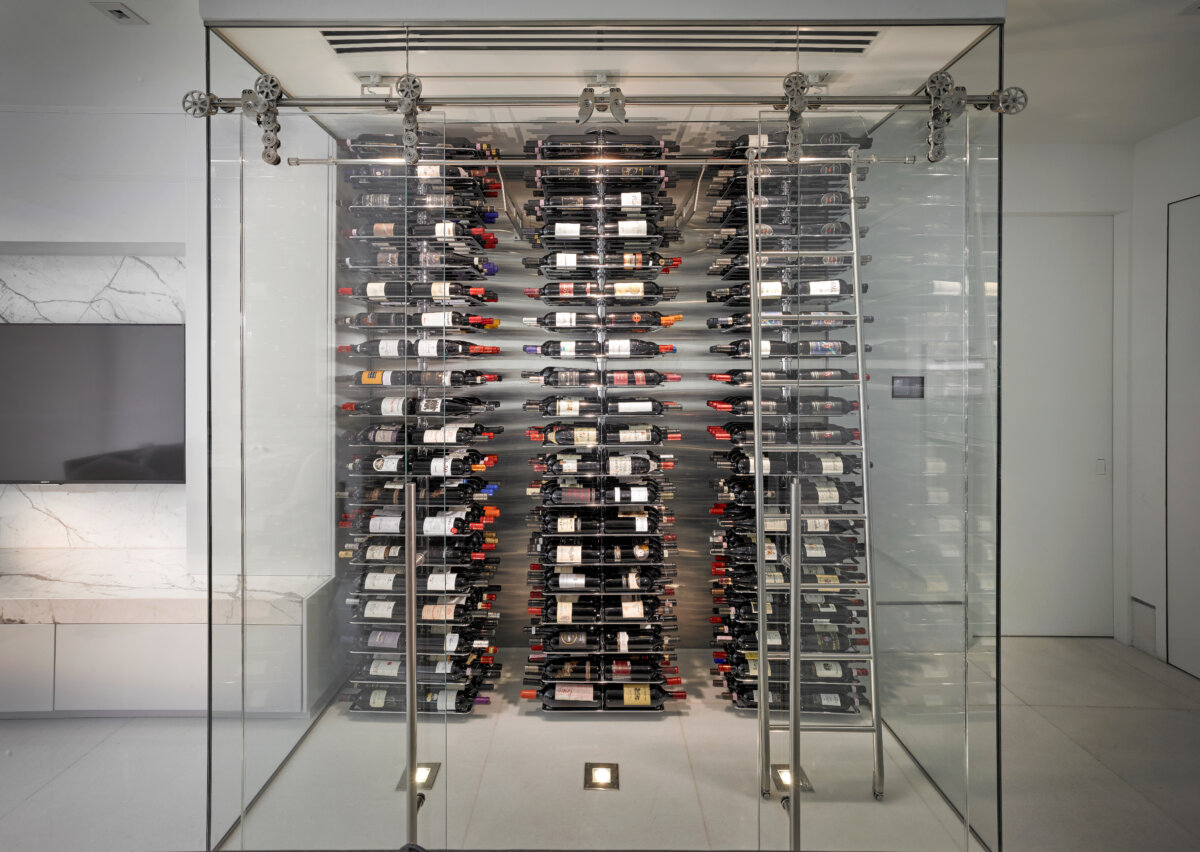
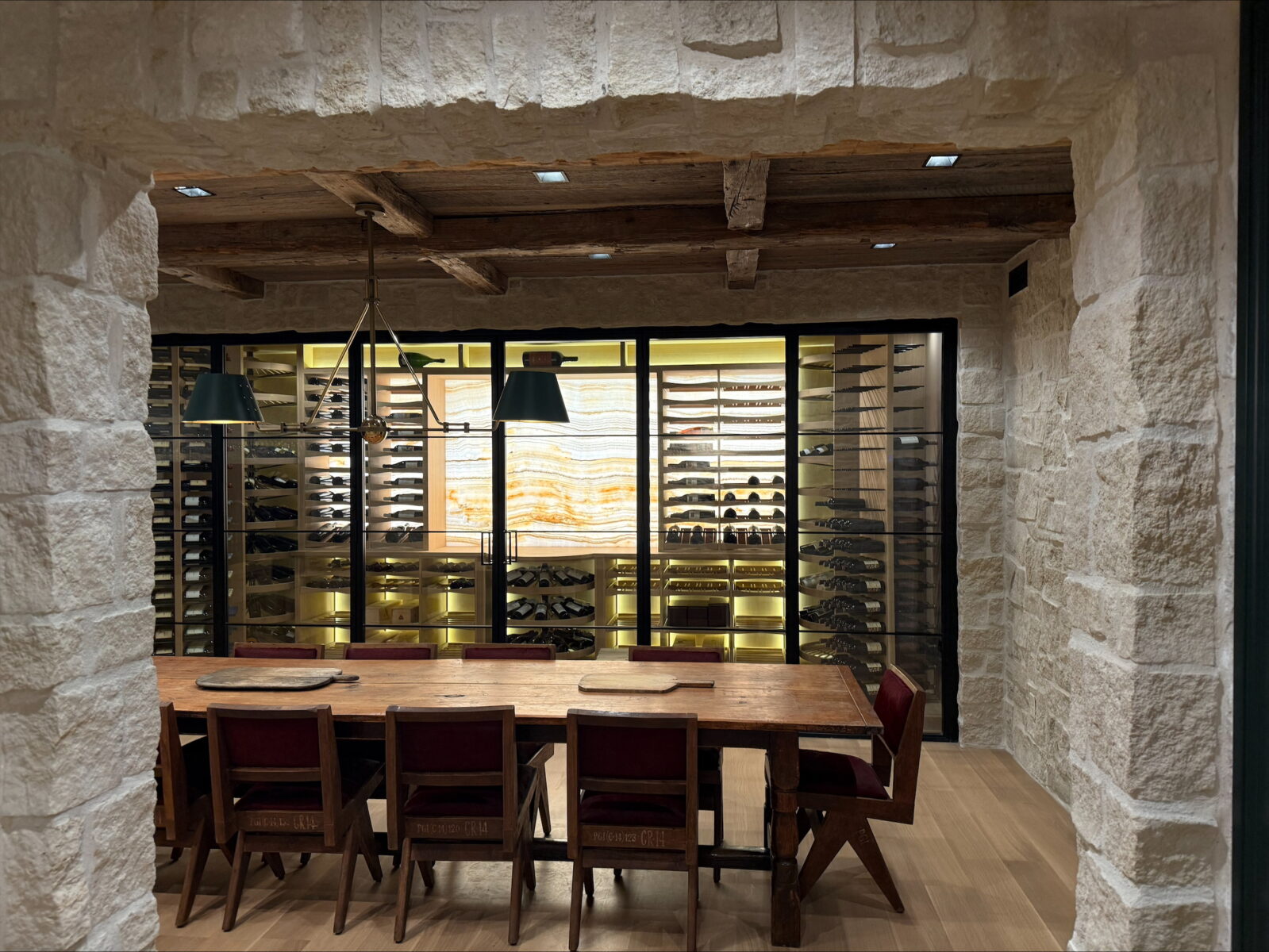
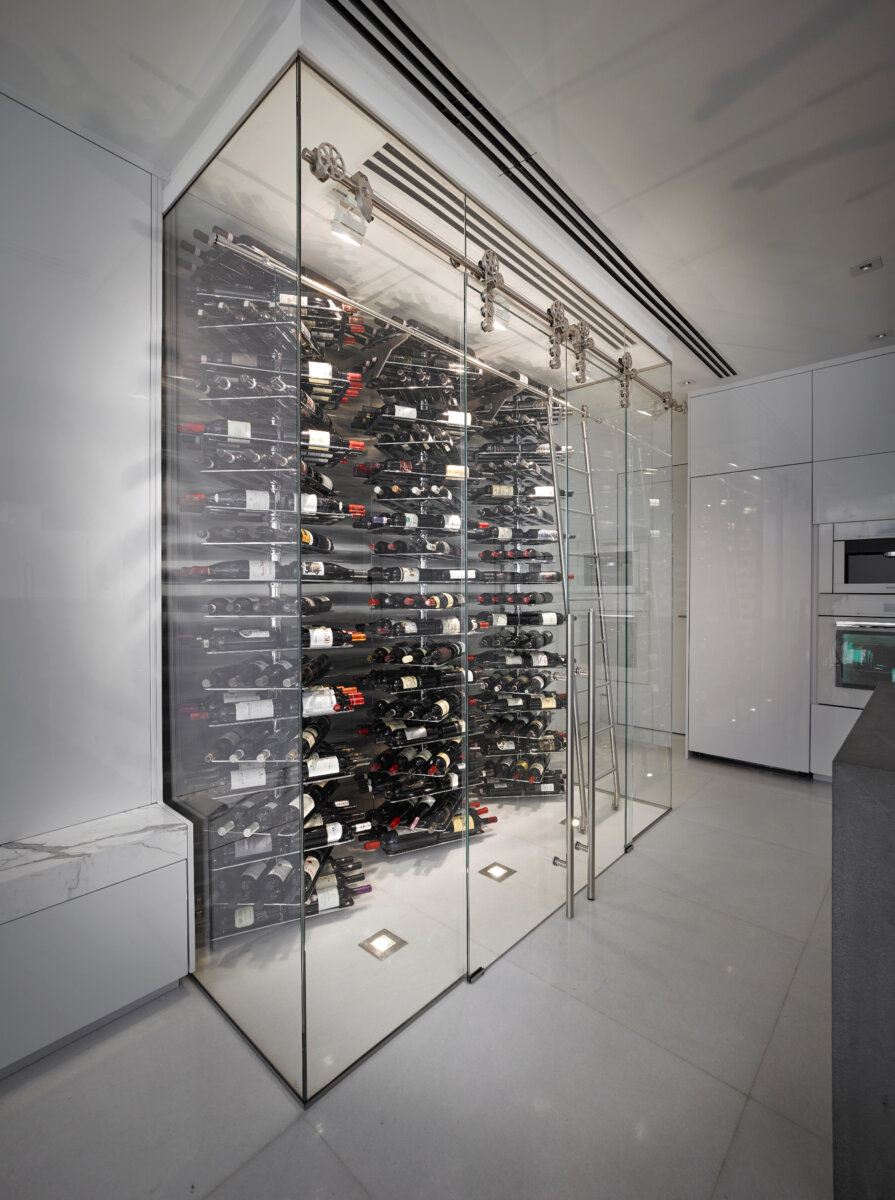
Wine cellars can be sited in many different areas in the home. We have installed cellars in basements, kitchens, dining rooms, stairwells and even in a re-purposed pool house. That said, wine requires several conditions to be met for ideal aging and the location of your cellar will help you to select appropriate features that will work for you. Some of the most important factors in creating an ideal environment for your wines include having adequate ventilation, no direct exposure to sunlight or to heat, and limited vibration.
Due to it’s complexity, setting up a wine cellar is not for the novice do-it-yourselfer. A wine cellar is a temperature and humidity controlled space that requires special attention to proper insulation, cooling systems, and lighting.
We have provided a wine cellar construction guide to walk you through the basic elements involved in preparing the wine cellar space. Every cellar presents a unique set of demands, circumstances and challenges, making it impossible to provide a one-size-fits-all how-to manual. Some of the content is technical in nature and consultation with qualified professionals within the various disciplines involved is strongly recommended.
While variations within a certain range can be acceptable, the consensus is that something on the order of a constant 55 degrees, and 70 percent humidity is optimal. All wine should be stored away from light, heat, vibration and temperature fluctuation.
Unless you have a passive wine cellar environment able to keep the temperature and humidity at a consistent level, then including a cooling unit in your cellar is essential. There are several different systems, but they fall into one of the following categories:
Through-the-wall design: A self-contained air conditioning unit is mounted literally through the wall. These units are best for smaller cellars as they have a limited cooling capacity (100-2000 cubic ft.). The placement of the unit is important as to not interfere with the wine cabinets and racks. The condenser side of the unit is outside of the cellar, and generates some heat and noise, which is another factor to be considered when determining the location.
Split Air Handler (Ducted System): This style of cooling unit is a versatile, self-contained ducted unit which offers maximum flexibility in design and installation. It has the cooling capacity to be used in any size cellar. A grille on the inside wall is connected by insulated flexible ductwork to a self-contained unit outside of the cellar. This unit contains the evaporator, fan and condenser and can be placed in any indoor location outside of the cellar. This results in a quiet cellar with no obtrusive equipment taking up space and is ideal for private or larger cellars, as well as for commercial use, as it can be sized for any cellar capacity.
Ductless Split System: A split system is comprised of two separate mechanical elements (a condenser and an evaporator) that can be used when ducting is not possible, in such cases as when the condenser must be installed outdoors or in an unheated space, such as a garage. The split systems have the evaporator fan mounted inside the wine cellar with the condenser located outside the room and connected to the cellar by refrigeration tubing. This type of system can be sized for any size cellar. However, unlike the first two styles of cooling units, the split system must be installed by a licensed electrical and refrigeration technician.