Label-Forward vs. Neck-Out: Which Wine Racking System is Best for Your Collection?
Stop playing "wine cellar archaeology." If you’ve ever had to pull out three different bottles just to find the one you were actually looking for, your racking system is working against you. In the debate of Label-Forward vs. Neck-Out storage, the choice comes down to a balance of density, visibility, and accessibility. We break down the pros and cons of traditional racking versus modern sliding systems to help you choose a display that treats your collection like the investment it is.
For a collector, there is nothing more frustrating than standing in a beautiful cellar and having absolutely no idea where the 2014 Bordeaux is.
The debate between Label-Forward and Neck-Out racking isn’t just about aesthetics; it’s about how you interact with your investment. If you have to play “wine cellar archaeology” every time you want to pull a bottle—sliding out three others just to read a single label—your storage system is working against you.
Here is the breakdown of the two primary racking styles and why the “modern” way is winning the SEO and functional battle in 2026.

The Traditional Approach: Neck-Out Racking
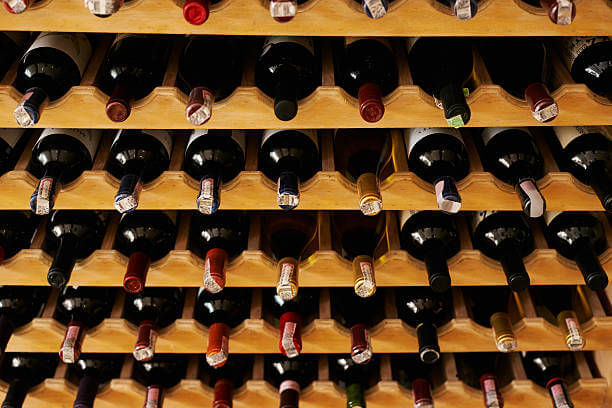
Neck-out storage is what most people picture when they think of a classic underground “cave.” The bottles are stored perpendicular to the wall, with the corks facing you.
The Pros:
- Maximum Density: This is the most space-efficient way to store wine. If your only goal is to cram 2,000 bottles into a tiny footprint, neck-out is the answer.
- Classic Aesthetic: It provides that “library of wine” look that many traditional collectors love.
The Cons:
- Zero Visibility: You are looking at a sea of identical capsules and corks. Unless you have a meticulous tagging system or a digital cellar map, you’re flying blind.
- Increased Handling: To find a specific vintage, you often have to pull bottles out, increasing the risk of temperature fluctuations and physical accidents.
The Modern Evolution: Label-Forward Racking
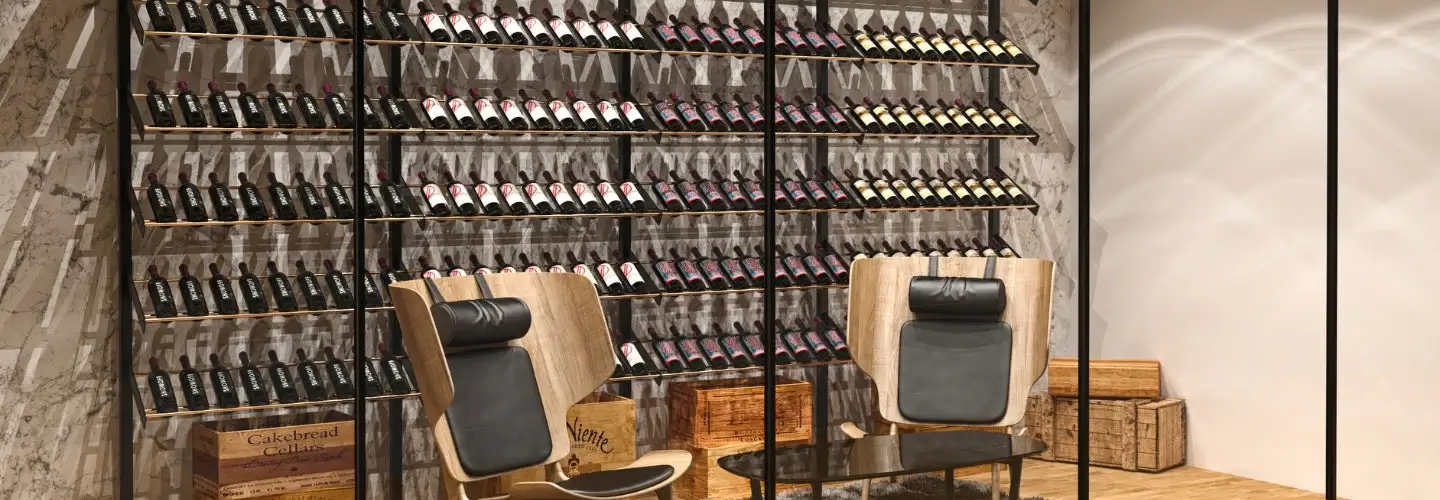
Label-forward (or horizontal) racking displays the bottle parallel to the wall, making the label the star of the show.
The Pros:
- Instant Recognition: You can see exactly what you have at a glance. It turns your collection into a visual gallery.
- Better Organization: It’s much easier to group by region or varietal when you can read the “California” or “Tuscany” on the label without moving a finger.
- Airflow: Horizontal placement often allows for better air circulation around the bottle, which is vital for consistent cooling.
The Cons:
- Lower Density: Historically, label-forward racking meant you could store significantly fewer bottles because they took up more “wall real estate.”
The Revel Difference: Why Sliding Drawers Change the Game
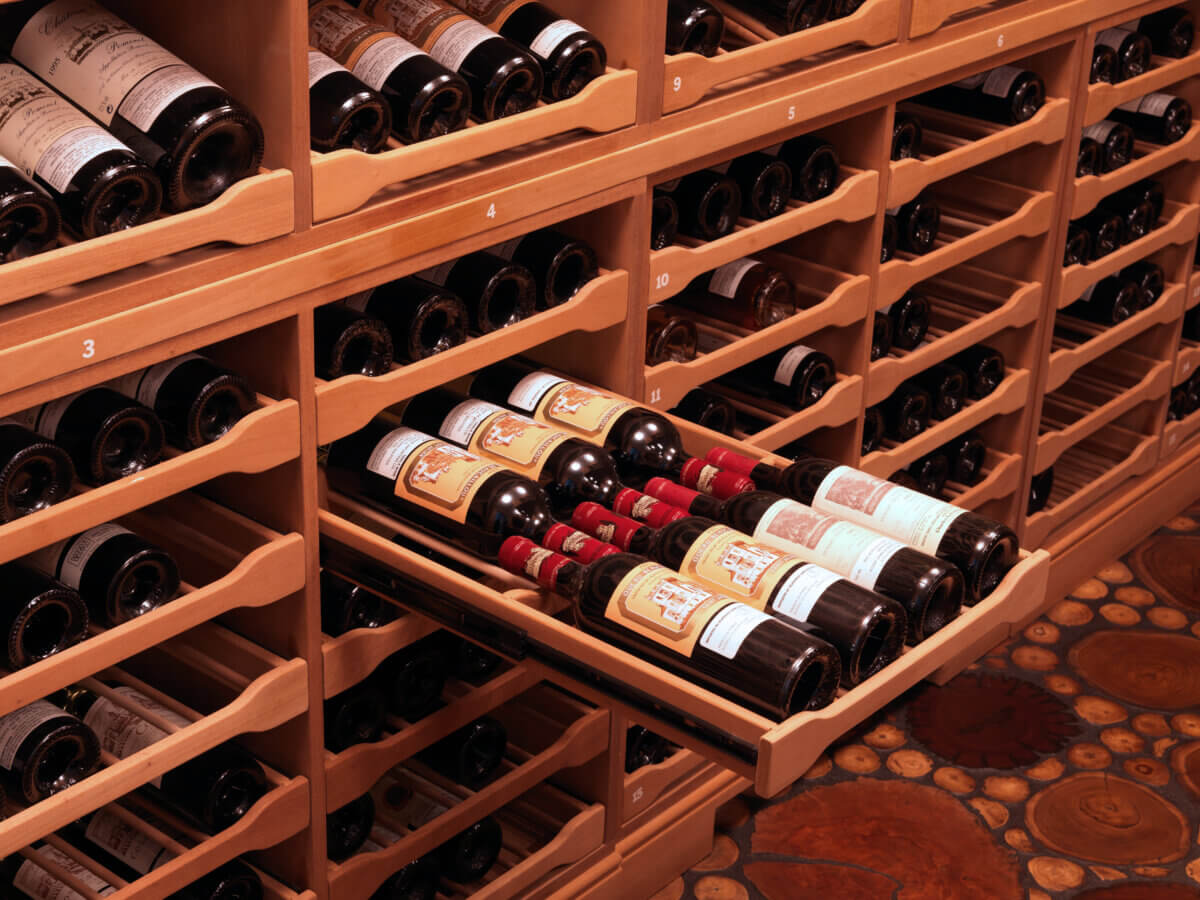
At Revel, we realized that collectors shouldn’t have to choose between density and visibility. This is why we pioneered the Sliding Wine Drawer. (See how our sliding pullout wine drawers work.)
By using a sliding, label-forward system, we’ve effectively killed the “hidden bottle” problem.
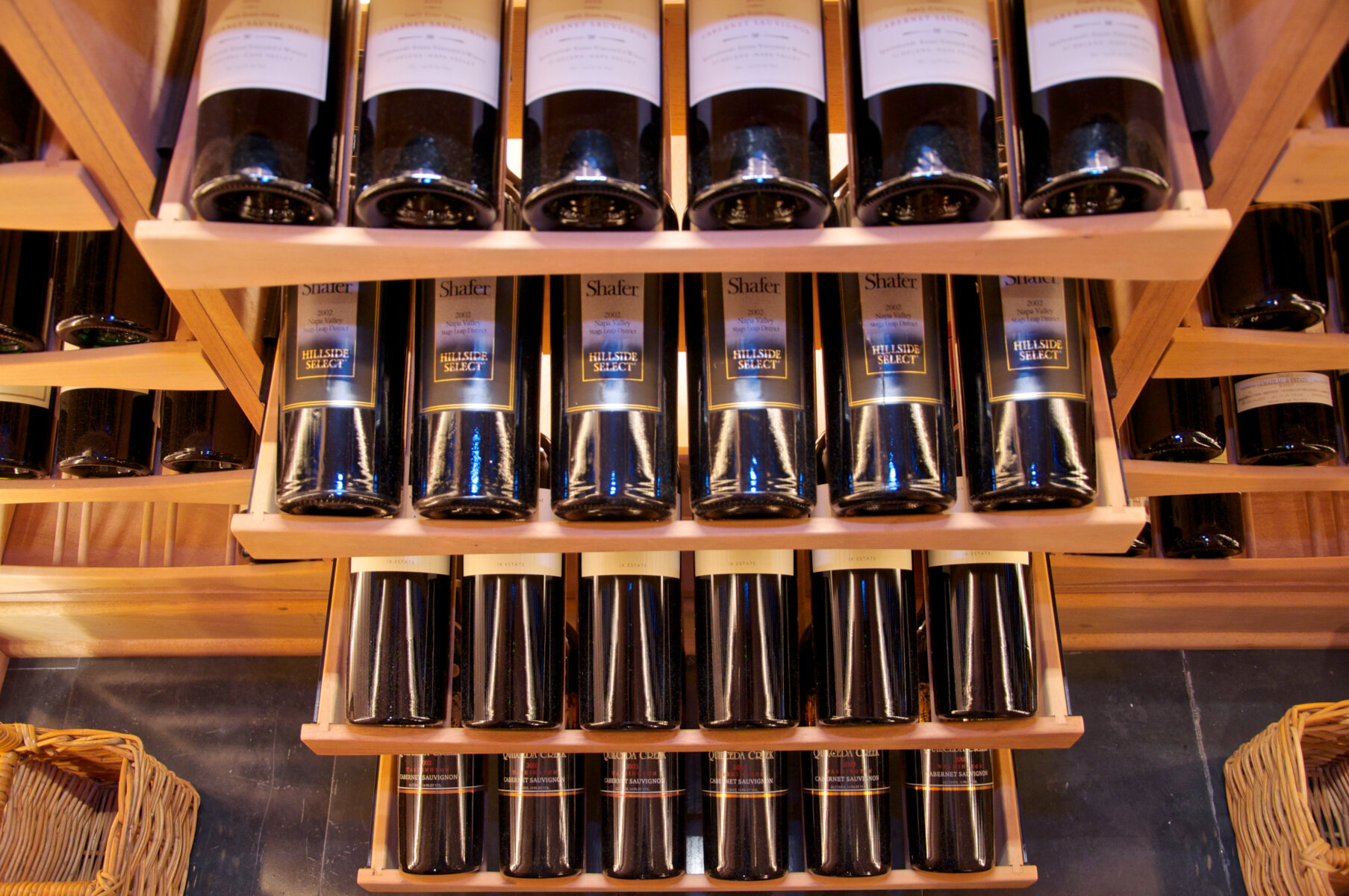
- High-Density Label-Forward: Our drawers allow you to store bottles multiple layers deep while still maintaining 100% visibility. You pull the drawer out, and every label in that section is revealed.
- Safety First: Traditional racking can be hard on labels (tearing them as you slide bottles in and out). Our precision-fit drawers cradle the bottle, ensuring the “art” on the outside stays as pristine as the wine on the inside.
- The “Hidden Bottle Tax”: Many collectors realize too late that they’ve re-purchased cases of wine they already owned simply because those bottles were buried in a neck-out rack. Label-forward storage is, quite literally, a money-saving tool for inventory management.
| Feature | Neck-Out | Label-Forward | Revel Drawers |
|---|---|---|---|
| Visibility | Corks only | Labels out | Superior access |
| Density | Highest | Low/Medium | High |
| Bottle Safety | Risk of tear | Low risk | Zero friction |
Which is right for you?
If you are a “set it and forget it” collector who is aging wine for 20+ years and rarely opens a bottle, neck-out might suffice.
However, if you are a modern enthusiast who hosts tastings, manages a diverse inventory, and treats your collection as a focal point of your home, label-forward sliding systems are the gold standard.
A cellar should be a place of enjoyment, not a search mission. By prioritizing visibility, you ensure that every bottle in your collection is seen, celebrated, and—most importantly—actually drank at its peak.