The Architect’s Guide to Planning a Custom Wine Cellar: 5 Things to Know Before Construction
Designing a world-class wine cellar is a high-stakes exercise in building science and mechanical coordination. As wine storage moves from the basement to high-visibility living areas, architects must master the balance between climate integrity and aesthetic impact. This technical guide outlines the five critical pillars—from vapor barrier placement to label-forward functionality—essential for delivering a high-performance luxury cellar that preserves both the collection and the home’s structural health.
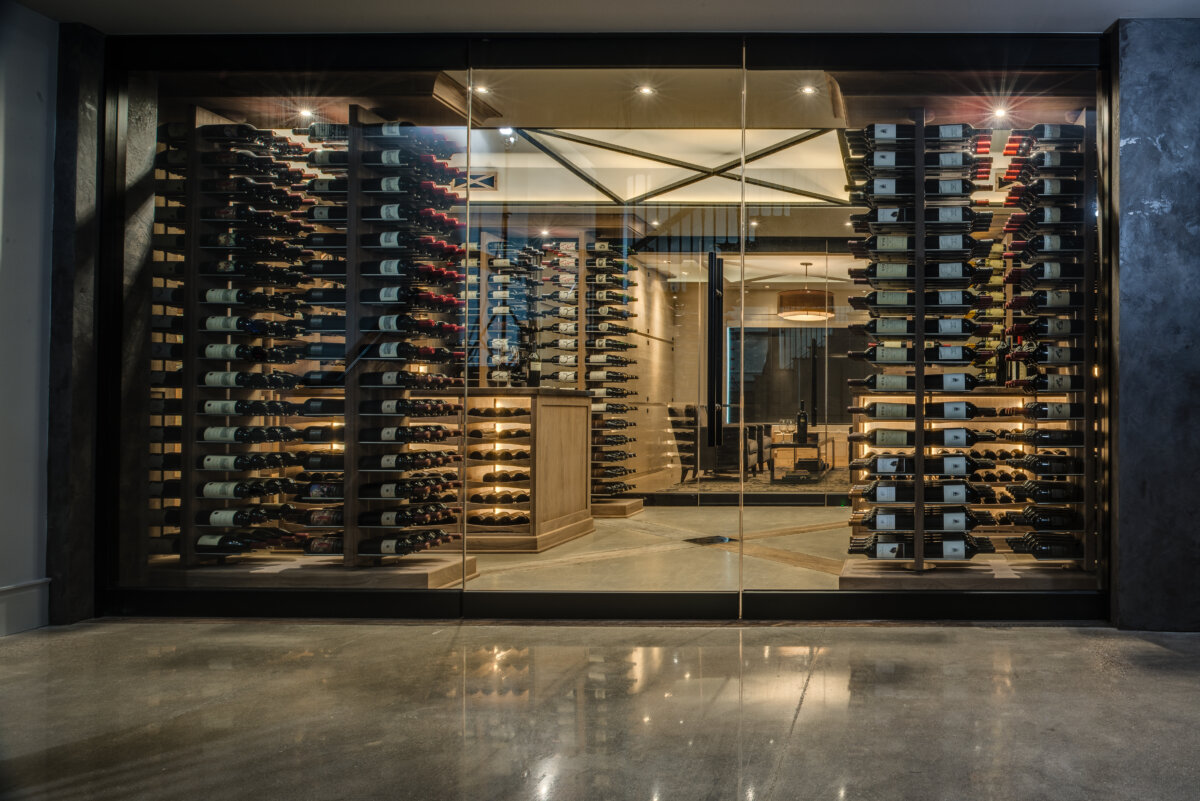
In modern luxury design, the wine cellar has migrated from the basement “bunker” to the main floor, becoming a high-visibility architectural anchor. For architects and builders, this shift transforms a storage project into a complex mechanical and aesthetic challenge.
A successful cellar requires more than just beautiful cabinetry; it demands a rigorous approach to building science. Here are the five critical factors to coordinate before the first stud is placed.
1. Thermal Envelope and Vapor Barrier Integrity
A wine cellar is not a standard room; it is a climate-controlled environment maintained at a constant 55°F–58°F with 60% humidity. Without a proper thermal envelope, you risk interstitial mold and structural rot.
- The Vapor Barrier: This must be installed on the warm side of the insulation (the exterior of the cellar envelope). We recommend a 6-mil polyethylene barrier or, ideally, closed-cell spray foam, which acts as both insulation and a vapor barrier.
- The R-Value: Aim for a minimum of R-19 in the walls and R-30 in the ceiling.
- The Seal: Treat the cellar like a walk-in humidor. Use exterior-grade doors with automatic “drop-down” seals and weather-stripping to prevent pressure imbalances that overwork the cooling system.
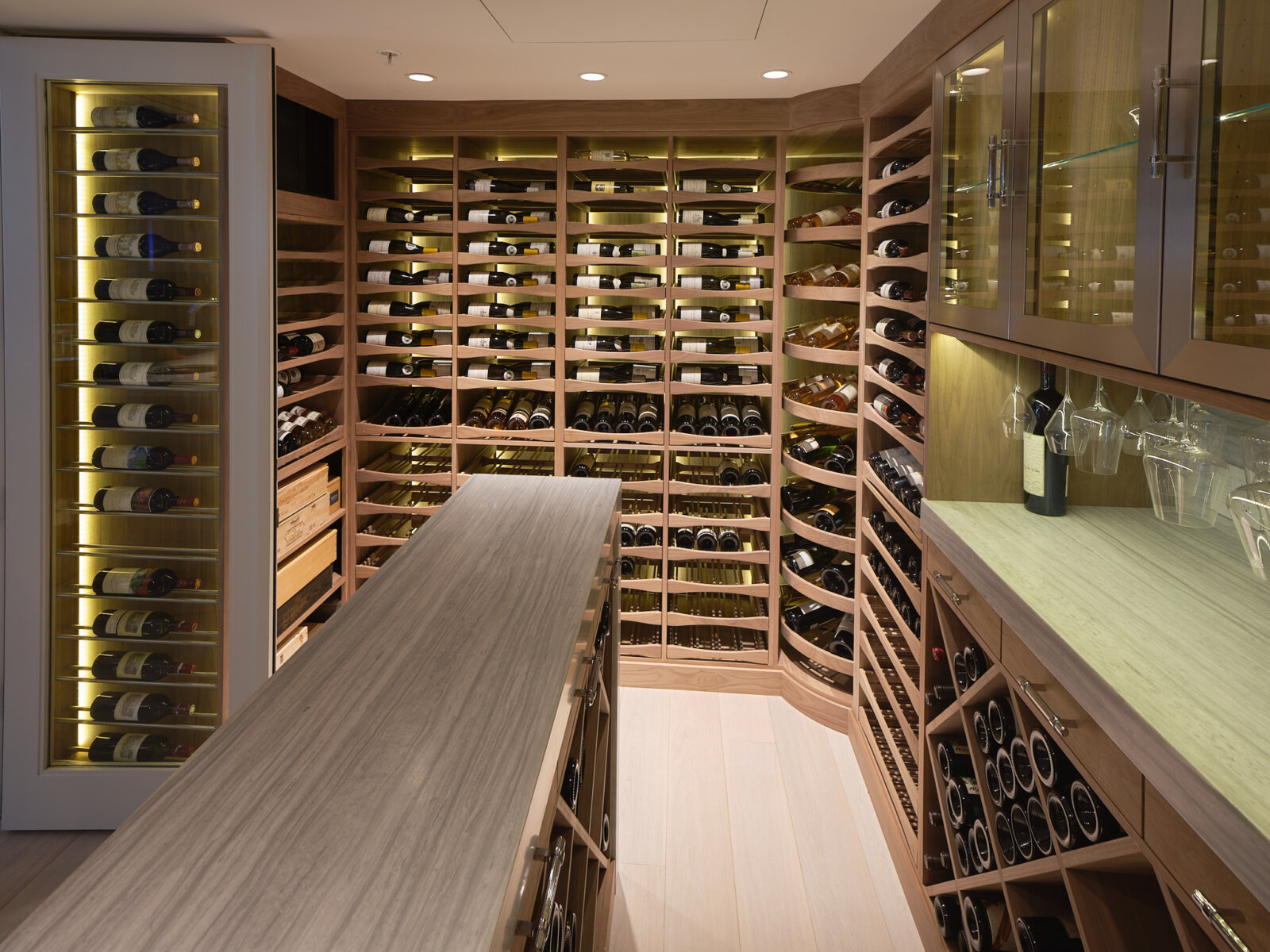
2. Mechanical Coordination: Split vs. Ducted Systems
Choosing a cooling system is a decision that must be made during the schematic design phase, as it dictates your ductwork and electrical requirements.
- Self-Contained Systems: These are the easiest to install but often the loudest and require significant exhaust space.
- Split Systems: These separate the evaporator (inside the cellar) from the condenser (outside the home), allowing for a nearly silent environment.
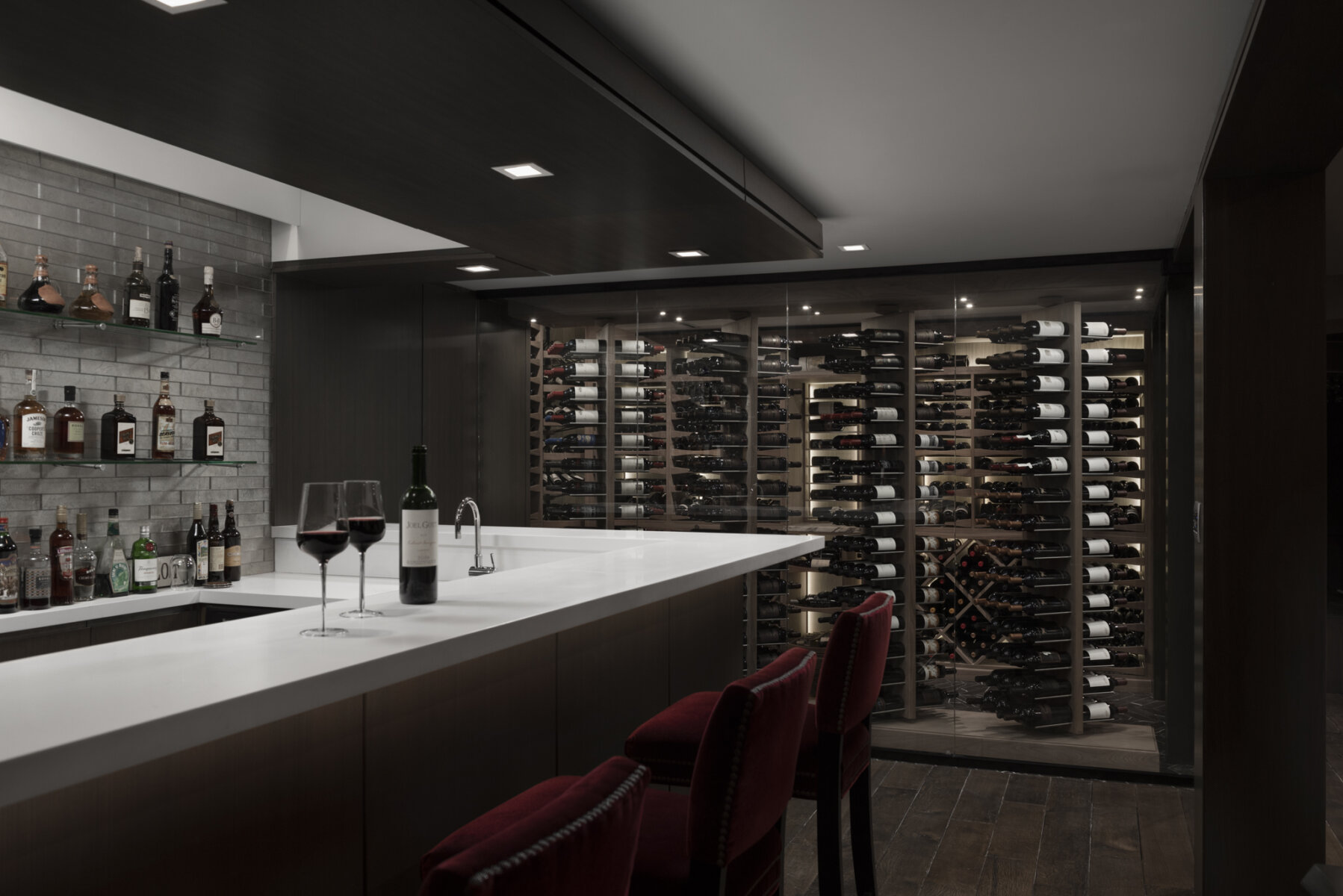
- Ducted Systems: The “gold standard” for luxury projects. These systems are hidden entirely, with only small, discreet supply and return grilles visible in the cellar. This is essential for the “minimalist glass box” aesthetic.
3. Solving the “Lost Bottle” Problem with Label-Forward Design
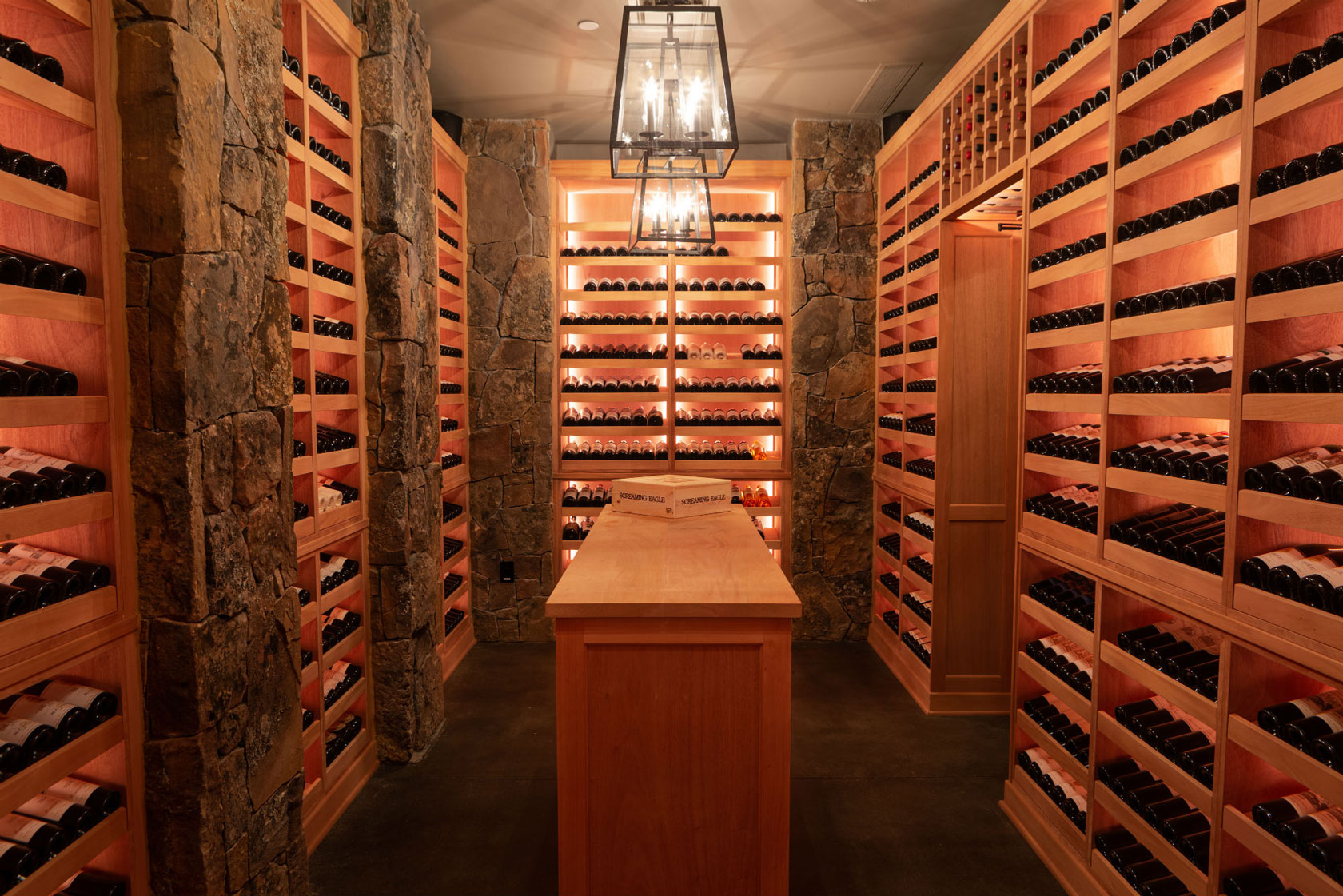
Traditional “neck-out” racking creates a significant UX issue for the homeowner: you cannot see what you are drinking without pulling every bottle. In a large collection, this leads to forgotten vintages and “lost” inventory.
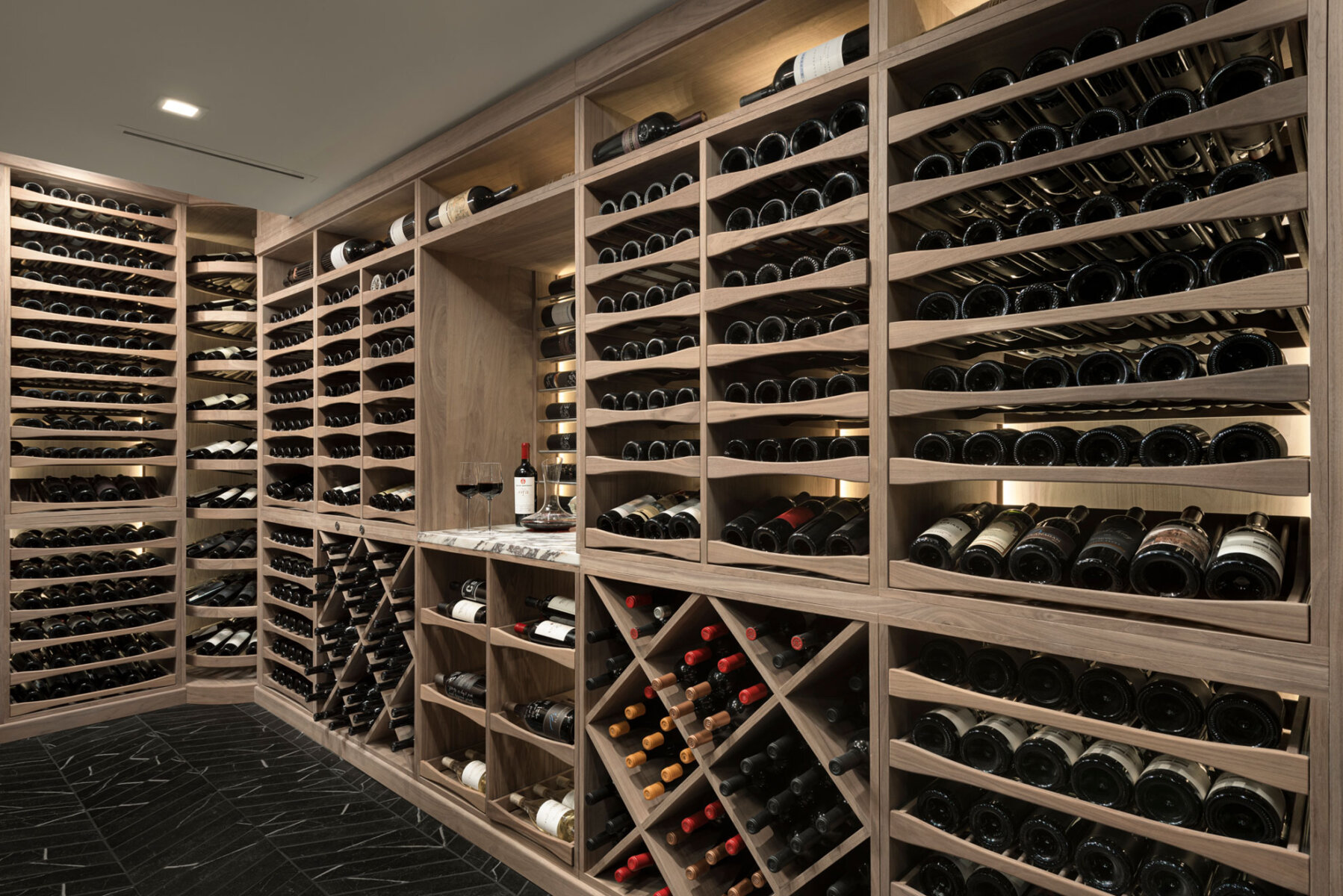
When specifying cabinetry, look for sliding, label-forward systems. Revel’s patented cabinetry systems allow collectors to view the entire label of every bottle at a glance. This high-density approach isn’t just a luxury; it’s a functional requirement for serious collectors who want to actually interact with their wine rather than just store it.
4. Lighting and UV Protection
Light is the enemy of wine. UV rays cause “light-strike,” which degrades the organic compounds in the bottle.
- LED Only: Use low-heat, UV-free LED lighting. Avoid recessed “can” lights, which can create hot spots near the top racks.
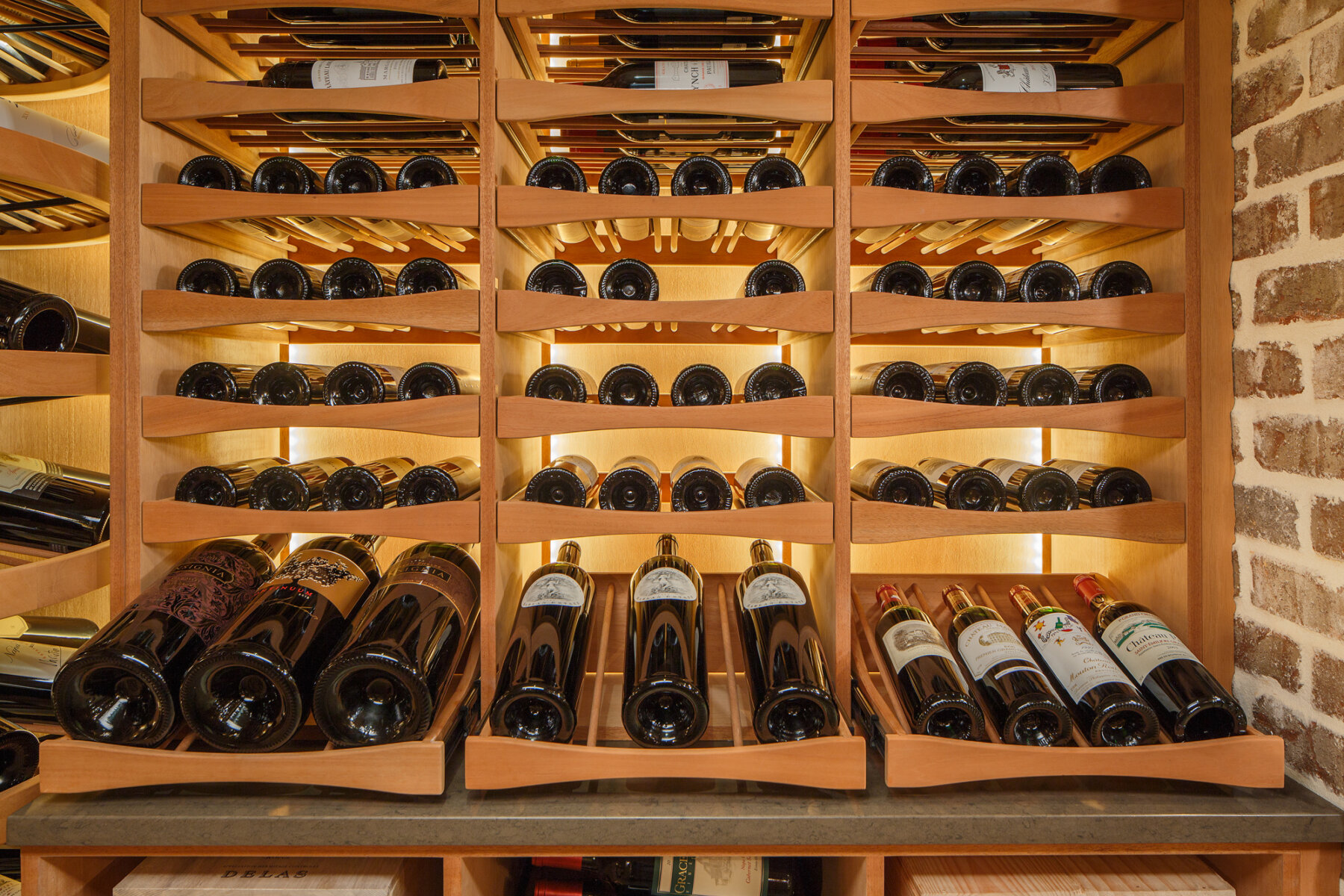
- Layered Lighting: Use integrated vertical light strips within the cabinetry. This illuminates the labels (not the glass) and adds a museum-quality glow to the space.
- Glass Specifications: If the design includes a glass wall, it must be thermally insulated, dual-pane, and UV-coated.
5. Materiality and Off-Gassing
Architects must be cautious with finishes inside a sealed, humid environment. Standard paints and stains can off-gas VOCs (Volatile Organic Compounds), which may eventually penetrate corks and taint the wine.
- Wood Selection: Specify hardwoods like Mahogany, Walnut, or White Oak. These woods are naturally resistant to the 60% humidity levels required for wine aging and do not require chemical sealants.
- Zero-VOC Finishes: Ensure all stains and lacquers used are water-based and certified for wine environments. At Revel, we typically build from raw, unfinished hardwoods to ensure the purest possible atmosphere for the collection.
The Designer’s Checklist for Site Prep
| Feature | Requirement |
|---|---|
| Flooring | Non-porous (Stone, Tile, or Sealed Concrete). No carpet. |
| Power | Dedicated 15-20 amp circuit for the cooling unit. |
| Drainage | A dedicated condensate drain line for the cooling system. |
| Automation | Integration with Savant, Crestron, or Control4 for remote monitoring. |
Collaborate with the Experts Planning a high-performance wine cellar is a specialized discipline. At Revel, we work directly with architects and interior designers to provide 2D elevations and technical specs that integrate seamlessly into your master plans.
Would you like to schedule a consultation? Click here to contact us.