Modern Glass Wine Walls: A Design & Integration Guide
The wine cellar has officially left the basement. In modern luxury homes, the glass-enclosed "Wine Wall" is the new architectural center of gravity. But taking your collection out of the shadows and into the great room brings a specific set of engineering hurdles. From managing thermal integrity to maximizing bottle density in shallow spaces, here is how to design a wine wall that looks like a gallery and performs like a professional cellar.
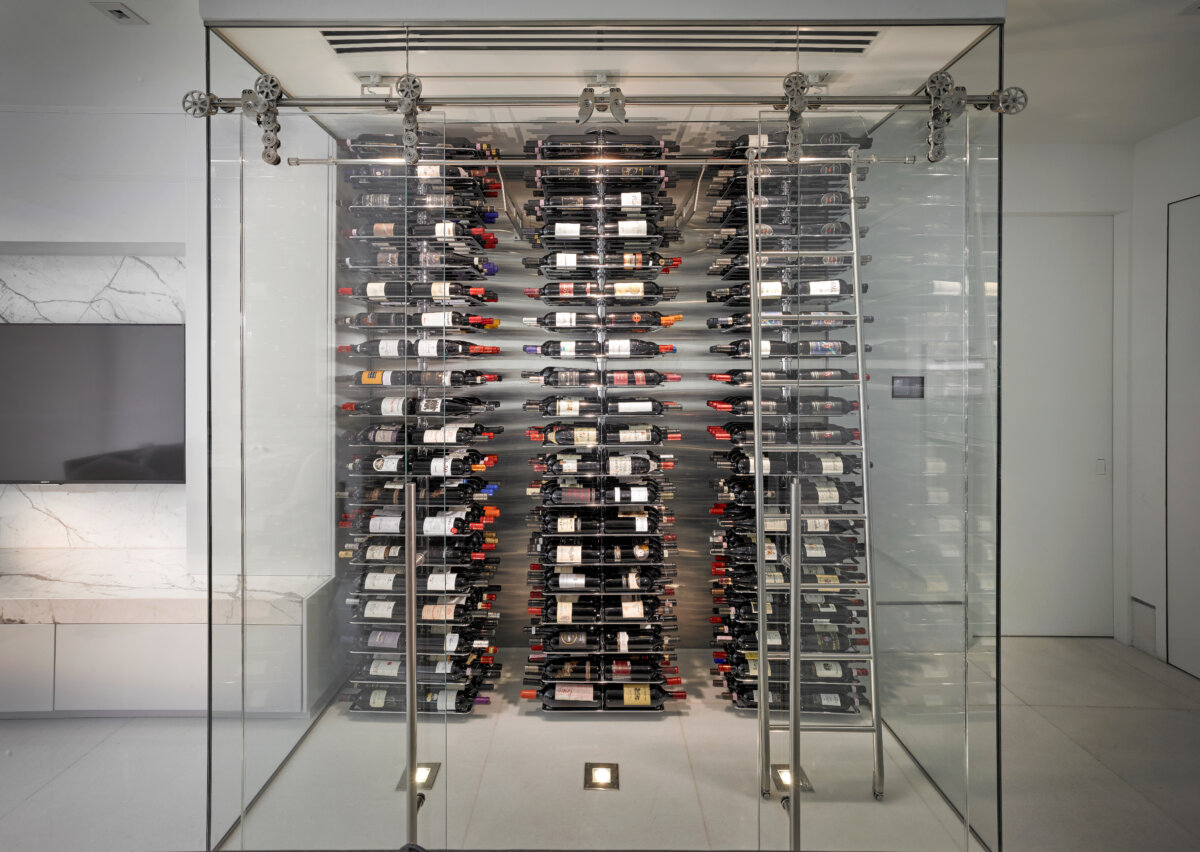
For years, the wine cellar was a “basement-only” luxury—a dark, tucked-away bunker where bottles were stored but rarely seen. That has changed.
In 2026, the Glass-Enclosed Wine Wall has emerged as the ultimate architectural anchor for modern homes. By bringing the collection into the kitchen, dining room, or great room, wine storage is no longer just a utility; it is a high-end design statement.
However, moving wine storage into the main living area presents unique engineering challenges. If you are planning a glass-enclosed display, here is how to balance stunning aesthetics with the rigorous science of wine preservation.
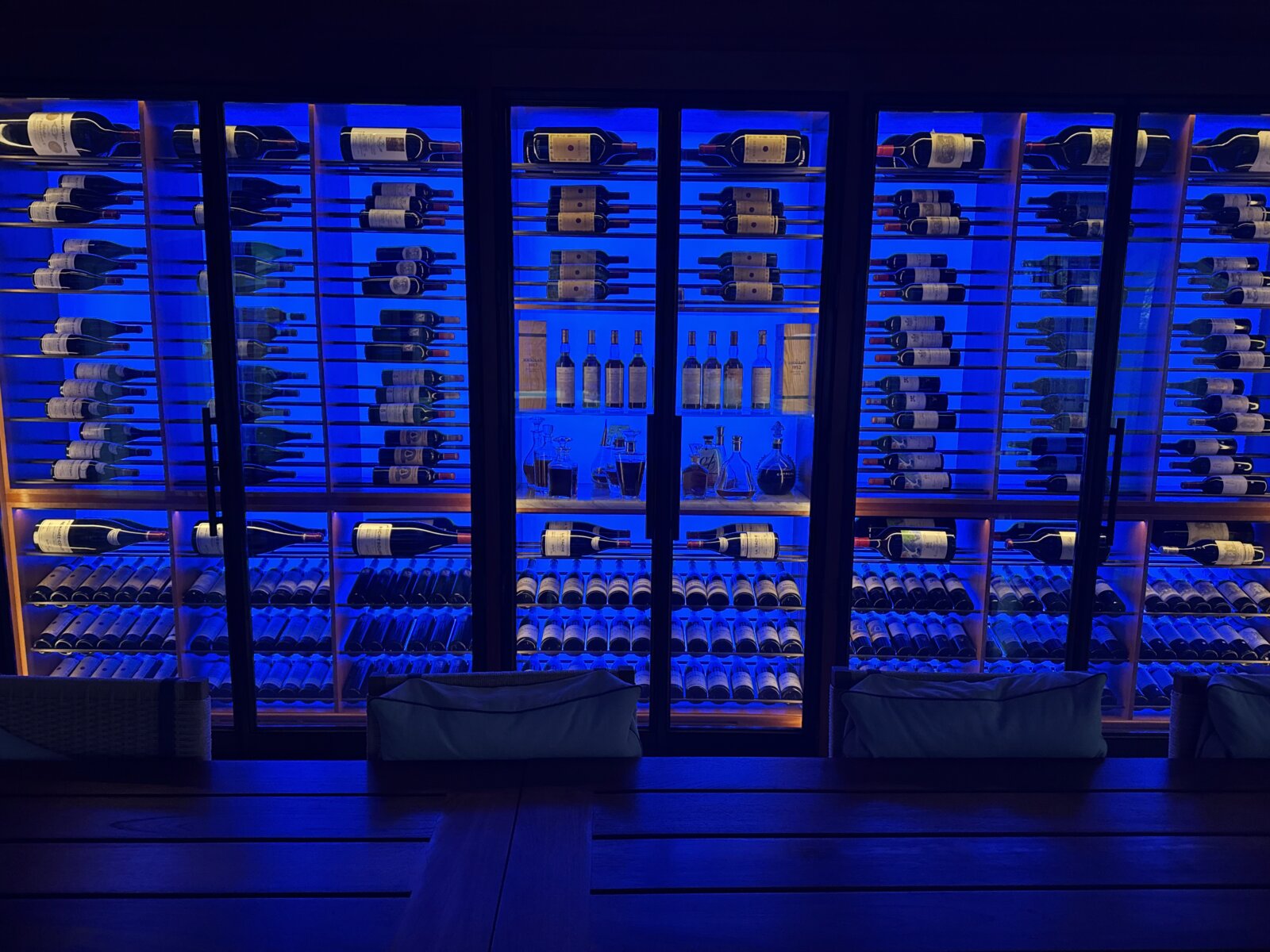
1. The Shift from Storage to Showcase
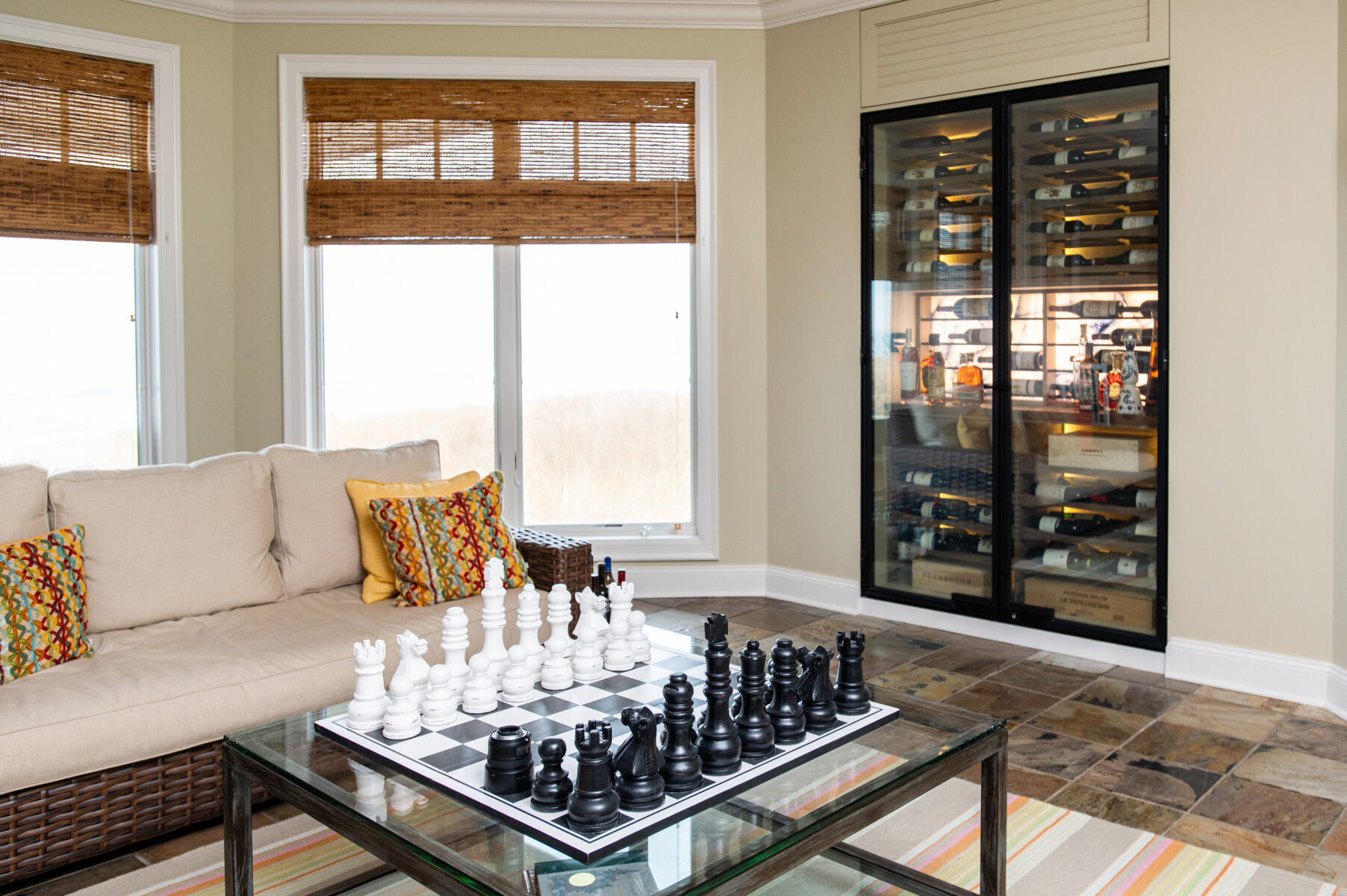
The modern homeowner treats their wine collection as curated art. A glass wine wall acts as a transparent partition that adds depth to a room without closing it off. Unlike traditional cellars, these “jewel boxes” are designed for visibility.
When integrating a wine wall, consider its role in the flow of the home. Is it a backdrop for the dining table? Or a room-divider between the kitchen and the lounge? Placement is the first step in the design process.
2. The Thermal Challenge: Beyond the Glass
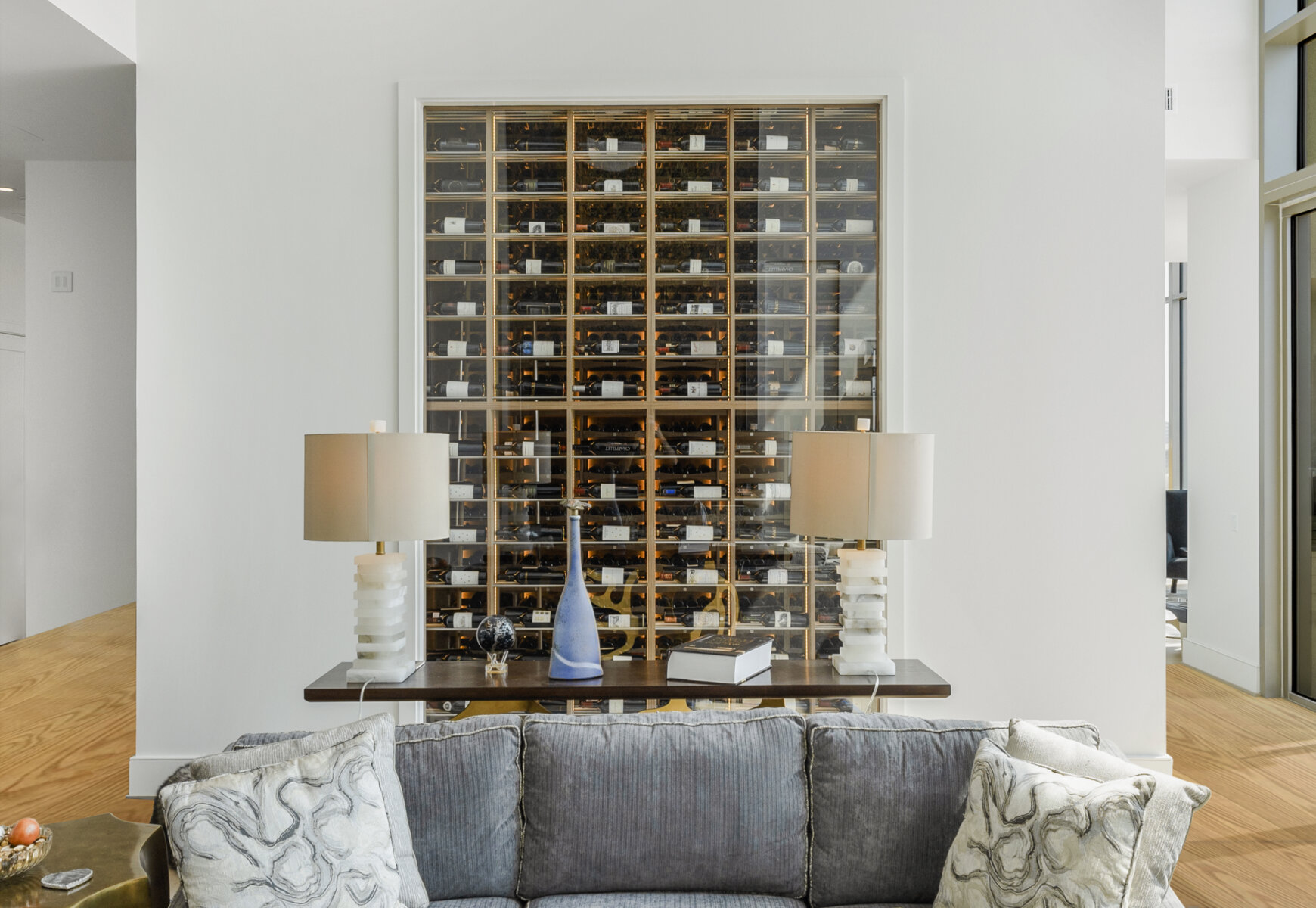
A common mistake in wine wall design is prioritizing the “look” over the climate. Because glass is a poor insulator compared to a traditional wall, you must spec the right materials:
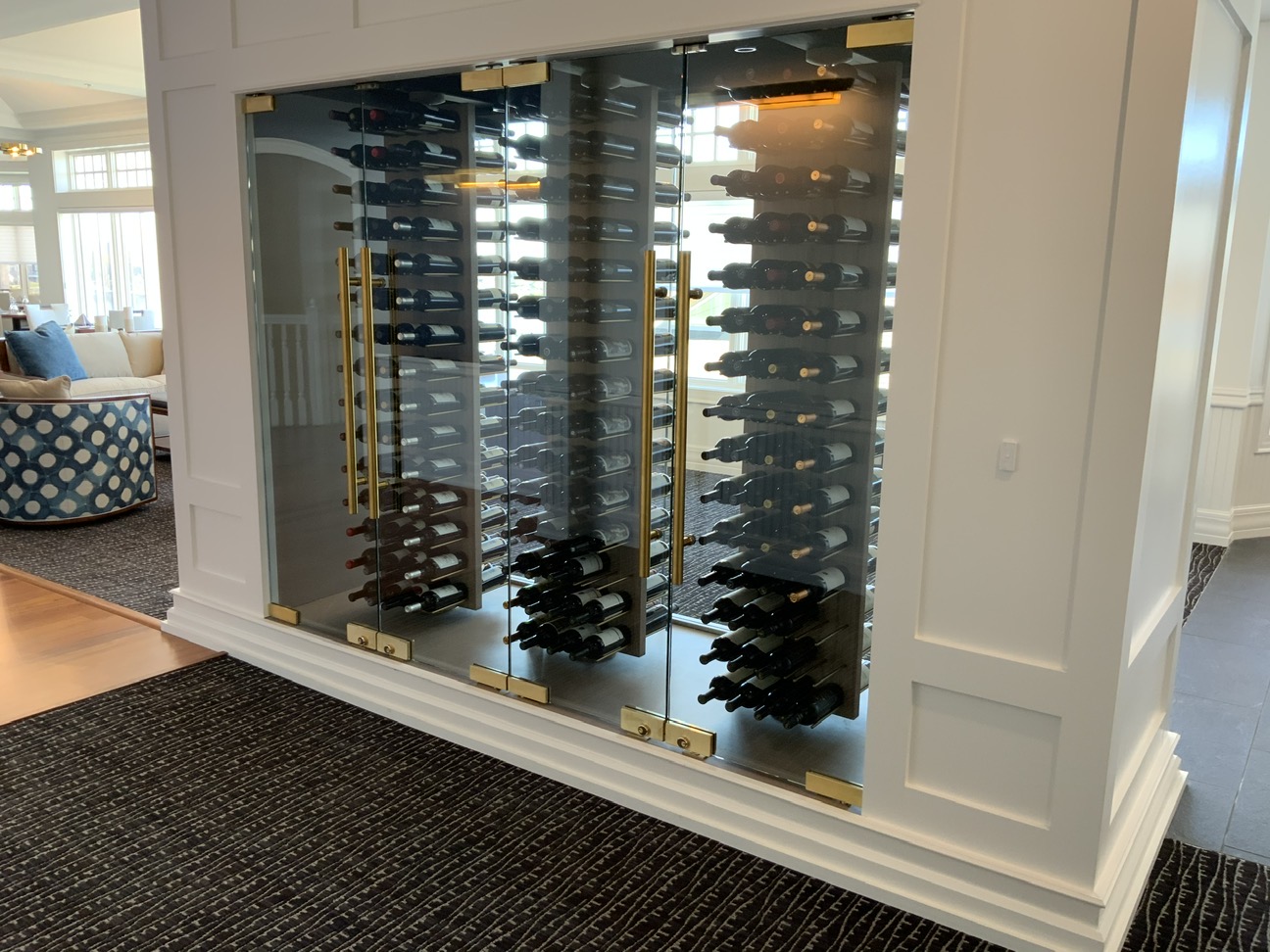
- Thermally Insulated Glass: Use dual-pane, argon-filled glass units with UV coatings. This prevents condensation from forming on the outside and protects your wine from “light-strike” degradation.
- Airtight Seals: Standard interior doors won’t work. You need architectural-grade seals and “drop-down” thresholds to maintain a constant 55°F–58°F and prevent the cooling system from overworking.
- The Vapor Barrier: Even with a glass front, the surrounding walls and ceiling must be perfectly insulated with a proper vapor barrier to prevent moisture from seeping into the home’s structure.
3. Maximizing Density in a Slim Profile
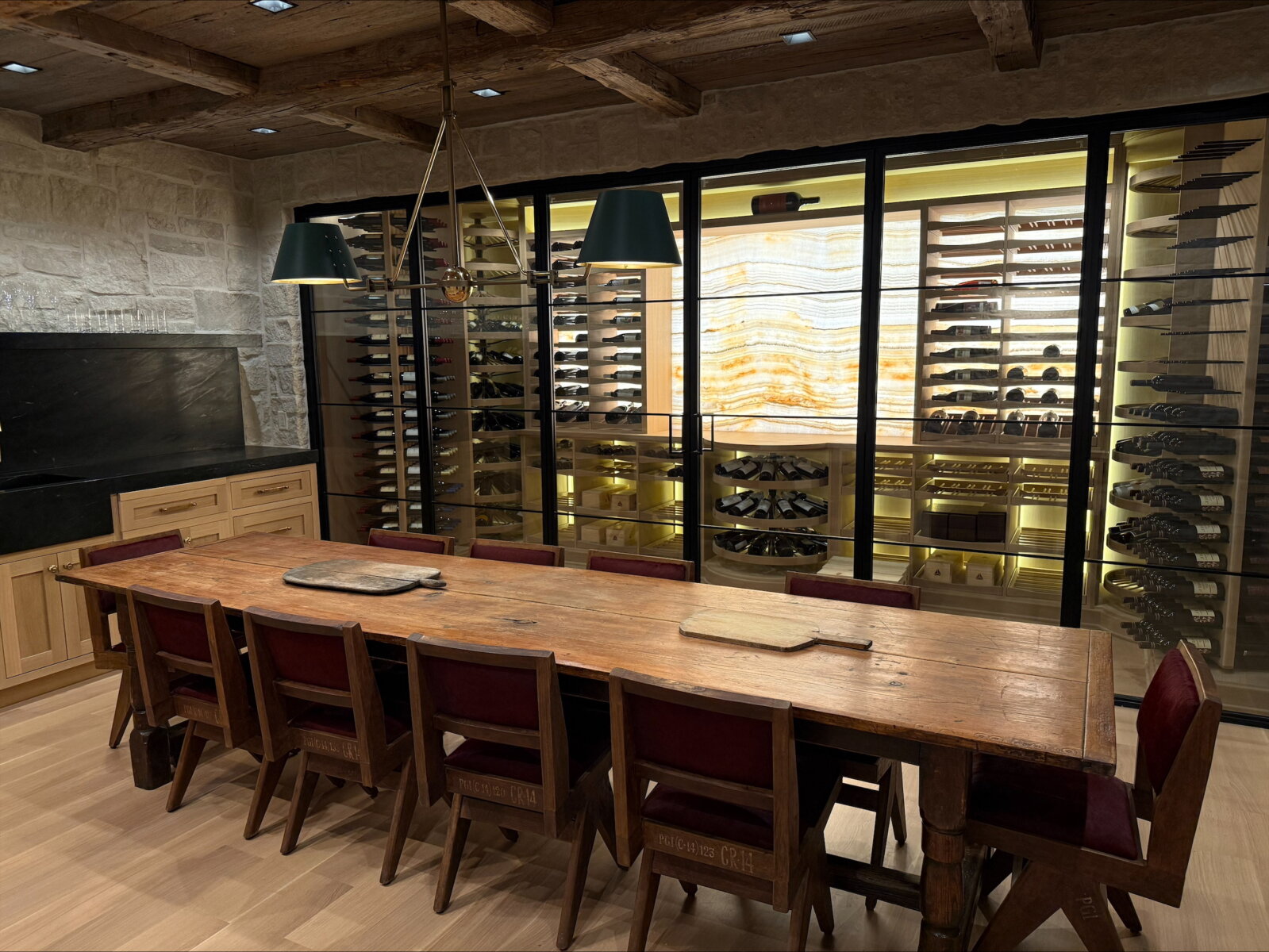
Most wine walls are relatively shallow (often 24 to 30 inches deep). In a traditional “neck-out” rack, this limited depth means you can’t store a significant collection.
This is where Label-Forward Sliding Drawers become a necessity.
By using Revel’s patented sliding system, you can store bottles multiple layers deep. Because the drawers slide out, you maintain 100% visibility of the labels even in a compact, glass-enclosed space. You get the “art gallery” look without sacrificing the bottle count.
4. Lighting: Setting the Mood Without the Heat
Lighting is what brings a wine wall to life, but it can also be a silent killer for your collection.
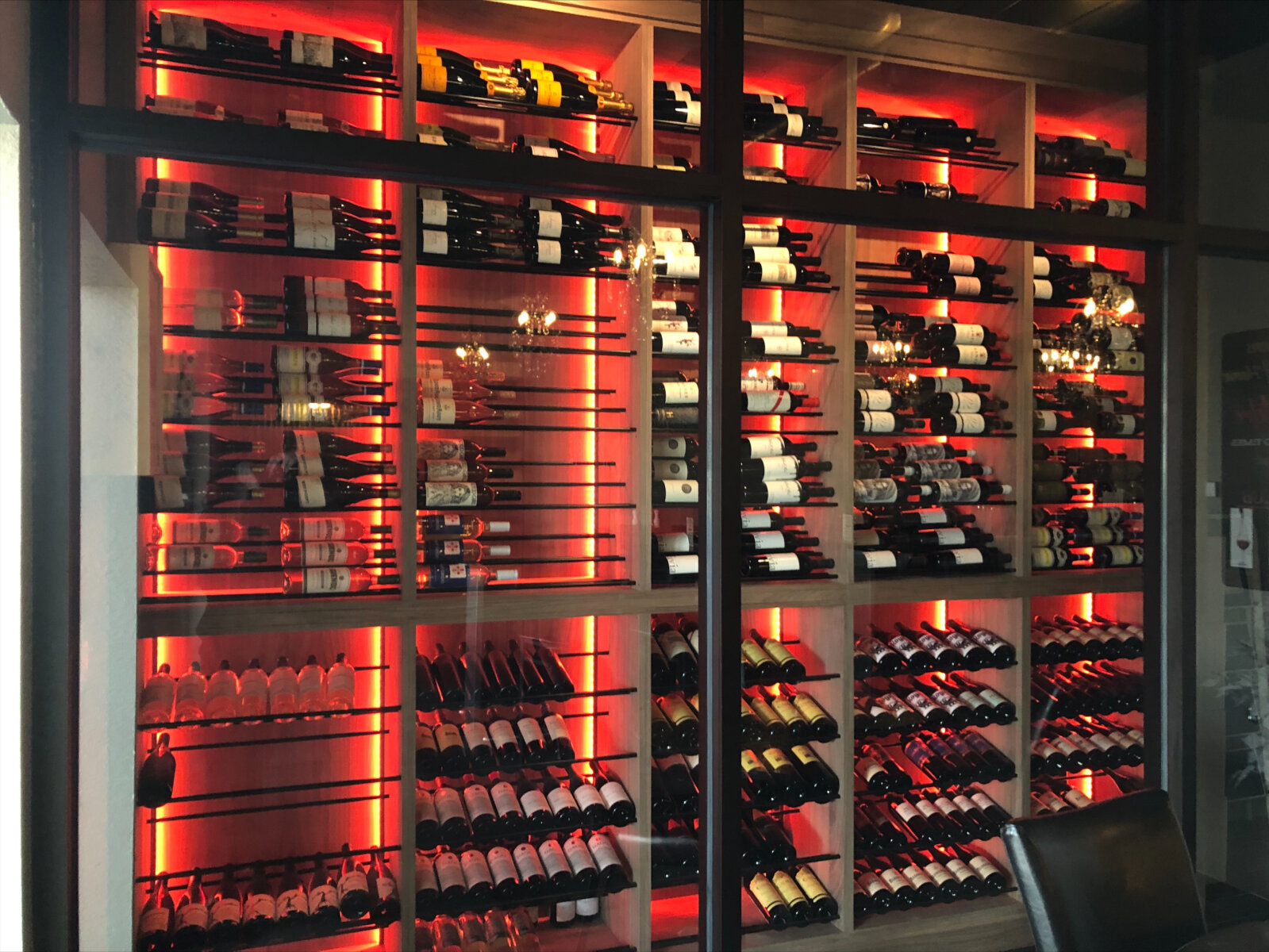
- Cool-Touch LEDs: Avoid halogen or incandescent bulbs that emit heat.
- Integrated Strips: We recommend vertical LED strips recessed into the cabinetry. This creates a museum-quality glow that highlights the labels and the glass without creating “hot spots” that could fluctuate the temperature of individual bottles.
5. Mechanical Stealth
In a high-visibility living area, you don’t want to hear a loud compressor kicking on while you’re hosting a dinner party.
For wine walls, Ducted Split Systems are the gold standard. The noisy condenser is located outside or in a mechanical room, while the cool air is quietly delivered through discreet vents in the ceiling or floor of the display.
| Feature | Professional Recommendation |
|---|---|
| Glass Type | Dual-pane, UV-protected, tempered glass. |
| Racking Style | Label-forward sliding drawers for depth/visibility. |
| Cooling | Remote ducted split system for silence. |
| Placement | Away from direct sunlight and vibrating appliances. |
| Lighting | 2700K–3000K UV-free LED strips. |
The New Standard of Luxury
A glass wine wall is a testament to the collector’s lifestyle. It says that wine isn’t just something you drink—it’s something you live with. By combining architectural glass with Revel’s precision cabinetry, you create a space that is as technically sound as it is visually breathtaking.
Ready to start planning for your upcoming wine wall project? Contact the Revel team today for a consultation.