Wood Selection for Wine Cellars: Why Unfinished Hardwoods Matter
Your wine collection is constantly breathing the air around it. Choosing the wrong wood species or using heavy chemical lacquers inside a climate-controlled cellar can trigger airborne off-gassing, quietly ruining your finest vintages over time. From Fijian Mahogany to Hard Maple and Hickory, discover why furniture-grade, unfinished hardwoods are the ultimate gold standard for luxury wine preservation.
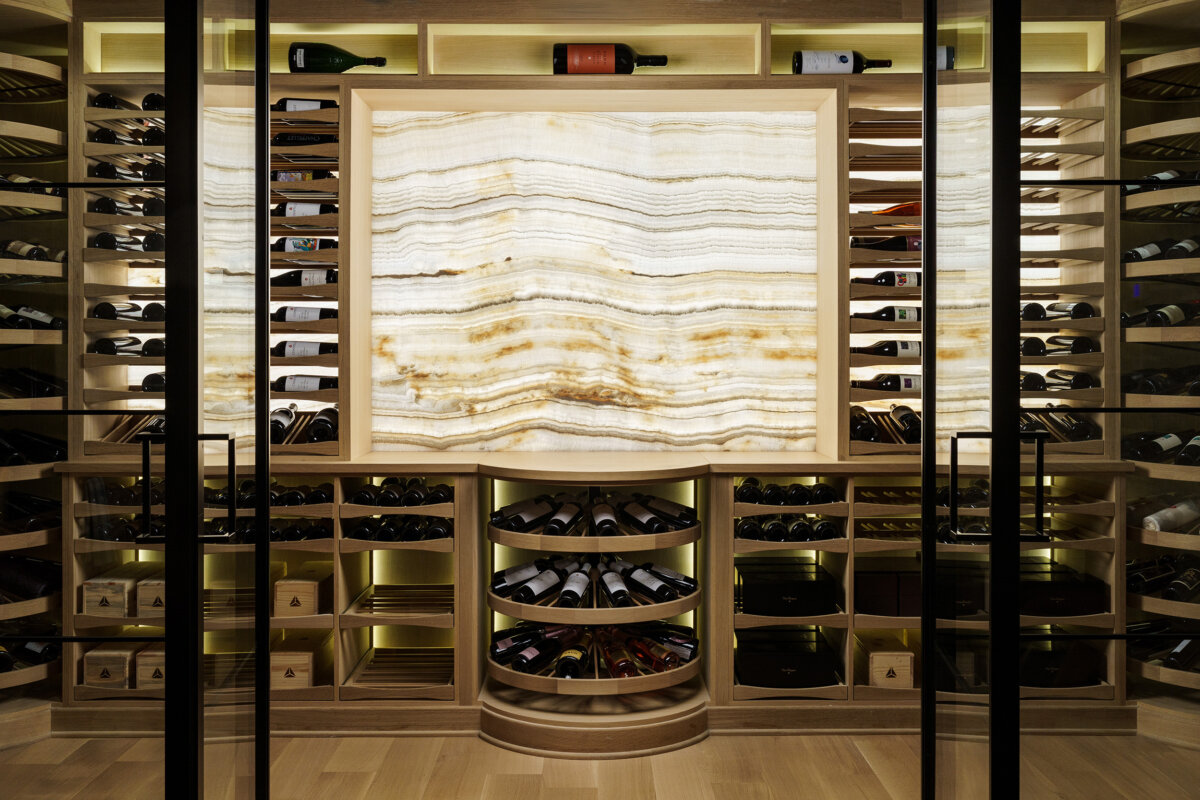
When building a luxury wine cellar, most of the focus naturally goes toward the cooling systems, the architectural lighting, and the glass framing. But there is a silent, often overlooked variable that can quietly ruin a million-dollar collection before a single cork is pulled: the wood itself.
In a high-end wine cellar, wood isn’t just structural cabinetry—it is an environmental factor. Choosing the wrong wood species or applying the wrong chemical sealants can contaminate your collection through a process known as airborne off-gassing.
To preserve the integrity of your wine, furniture-grade, unfinished hardwoods are the gold standard. Here is the science behind why raw wood matters and how to select the right materials for a high-performing wine room.
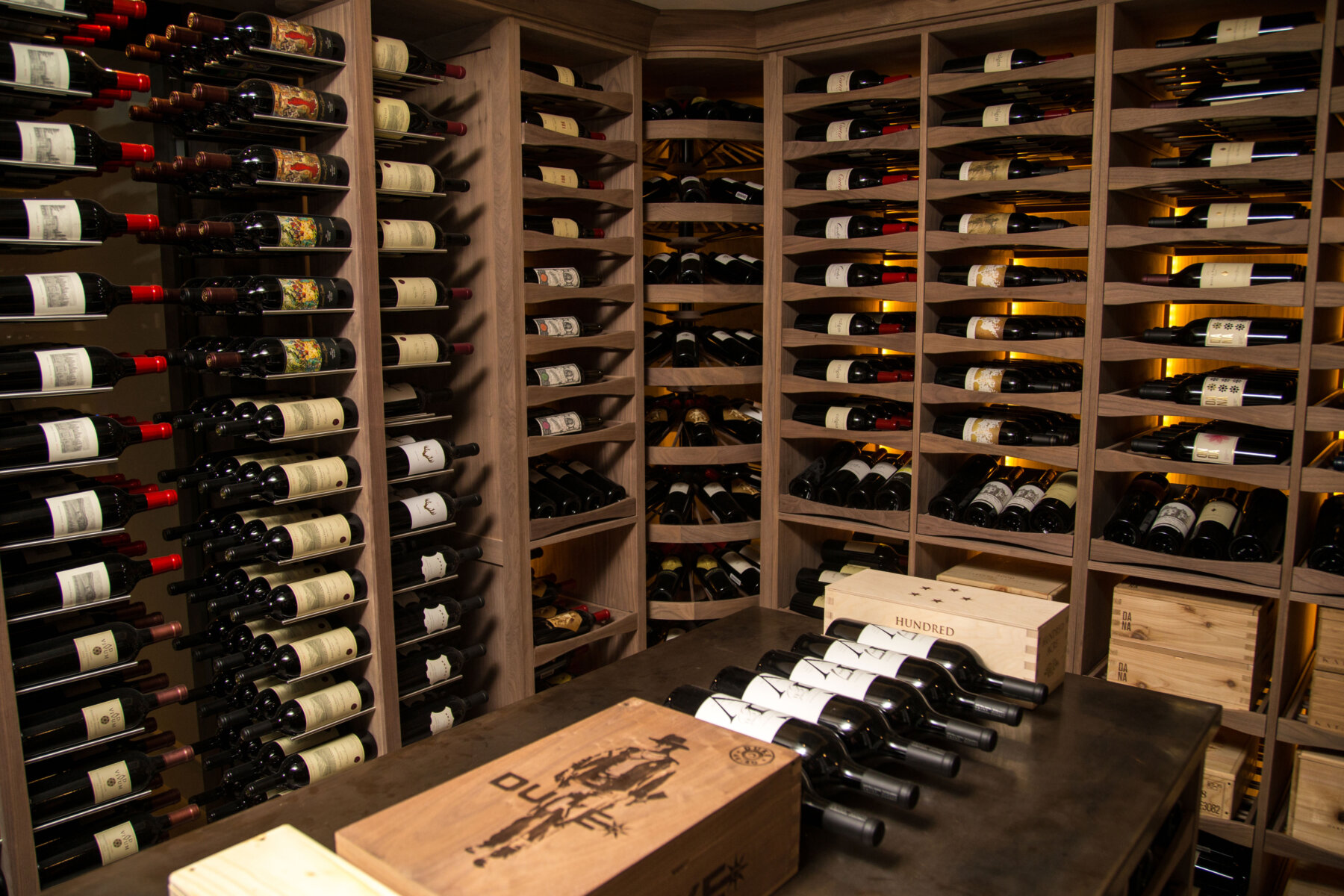
1. The Science of the Cork: Why Wine “Breathes” Its Environment
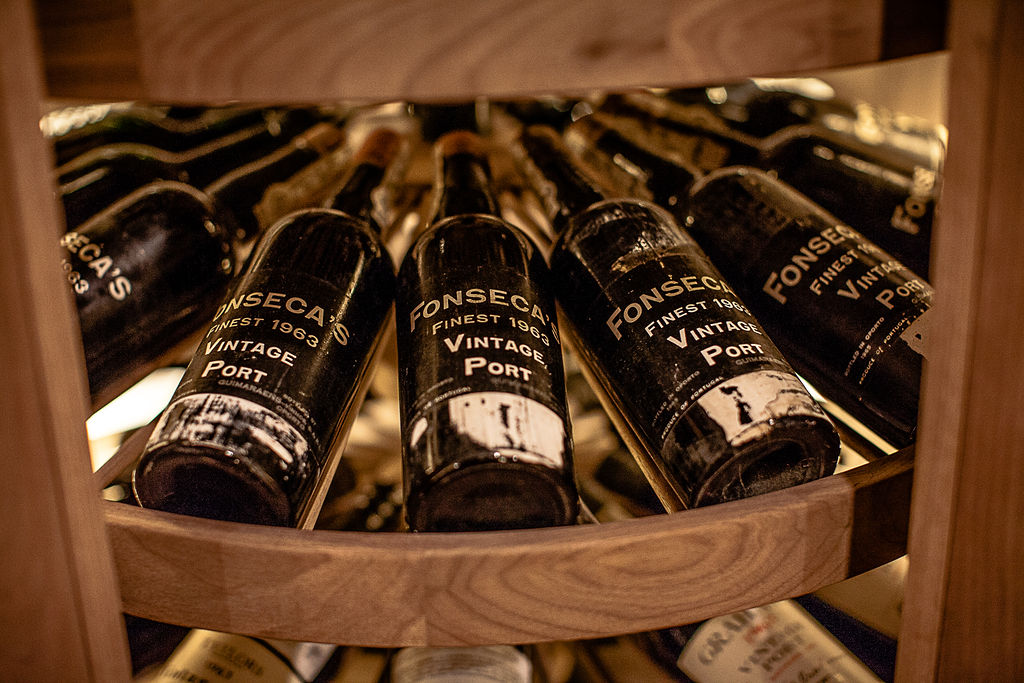
A common misconception is that a wine bottle is a perfectly sealed, isolated capsule. In reality, natural cork is a porous, elastic material. While it keeps the liquid inside the bottle, it allows micro-amounts of oxygen exchange over time. This slow “breathing” is exactly how a fine vintage matures and develops complexity.
However, if the air inside your cellar is filled with chemical vapors or volatile organic compounds (VOCs), those offending odors can seep through the porous cork. Over months and years, this chemical exposure can alter the taste profiles of your wines, leading to off-flavors or premature spoilage.
2. The Cellar Environment: 55°F and 70% Humidity vs. Cheap Lumber
A proper wine room operates at a continuous 55°F to 58°F with relative humidity hovering around 60% to 70%. This damp, cool climate is ideal for wine, but it is brutal on standard lumber.
- Softwoods (Pine, Fir, Cedar): Cheap softwoods absorb moisture quickly, leading to warping, bowing, and structural sagging under the immense weight of a bottle collection. Additionally, highly aromatic softwoods (like standard cedar) emit natural oils that can easily overpower the delicate aromatics of an aging wine.
- Premium Hardwoods: Woods like Mahogany, Walnut, and White Oak are incredibly dense and stable. They naturally resist moisture absorption, meaning they won’t warp or degrade in a high-humidity environment, even when left completely unfinished.
3. The Unfinished Rule: Why Revel Eliminates Lacquers
The primary source of dangerous off-gassing in a wine cellar doesn’t actually come from the wood itself—it comes from the stains, oils, and lacquers used to finish it. Traditional oil-based polyurethane finishes can continue to off-gas harmful chemical fumes for months, or even years, after installation. In a tightly sealed, climate-controlled space, these fumes become highly concentrated.
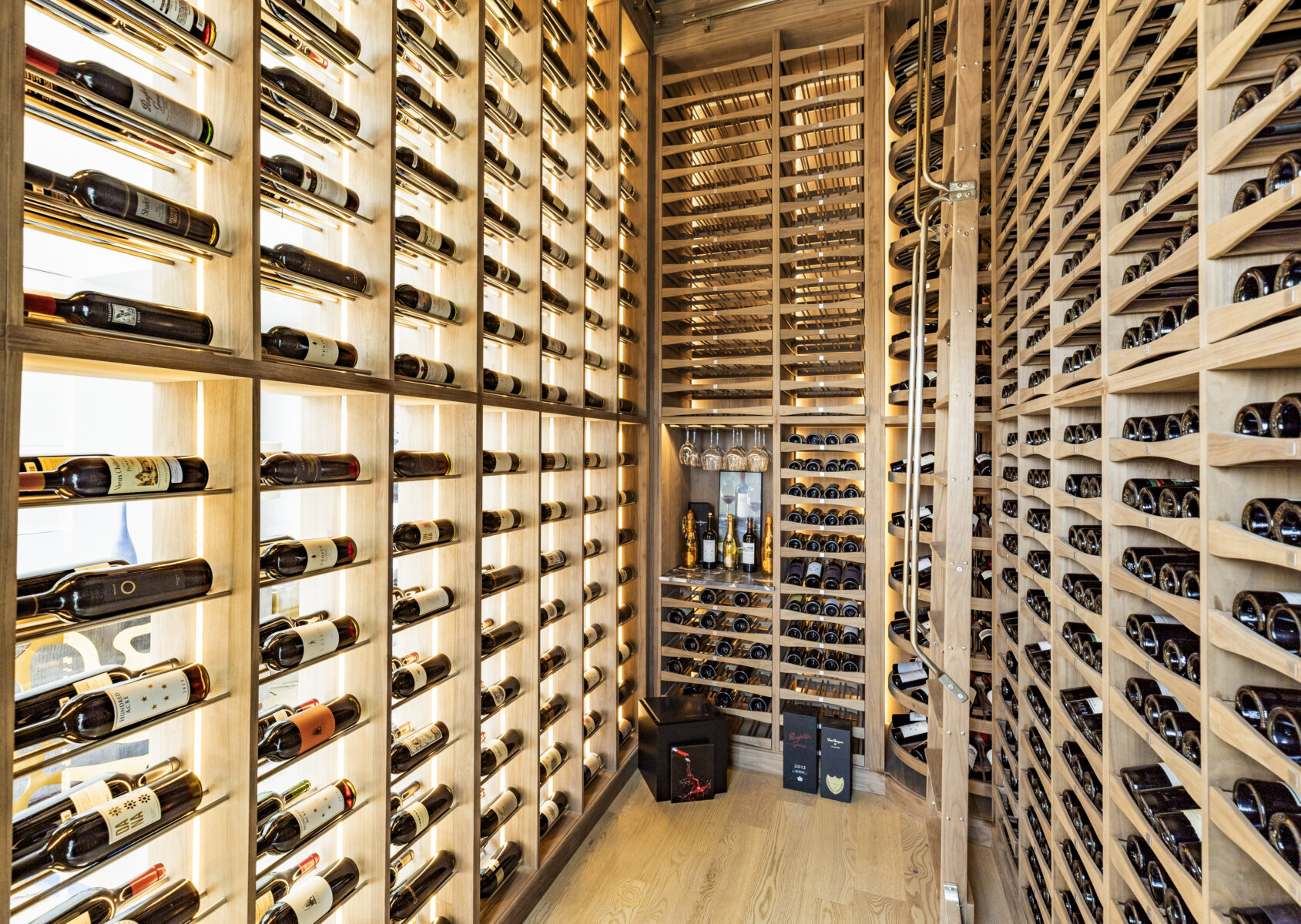
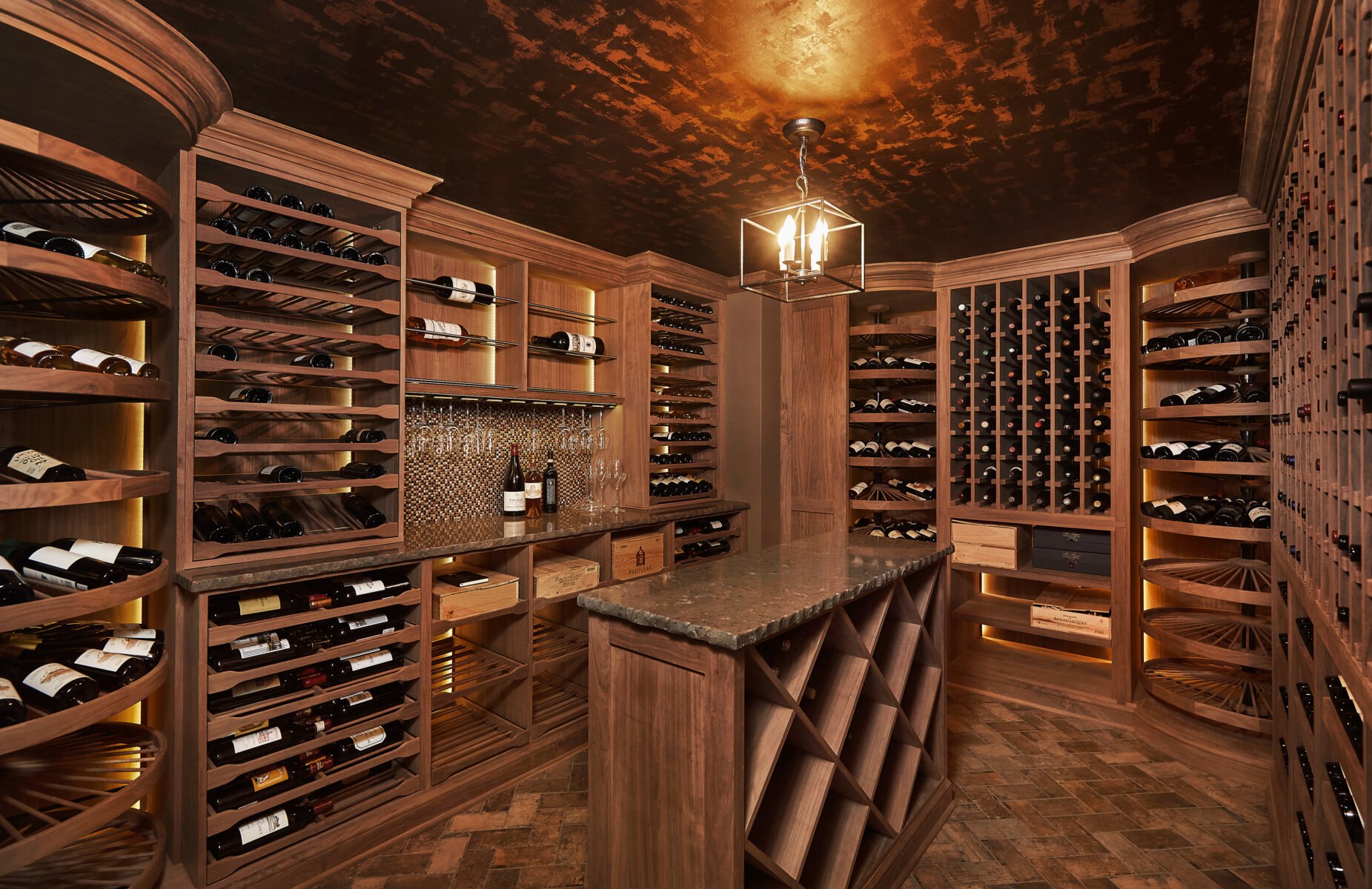
The Revel Standard: To eliminate the threat of chemical contamination, nearly all Revel custom cellars are built using raw, unfinished hardwoods. Our precision craftsmanship ensures that the wood is sanded to a furniture-grade smoothness that looks spectacular on its own, relying on the natural beauty and grain of the timber rather than synthetic topcoats.
| Wood Species | Structural Benefits | Visual Aesthetic |
|---|---|---|
| Fijian Mahogany | Exceptionally dense; highly stable in damp conditions; natural rot resistance. | Rich, reddish-brown tones with a sophisticated, interlocking grain. |
| Walnut | Highly durable; excellent impact resistance; holds structural integrity perfectly. | Deep, dark charcoal and chocolate hues; ideal for modern and transitional cellars. |
| Rift-Cut White Oak | Exceptional moisture resistance; tight, straight linear grain patterns. | Light to medium brown with sophisticated gray undertones; a modern design favorite. |
| Hard Maple | Highly dense and heavy; excellent resistance to warping, abrasions, and humidity shifts. | Light, creamy white to subtle golden hues with a remarkably smooth, uniform, and fine grain. Perfect for bright, minimalist cellars. |
| Hickory | One of the hardest, strongest North American woods; supreme impact resistance and lifetime durability. | Dramatic, high-contrast grain patterns with striking color variations from pale cream to deep, warm brown. Ideal for bold, high-character designs. |
| Cherry | Smooth texture; stable structure that improves and deepens with age. | Warm, amber-red tones that develop a rich, lustrous patina over time. |
4. What If a Project Requires a Custom Finish?
There are times when an interior designer or architect needs to match the cellar cabinetry to existing woodwork in a home. If a raw wood aesthetic doesn’t align with the design vision, you must adhere to strict safety guardrails:
- Water-Based Only: Never allow oil-based stains or varnishes inside a wine space. Only specify high-quality, water-based finishes.
- 100% VOC-Free: Ensure the products used are certified VOC-free. This guarantees that once the finish dries, it will not release harmful airborne chemicals into the sealed environment.
- Extended Off-Site Curing: Any finished cabinetry should be allowed to fully cure in a well-ventilated warehouse for several weeks before being transported and installed in the enclosed cellar space.
Preservation is the Highest Form of Luxury
A custom wine cellar should be as technically sound as it is visually breathtaking. Sourcing premium, sustainably managed hardwoods and leaving them unfinished protects your investment from the silent threat of off-gassing. When your racking system is crafted from the right materials, you can rest assured that the only thing aging inside your bottles is the wine itself.
Ready to select the perfect materials for your custom wine space? Contact the Revel team today to explore our hardwood options and request a design consultation.