Where Is the Best Place in a Home for a Wine Cellar? (Room-by-Room Guide)

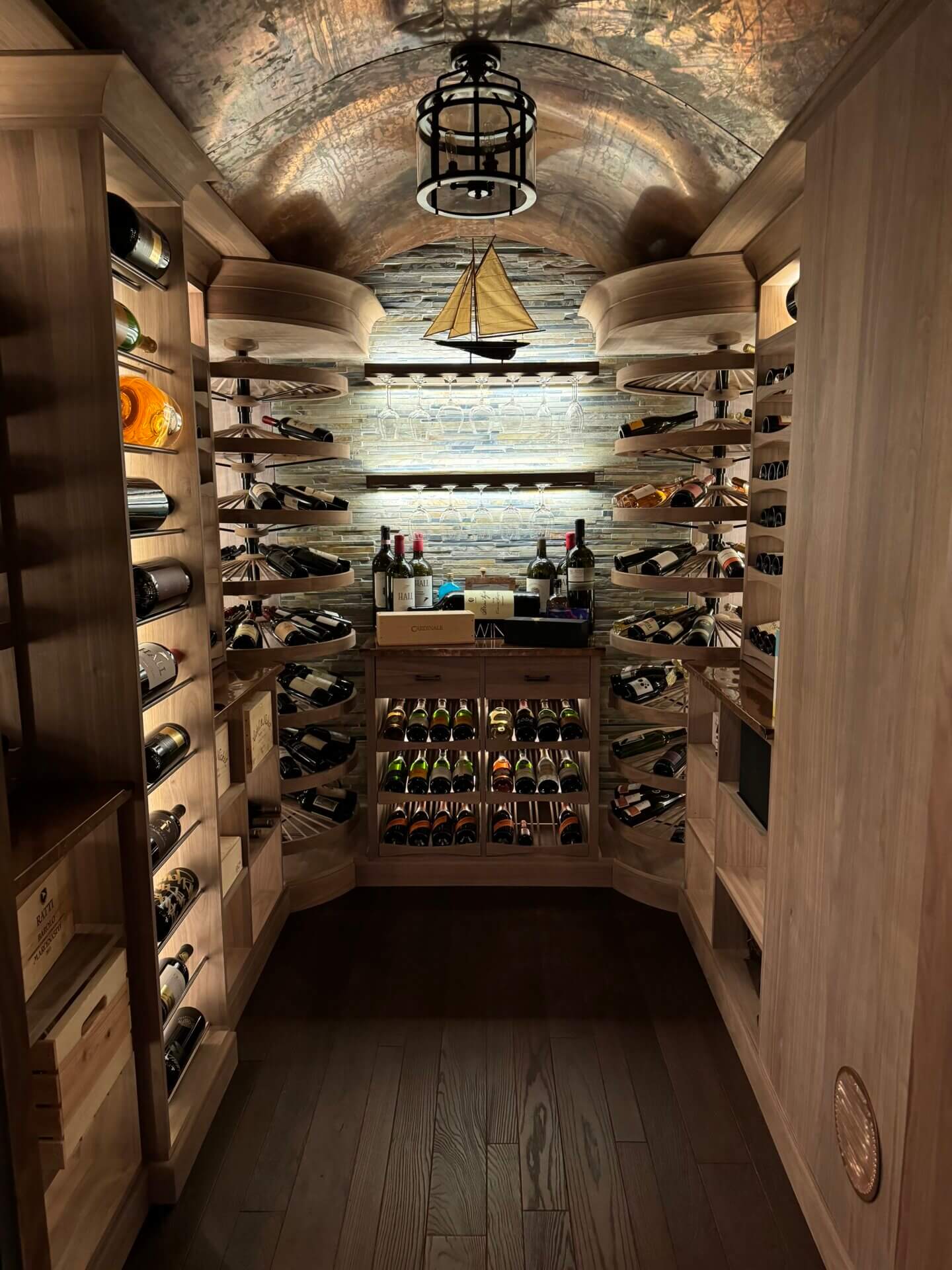
The best place for a wine cellar is a space you can keep cool, dark, still, and properly ventilated—often a basement, but also kitchens, dining rooms, stairwells, or a glass-enclosed room designed for the collection. Location shapes cooling, insulation, and how you live with the wine; Revel has built cellars in all of these settings when conditions are right.
What makes a location “best” for wine
Wine ages best when left undisturbed. Across Revel projects, three conditions matter more than any single room label:
- Adequate ventilation for the cooling system’s exhaust side (improper exhaust-room ventilation is one of the most common construction mistakes)
- No direct exposure to sunlight or heat
- Limited vibration
Target storage conditions are on the order of a constant 55°F and about 70% humidity, away from light, heat, vibration, and temperature swings. A below-grade space can borrow some of the calm of a traditional passive cellar, but most homes still need a properly built, mechanically cooled enclosure—planned the way a refrigerator is planned: efficient walls, vapor control, and cooling sized to the room.
For the enclosure itself—framing, vapor barrier, insulation, doors, and cooling types—see Revel’s wine cellar construction guide. For inspiration across styles and room types, browse Our Work.
A well-chosen location also respects how you use the home. A cellar no longer needs to sit in the back corner of a basement. Collectors share wine with friends and colleagues, so traffic patterns, adjacencies, and social spaces belong in the location decision—alongside thermal performance.
Room-by-room: where wine cellars work in the home
Is a basement the best place for a wine cellar?
Often, yes—for environment. Locating the cellar below grade and insulating it properly is one of the easiest ways to gain some of the benefits of a passive cellar: cooler ambient temperatures and a more stable starting point for mechanical cooling. Basements also tend to offer more continuous wall area for cabinetry and racking.
Basements are not automatic wins. Watch for:
- Exhaust-room ventilation for the cooling unit
- Vibration from mechanical rooms, laundry, or nearby stairs
- Moisture and vapor control (critical in both humid and dry climates)
- Daylight if the basement has walk-outs or large windows
If you want tasting or entertaining nearby, place that comfort zone adjacent to the cellar—not inside it. Cold, damp air is ideal for wine and uncomfortable for guests; glass walls and an integrated door can keep the collection in view while you enjoy the wine in a warmer adjoining space.
Can you put a wine cellar in a kitchen?
Yes. Revel has designed and installed kitchen-adjacent and kitchen-integrated cellars when the enclosure, cooling, and lighting are planned correctly. A kitchen cellar puts the collection into daily life and can make selecting a bottle part of cooking and hosting.
Plan carefully around:
- Heat sources (ranges, ovens, dishwashers) and direct sun from windows or skylights
- Vibration from appliances
- Cooling exhaust into a properly ventilated space—not a closed cabinet chase that traps heat
- Lighting that shows labels without baking the wine (low-voltage / LED, dimmable, minimal UV and heat)
Keep refrigerators and secondary coolers out of the conditioned cellar volume. Appliance heat works against the cellar cooling system and steals space better used for wine. An undercounter wine fridge can still make sense for everyday service bottles near the kitchen—but that is a different job from a custom climate cellar. For how those options compare on climate, capacity, and label-forward access, see custom wine cellar vs. wine fridge.
Is a dining room a good location for a wine cellar?
Dining rooms and rooms that open to dining or bar areas are strong candidates when you want the collection as a focal point. Glass fronts and glass-enclosed cellars let guests see the wine while you keep temperature and humidity under control behind a sealed enclosure.
Design notes:
- Treat the view into the cellar as a focal point—the wall your eye meets first sets the impression
- Factor glass into heat-loss and UV planning (tempered, insulated Low-E glazing and framing systems need professional design)
- Provide a small counter or service surface for opening a bottle, even if a bar sits just outside
What about stairwells and underused pockets of the home?
Stairwells, landings, and narrow residual spaces can become striking, efficient cellars when dimensions are precise and cooling is sized correctly. These locations often sit near main circulation—useful if you want the wine visible as you move through the house.
Watch vibration from foot traffic on stairs, limited depth for cabinetry, and how the door seals the conditioned volume. Custom cabinetry built to finished interior dimensions matters especially in tight footprints.
Can a pool house or outbuilding work?
Revel has installed cellars in re-purposed spaces such as a pool house when the room can be built as a true enclosure: insulation, vapor barrier, exterior-grade sealed door, and cooling with a viable exhaust path. Outbuildings may see wider outdoor temperature swings, so cooling capacity, insulation levels, and ventilation deserve early engineering—not afterthoughts.
Locations to approach carefully
Some rooms can become excellent cellars with the right enclosure and mechanical design. Others ask more of the building science. None of these are automatic disqualifiers—but each deserves an honest, case-by-case look with your designer, builder, and cooling professional before you commit millwork.
Garages
Garages often bring heat, cold, vehicle exhaust, vibration, and wide daily temperature swings. A conditioned cellar volume can still be planned here when the room is fully insulated and sealed as its own enclosure and cooling is sized for the real load—not when bottles simply sit in an unfinished bay. If a garage is in play, treat it as an engineering problem first and a finish problem second.
Exterior walls and sun-exposed rooms
Rooms with long exterior walls, large west- or south-facing glass, or poor shade start with a higher heat load. That does not rule them out; it means insulation, glazing choices, and cooling capacity must match the envelope. Direct sun on bottles or on a glass cellar wall is the risk to design around, not a reason to abandon a beautiful room without review.
Upper floors
Upper-level cellars lose the below-grade thermal buffer basements enjoy. They can still work when the enclosure is tight, cooling is correctly sized, and vibration from living spaces is managed. Expect more coordination with the home’s HVAC and structure than a quiet basement corner usually requires.
Unsealed closets and leftover cavities
A closet is not a wine cellar until it is a sealed, insulated, vapor-controlled room with a proper door and a cooling plan. Unfinished or leaky cavities fight humidity control and overwork equipment. If the footprint is right, convert it into a true enclosure; do not assume “small and dark” is enough.
When a preferred spot is constrained, Revel often helps collectors weigh a full walk-in against a Signature Wine Vault or a phased plan—still without inventing a one-size mechanical recipe in place of a site-specific design.
Glass-enclosed cellars in living areas
Collectors increasingly bring the cellar into the main living sequence with glass walls and glass entry systems. Done well, these rooms showcase label-forward storage and make the collection part of the architecture. Done poorly, glass becomes the weak link for temperature, humidity, and UV.
If glass is central to the vision, involve a qualified glass professional early and size cooling for the real heat load. Pair the glass room with an adjacent tasting or lounge space rather than seating inside the cellar itself. For how modern glass and lighting made these showpiece rooms practical, see Revel’s note on glass and light in wine cellars.
How location connects to construction and design
Location chooses your starting climate; construction locks it in. Walls, ceilings, vapor barriers, mold-resistant surfaces, sealed doors, lighting, and cooling type (self-contained, split, or fully ducted) all follow from where the room sits and what adjoins it. Revel’s process starts with consultation—space, collection, and how you will use the cellar—then design, production, and installation coordinated with your architect, builder, or designer.
Explore completed projects by style on Our Work, and use the construction guide when you or your team are preparing the room.
FAQ
The best place is wherever you can reliably maintain cool, dark, still, ventilated conditions—commonly a basement, but also kitchens, dining rooms, stairwells, glass-enclosed living spaces, or a properly prepared outbuilding. Revel evaluates ventilation, heat and light exposure, vibration, and how you want to live with the collection.
No. Below-grade spaces help thermally, but cellars no longer need to hide in a basement corner. Many collectors prefer locations tied to entertaining and daily use, provided the enclosure and cooling are designed for that room.
Consensus storage conditions are on the order of a constant 55°F and about 70% humidity, with wine kept away from light, heat, vibration, and temperature fluctuation.
Avoid direct sun, heat sources, and vibration. Do not place refrigerators or similar heat-producing appliances inside the cellar. Prefer tasting and seating in an adjacent room, not inside the cold, damp enclosure. Rooms such as garages, sun-baked exterior walls, upper floors, and unsealed closets need careful engineering—not a blanket ban.
Review ventilation for cooling exhaust, insulation and vapor control, door sealing, lighting, and adjacency to heat or vibration. A consultation with Revel—often alongside your architect, builder, or interior designer—confirms whether the space can become a proper cellar and what features it will need.
Ready to choose a location—and a cellar worthy of the collection?
Every home and collection is different. If you are weighing basement versus kitchen, glass enclosure versus closed room, or how a cellar should connect to entertaining, request a consultation. Revel Custom Wine Cellars will help you match location, enclosure, and label-forward cabinetry to the way you collect and share wine.