Revel-ution Rotating Wine Towers: 360° Access for Contemporary and Transitional Cellars
A Revel-ution wine tower is Revel’s rotating wine tower for contemporary and transitional cellars. Here is how rotating wine towers work: each panel can rotate up to 360 degrees and can come 3 or 4 bottles deep, and the system allows easy bottle access from either the front or the rear.
Revel-ution towers are one of the storage systems Revel designs and builds for custom cellars, alongside sliding pullout drawers, the Wine Wheel and wine ladders. This guide explains how the towers work, how rotation, depth and access fit together, which dowels and woods appear in Revel projects, how the towers suit contemporary and glass-walled rooms, and how they compare with drawers, the Wine Wheel and Revel’s Designer Series.
How Rotating Wine Towers Work
The Rotating Revel-ution Towers page sums up the system in one heading: “Rotates 360°, Holds Multiple Bottle Sizes.” Each tower is a column of panels, and the product page explains that “Each panel can rotate up to 360˚ and can come 3 or 4 bottles deep.” The panels are rotated by hand; there is no motor. Because a panel turns, the bottles at the back come around to you, and “This system allows easy bottle access from either the front or the rear.” Tower height is custom to the room; there is no standard or maximum height.
Considering Revel-ution towers for your cellar? Choose Project Inquiry and tell us about your space, including your approximate bottle count and square footage, and we’ll plan the towers in your design.
What Revel-ution Re-Invents Compared With Static Racks
In a static rack, a bottle stays where it was put, and the bottles behind it stay out of reach. Revel’s product page says the features of the Revel-ution system “re-invents wine racking systems of the past.” The Revel-ution is patented. The idea grew out of founder Jim Cash’s own frustration as a collector. In Life After Parker he wrote that with traditional racks he “couldn’t find what I was looking for, couldn’t find my odd sized bottles and damaged the labels hauling bottles in and out of the wooden slots.”
Revel’s Elements page credits that same mix of experience: “Attention to our client’s needs combined with our founder’s personal experience as both a collector and designer of wine storage systems have led to a variety of creative solutions such as our Contemporary Designer Series and our Revel-ution Towers.” For more on why visible labels matter, see our guide to label-forward vs. neck-out racking.
Rotation, Depth and Access
Three choices shape how a Revel-ution wine tower behaves in a room. The first is depth: panels “can come 3 or 4 bottles deep,” and turning a panel brings the rear bottles forward. The second is rotation: the panels rotate; they do not slide. The third is access, front or rear, which lets a run of towers stand away from a wall or along a glass wall and still be reached.
Capacity depends on ceiling height: with an 8-foot ceiling, a Revel-ution tower holds 144 bottles. At the Charlevoix, Michigan cellar, Revel-ution Towers with walnut panels line the front and back glass walls.
Dowels, Panels and Finishes
Revel-ution dowels are aluminum. Revel’s projects show how much the finish can change the look. The Mountain Chic cellar in Missouri features Revel-ution Towers with black powder-coated aluminum dowels for a modern touch. At Charlevoix the towers use walnut panels, and the Melbourne, Australia cellar also includes Revel-ution towers.

Revel-ution towers use engineered wood panels. Panels in Revel projects are shown in walnut at Charlevoix and in white oak at Mountain Chic, which “is crafted from premium white oak.”
Contemporary and Transitional Design
Revel describes Revel-ution as “Rotating wine storage that is adaptable to both contemporary and transitional design preferences.” Revel’s 2016 launch post put the range more broadly: the systems are “Amenable to residential, hospitality, and commercial venues” and can “please design styles ranging from contemporary, to transitional, to everything in between.”
In the Oklahoma City cellar, rotating Revel-ution wine towers and large format wine ladders add a splash of contemporary styling to the mix. For more rooms in these styles, browse Revel’s modern and transitional galleries.
Pairing Revel-ution Towers With Glass Rooms
Front-or-rear access makes the towers a natural fit for glass-walled cellars, where the collection is meant to be seen from outside the room. At Charlevoix, the towers line the front and back glass walls. Mountain Chic is “Encased in sleek glass,” with its onyx focal point “flanked by our signature Revel-ution Towers with black powder-coated dowels for a modern touch.”
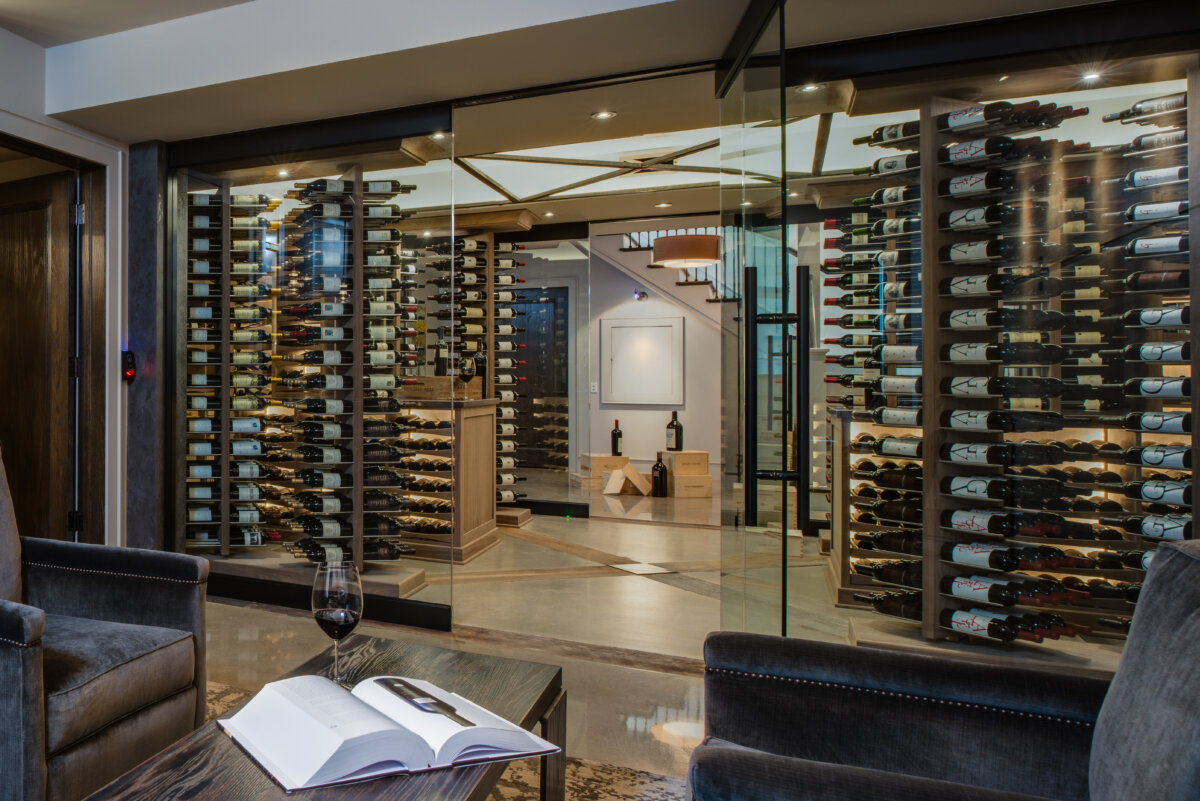
For a glass cellar, Revel provides a glass specification, and your glass fabricator builds and installs the glass. Revel can recommend trusted glass partners. See more in Revel’s glass gallery and our post on the rise of modern glass wine walls.
Towers, Drawers or a Wine Wheel?
Revel doesn’t set a rule for choosing one system over another, because the systems are designed to work together. Each has its own strengths:
- Sliding pullout drawers: Revel’s configuration “orients the bottle on its side, with the entire bottle label facing out,” and the drawers let you “store multiple bottle sizes side-by-side.” Our guide to wine cellar pullout drawers covers them in depth.
- Wine Wheel: Revel’s rotating system for corners, covered in our Wine Wheel guide.
- Revel-ution towers: panels that rotate up to 360 degrees, 3 or 4 bottles deep, with access from the front or the rear.
Our custom wine cellar vs. wine fridge guide notes that “systems like drawers, Wine Wheels, Reveal, and Revel-ution towers mix within one room.” The Wine Wheel guide puts it simply: “drawers line the walls, a Wine Wheel takes the corner, and towers anchor a modern space.”
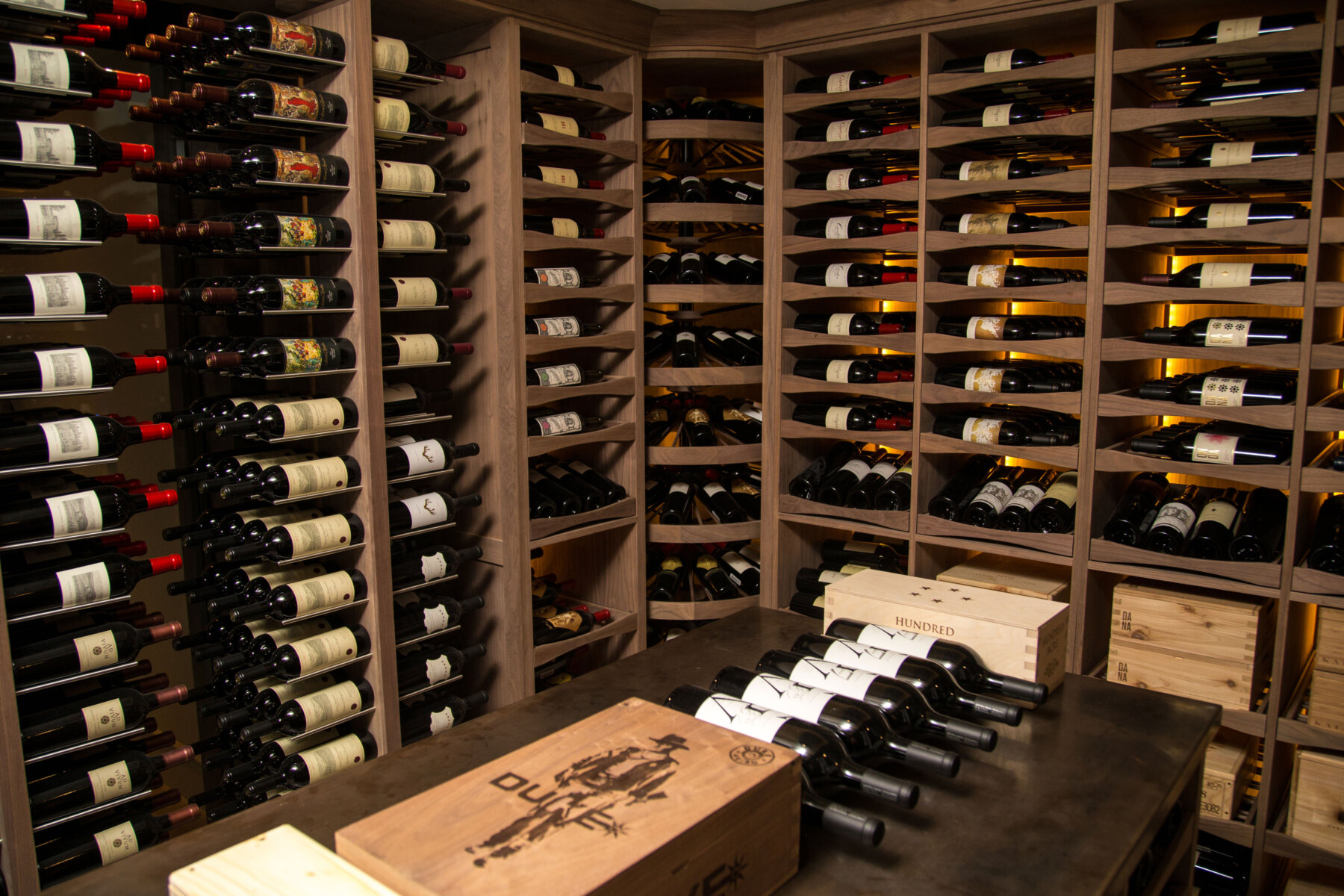
Weighing towers, drawers or a Wine Wheel? Revel’s systems can mix within one room. Choose Project Inquiry and upload your floor plan, and in your message tell us which systems you’re considering and what you collect. We’ll show the mix in your design.
Revel-ution vs Designer Series
Revel makes a second rotating tower, the Rotating Designer Series. Revel designed it “Based upon demand from our customers for a more contemporary product style,” and “It incorporates new materials such as aluminum, bamboo, and acrylic.” Instead of wood panels with dowels, “The Designer Series features a column of individually rotating plates, situated vertically on a rod that serves as the axis for the rotation,” and “The bottles will be oriented on their sides with the labels facing outwards for ease of identification.”
In short, Revel-ution uses engineered wood panels with aluminum dowels, and the Designer Series uses rotating plates in materials such as aluminum, bamboo and acrylic. In the Key Biscayne, Florida cellar, “Each gleaming, chrome-plated Designer Series tower” stands in a modern kitchen.
Revel-ution Projects
The patented Revel-ution rotating wine tower appears in cellars across Revel’s portfolio. Charlevoix and Mountain Chic are covered above, along with Melbourne and Oklahoma City. In the North Carolina cellar, “The storage elements include our rotating Revel-ution wine towers, sliding pullout drawers, large format wine ladders and case storage.” Revel-ution towers also appear in the 2-story Montana cellar, the West Bloomfield cellar, which holds 2,552 bottles, and the Naperville, Illinois glass-enclosed cellar. See more finished rooms in Revel’s work. See a project like yours? Mention it in your message when you reach out.
Plan Your Revel-ution Towers With Revel
Rotating wine tower layout is settled during design. Revel’s process explains that “The design will also confirm the bottle count and the molding and trim styles.” All Revel cellars are built in Holland, Michigan; the About page says, “All of our wine cellars are built in our state-of-the-art wood shop in Holland, Michigan.”
Frequently Asked Questions About Revel-ution Towers
Each Revel-ution tower is a column of panels. Every panel can rotate up to 360 degrees and can come 3 or 4 bottles deep, so turning a panel brings the bottles at the back within reach. The panels are rotated by hand, with no motor. The system allows easy bottle access from either the front or the rear.
No. The panels rotate; they do not slide. Each panel is rotated by hand, with no motor, and can rotate up to 360 degrees. Panels can come 3 or 4 bottles deep, and the system allows easy bottle access from either the front or the rear.
Revel-ution dowels are aluminum. The towers use engineered wood panels, and finishes can change the look from project to project. The Mountain Chic cellar, for example, uses black powder-coated aluminum dowels. Panel woods also vary, including walnut at Charlevoix and white oak at Mountain Chic. Discuss finishes during design.
Revel describes Revel-ution as rotating wine storage adaptable to both contemporary and transitional design preferences. In Oklahoma City, Revel-ution towers and large format wine ladders add a splash of contemporary styling. Revel’s 2016 launch post said the systems suit styles from contemporary to transitional and everything in between.
Yes. At Revel’s Charlevoix cellar, Revel-ution towers with walnut panels line the front and back glass walls. Front or rear access suits rooms meant to be seen through glass. Revel provides a glass specification, and your glass fabricator builds and installs the glass. Revel can recommend trusted glass partners.
Revel-ution towers use engineered wood panels that rotate, outfitted with aluminum dowels. Designer Series towers use a column of individually rotating plates on a central rod, in materials such as aluminum, bamboo and acrylic, with bottles on their sides and labels facing outward. Revel created the Designer Series for a more contemporary product style.
Capacity depends on ceiling height. With an 8-foot ceiling, a Revel-ution tower holds 144 bottles. Height is custom to the room; there is no standard or maximum. During design, Revel’s drawings confirm the bottle count along with the molding and trim styles, so you know what your cellar holds before production begins.
Yes. Revel’s systems are designed to work together, and drawers, Wine Wheels, Reveal and Revel-ution towers can mix within one room. A common pattern is drawers along the walls, a Wine Wheel in the corner and towers anchoring a modern space. Your design will show how the systems fit together in your cellar.
Start Your Revel-ution Tower Project
To see how rotating wine towers work in finished cellars, visit the Rotating Revel-ution Towers page.
When you’re ready, request a consultation and choose Project Inquiry. Share your approximate bottle count and the room’s approximate square footage, or upload floor plans or images. The design will also confirm the bottle count. In your message, tell us whether you’re considering towers, drawers or a mix, the style of the house, and where the project stands, whether that’s early planning, in design or under construction. Architects, interior designers and builders are welcome to reach out on a client’s behalf and send plans.