Custom Wine Cellar vs. Wine Fridge: Which Storage Fits Serious Collectors?
Compare a custom wine cellar vs. a wine fridge for serious collectors—climate, capacity, label-forward access, longevity, and when a Signature Wine Vault fits between the two.
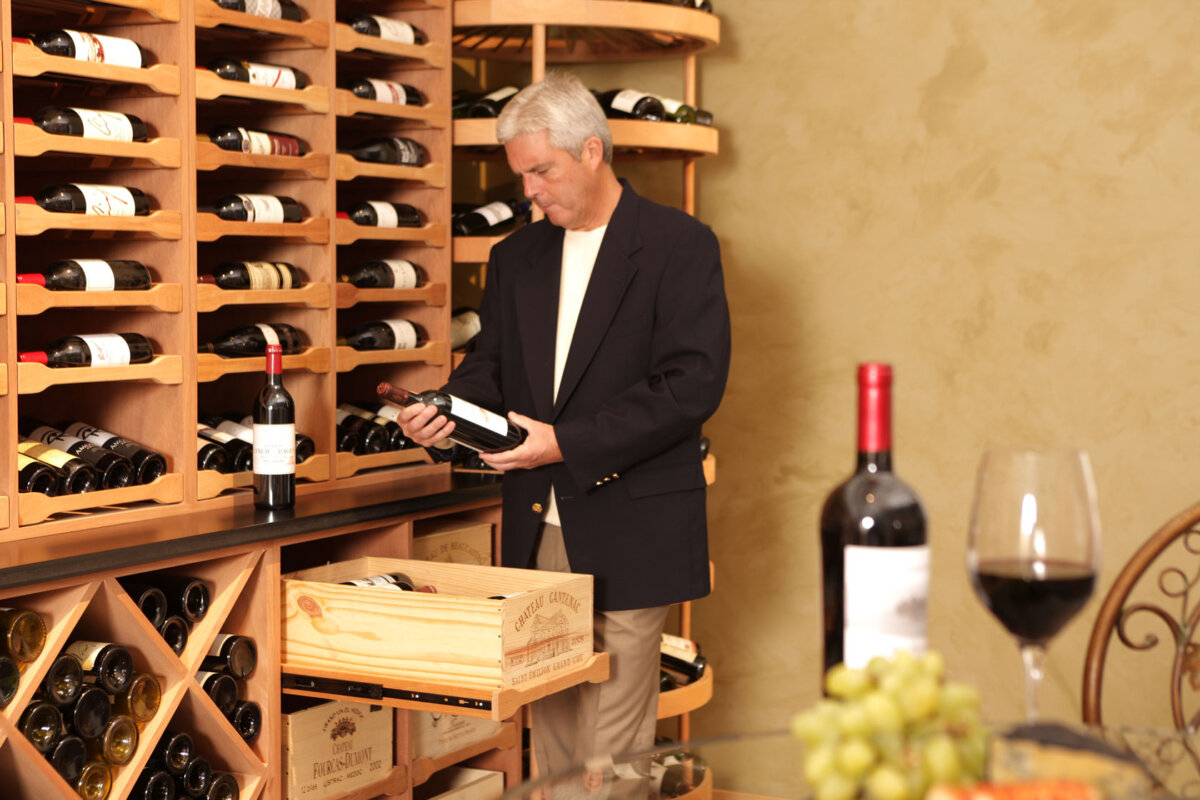
Custom Wine Cellar vs. Wine Fridge at a Glance
| Factor | Custom Wine Cellar | Wine Fridge |
|---|---|---|
| Climate | Dedicated room with cooling sized to the space; designed for steady ~55°F and ~70% humidity when properly built | Appliance-level cooling; humidity and stability vary by model and load |
| Capacity | Scaled to your footprint and growth plan—often hundreds to thousands of bottles | Fixed by unit size; typically better for everyday or modest collections |
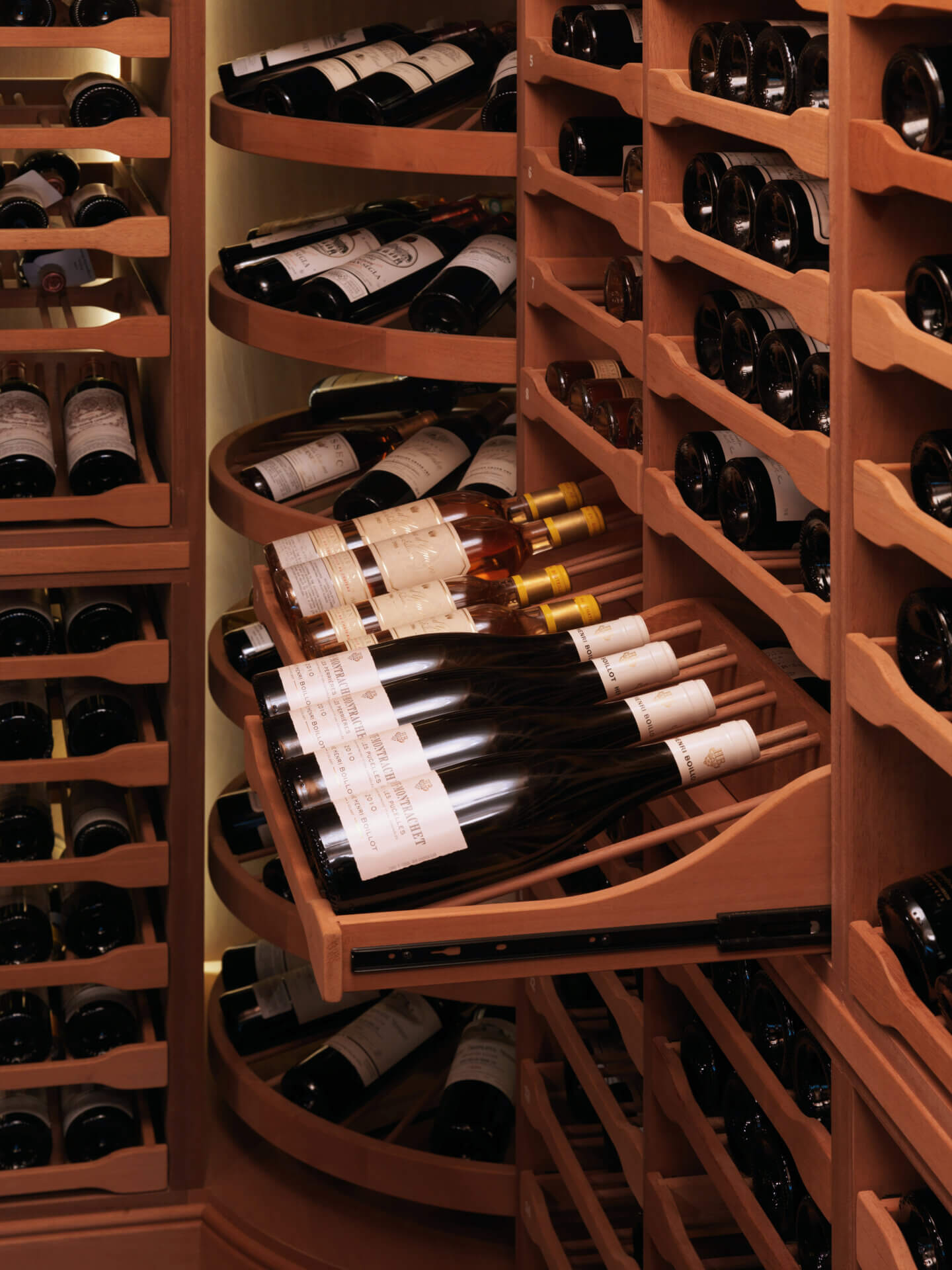
| Display & access | Label-forward drawers, wheels, and towers; bottles readable without “wine archaeology” | Shelves or racks; labels often hidden; bottles shuffled to reach what you want |
| Longevity | Hardwood cabinetry and a conditioned room built for decades of aging | Appliance lifespan; mechanical wear and replacement cycles are expected |
| Cost factors | Space prep (insulation, vapor barrier, cooling, door), custom millwork, design coordination—higher upfront investment | Lower entry cost; limited room for expansion without buying another unit |
| Best for | Serious collectors, aging inventories, entertaining, architecture-forward homes | Starter collections, service wine near the kitchen, temporary or rental setups |
Climate, Humidity, Vibration, and Light
Wine ages best when left alone. Revel’s FAQ consensus—and the broader collector standard—is a constant environment on the order of about 55°F and about 70% humidity, away from light, heat, vibration, and temperature swings.Temperature and humidity
A properly built custom cellar is a conditioned room: insulation, vapor barrier, an exterior-grade sealed door, and a cooling system matched to the cubic footage. Through-the-wall, ducted, and ductless split options each have a place depending on size, noise goals, and architecture. The goal is stability—not just “cold.” A wine fridge cools what fits inside the box. Many units prioritize temperature over humidity control. For short-term storage and frequent drinking, that can be enough. For long-horizon aging—especially cork-finished bottles that need cork contact and stable moisture—a dedicated cellar environment is the more intentional choice.Vibration
Wine settles best when it is not constantly moved or buzzed. Appliance compressors and fans sit close to the bottles. In a custom cellar, mechanical equipment can be designed so noise and vibration live outside the tasting experience—especially with ducted or remote condenser setups.UV and light
Wine is photosensitive. Bright light and heat force cooling equipment to work harder and can fade red pigments or darken whites. Cellars favor low-voltage, dimmable lighting—often integrated into cabinetry—so you can see labels without bathing bottles in glare. Fridges offer some UV-tinted glass, but they are still display appliances in living spaces where ambient light is hard to control. For construction fundamentals, see our wine cellar construction guide. Architects coordinating vapor barriers, cooling, and glass walls may prefer the architect’s planning guide.Display and Access: Label-Forward Cabinetry vs. Fridge Shelves
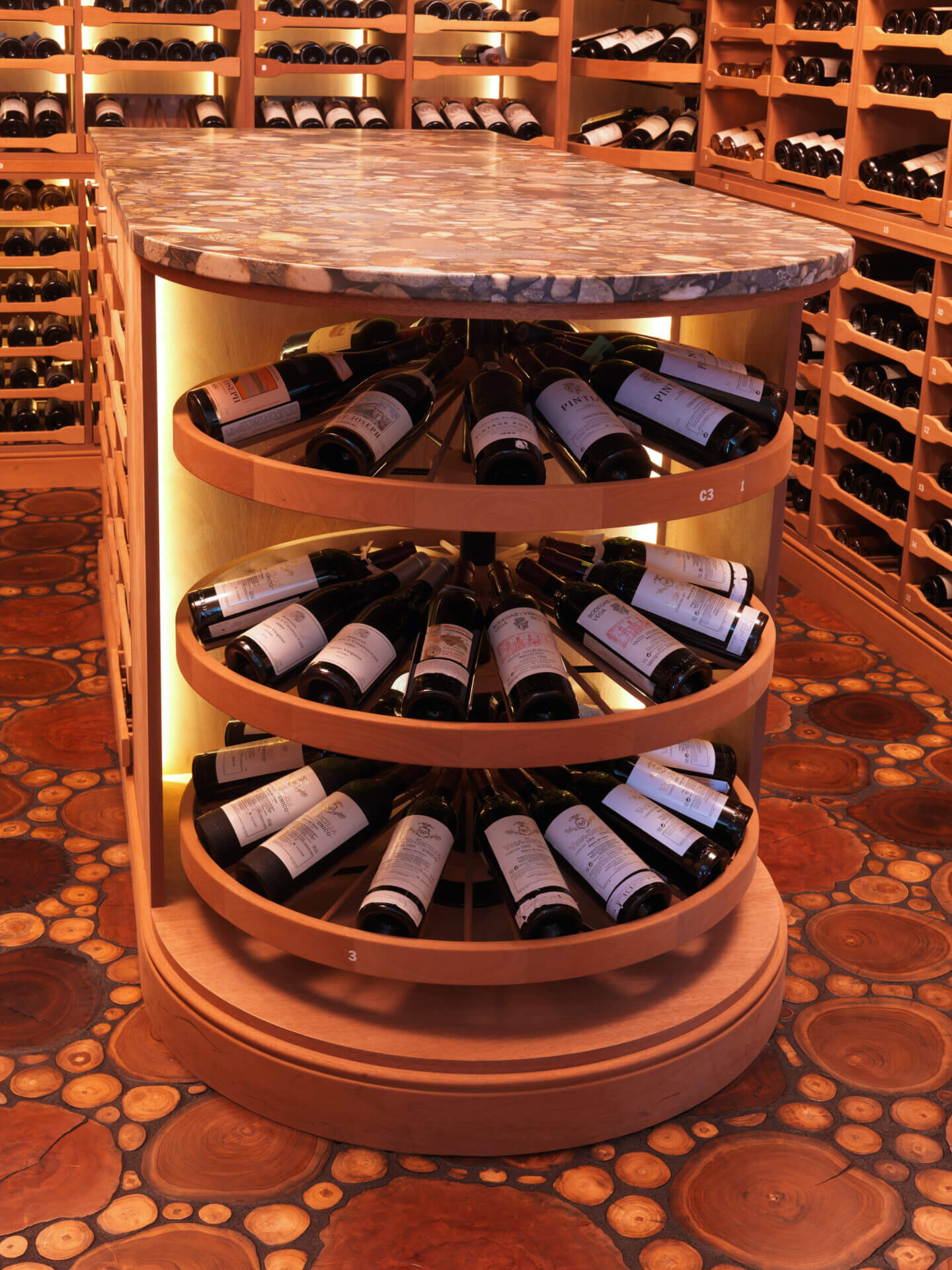 Storage is only half the story. How you find a bottle shapes whether you actually drink what you own—or lose it behind three other bottles.
Traditional neck-out (cork-out) racking packs density but hides labels. Fridge shelves often do the same: you pull, reshuffle, and hope the label survives the hunt. Serious collectors feel that friction every time they entertain.
Revel’s approach treats wine as an art gallery: label forward, accessible, undisturbed.
Storage is only half the story. How you find a bottle shapes whether you actually drink what you own—or lose it behind three other bottles.
Traditional neck-out (cork-out) racking packs density but hides labels. Fridge shelves often do the same: you pull, reshuffle, and hope the label survives the hunt. Serious collectors feel that friction every time they entertain.
Revel’s approach treats wine as an art gallery: label forward, accessible, undisturbed.
- Sliding Pullout Drawers orient bottles on their sides with labels facing out. Slide one drawer and you can read an entire section without touching neighboring bottles—protecting labels and provenance.
- Wine Wheel™ turns wasted corner volume into rotating storage (up to about 18 standard bottles per level), so you select without disturbing the rest.
- Reveal system presents bottles at a 15-degree angle for strong label visibility with no moving parts—useful in constrained or commercial spaces.
- Revel-ution towers rotate up to 360°, with panels three or four bottles deep, for access from front or rear.
When a Walk-In Cellar, Wine Vault, or Fridge Makes Sense
Choose a wine fridge when…
- Your collection is modest and mostly for near-term drinking.
- You need service wine near the kitchen or dining room.
- You rent, travel light, or are not ready for a dedicated room.
- Budget and speed matter more than long-term aging architecture.
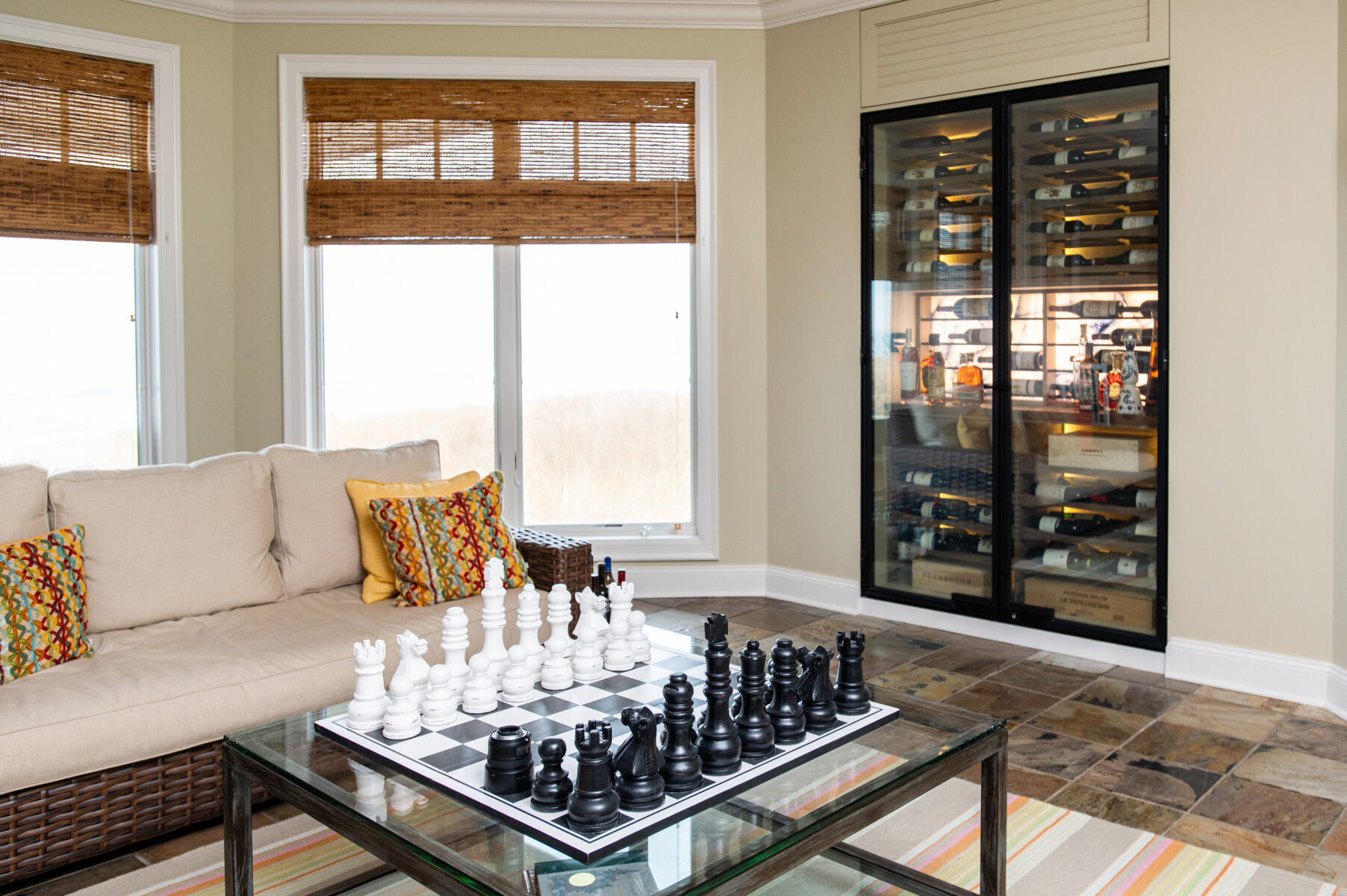
Choose a Signature Wine Vault when…
Not every home can dedicate a walk-in room—and not every collector wants only an appliance. Revel’s Signature Wine Vault is a self-contained, temperature-controlled solution designed for discriminating collectors who want elevated storage without a full cellar build-out. It can accommodate wine along with dedicated space for cigars and premium liquors, with sophisticated glass-door presentation and optional add-ons for single-bottle, case, cigar, or liquor storage. It also suits second homes when the primary residence already has a full cellar.Choose a custom walk-in cellar when…
- You are building or renovating and can plan insulation, cooling, and cabinetry together, starting with where the cellar belongs in your home.
- Capacity, aging horizon, and display quality all matter.
- You want hardwood millwork—mahogany, walnut, cherry, white oak, maple, or hickory—crafted unfinished where appropriate so the cellar atmosphere stays clean for wine.
- The cellar should feel like a room you enter and share, not a box you open.
How Revel Designs Around Your Space and Growth
Revel starts with the wine and works outward—form following function. Our 5-step approach typically includes:- Consultation — needs, collection size, bottle formats, and vision
- Design — layouts, elevations, materials, and renderings tailored to your space
- Production — finalized dimensions and craftsmanship in Holland, MI millwork
- Pre-delivery review — coordination with clients and project teams near and far
- Shipping & installation — fully assembled systems shipped nationwide and internationally; installation can be coordinated with your contractor or, especially near Michigan, with Revel support
Soft Next Step: A Conversation, Not a Catalog Order
If you are weighing a custom wine cellar vs. a wine fridge, the right answer is usually personal: bottle count today, growth rate, how often you pull for guests, and whether the room should feel like architecture or an appliance. We are happy to talk through options—walk-in cellar, Wine Vault, or a phased plan—without pressure. Request a consultation and tell us about your space and collection. We will help you see what fits.FAQ
If you mainly hold a modest number of bottles for near-term drinking, a quality wine fridge can be enough. If you are aging wine, growing past a few cases, or want label-forward display and room-scale climate control, a custom cellar (or a Signature Wine Vault) is the more collector-aligned path.
Some high-end units offer strong temperature control, but a purpose-built cellar is designed as a stable room—insulation, humidity strategy, sealed door, and cooling sized to the space. That architecture generally supports long-term aging better than an appliance alone.
Revel’s guidance aligns with the common collector consensus: roughly a constant 55°F and about 70% humidity, with protection from light, heat, vibration, and swings.
Choose the Wine Vault when you want self-contained, elevated storage for wine (and optionally cigars and liquor) without dedicating a full conditioned room—or when you need a refined second-home solution alongside a primary cellar.
Yes. Revel systems are engineered for varied formats—often within the same drawer or Wine Wheel—and can be customized for large trophy bottles such as Jeroboams.
Begin with a consultation. Share your goals, floor plan if you have one, and collection profile via our inquire page. From there, design, millwork, and shipping follow our five-step process.