Wine Vault vs. Walk-In Custom Cellar: Choosing the Right Scale of Storage
Wine cabinet vs wine cellar? Choose a walk-in cellar for a dedicated room, with insulation, cooling and lighting planned to hold about a constant 55 degrees and about 70 percent humidity. Choose Revel’s Wine Vault, a self-contained wine vault designed for discriminating collectors, when there’s no room for a walk-in or a second home needs a smaller-scale solution.
Both paths start from the same question: how much space can you give the collection, and how do you want to live with it? A walk-in custom cellar is architecture: a room planned with your architect and builder. Revel’s Wine Vault is a single piece of furniture-scale storage for wine, cigars and spirits. This guide walks through who each path serves, how they differ, and what the next step looks like on each path.
Wine Cabinet vs Wine Cellar: Where the Wine Vault Fits
Search for wine vault vs wine cellar and you’ll mostly find definitions that treat the two words as synonyms. At Revel they mean different scales of storage. The wine cabinet vs wine cellar question is really about whether your collection gets a room or a refined piece of storage within a room.
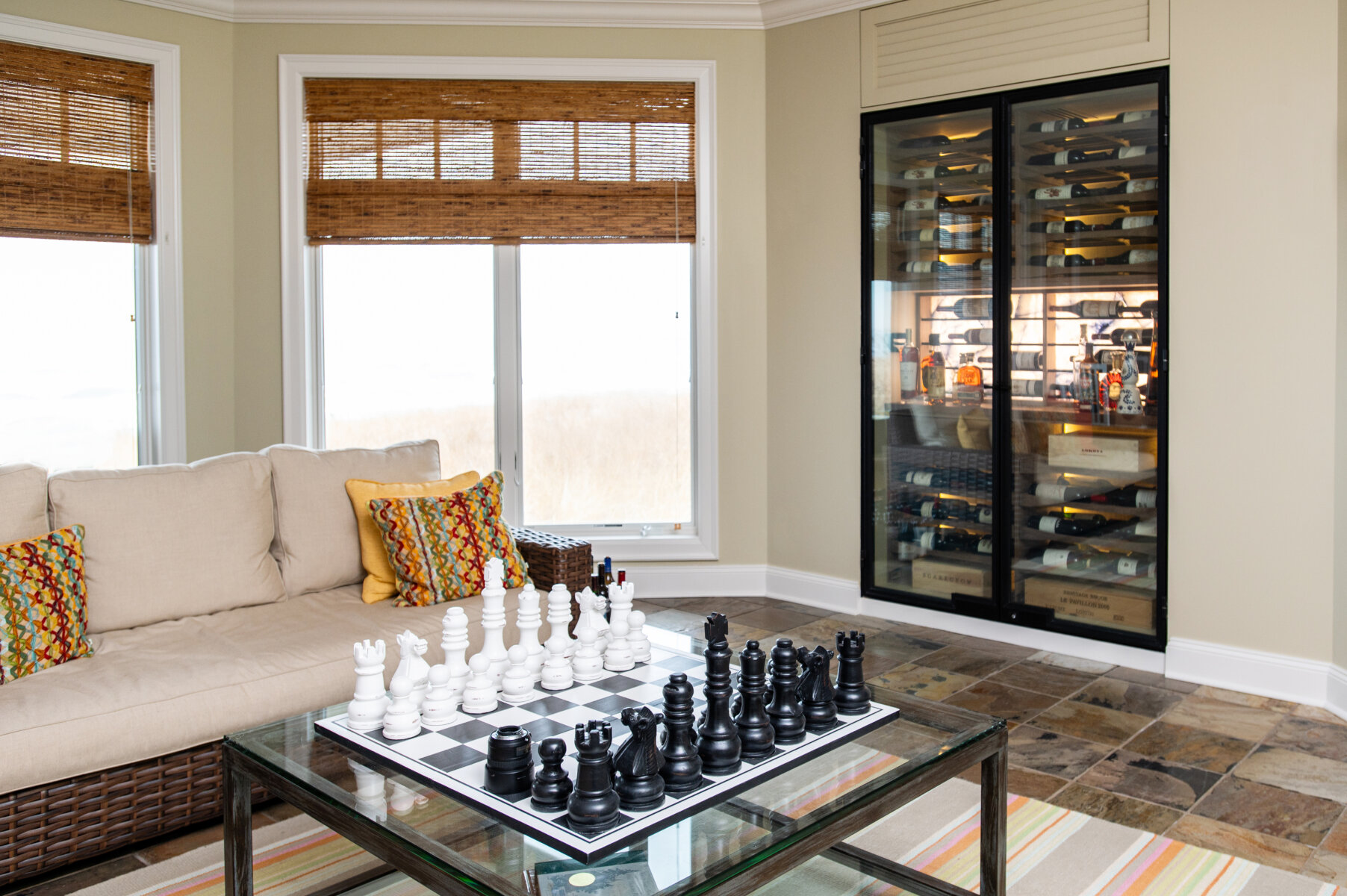
Revel describes its Wine Vault as a “self-contained wine vault designed for discriminating collectors.” The product page is clear that it isn’t an appliance: “More than just a wine fridge, Revel’s wine vault boasts versatile storage options.” In Revel’s words, it “blends cutting-edge technology with elegant design, offering the perfect environment for your cherished wine collection, cigars, and premium liquors.” Each Vault is made to custom sizes and dimensions. In one Revel Vault, the cooling unit sits in the space above and is ducted in; that is one example of how a Vault can be cooled.
A walk-in cellar, by contrast, is a dedicated space. Revel’s FAQ explains that “A wine cellar is a temperature and humidity controlled space that requires special attention to proper insulation, cooling systems, and lighting.”
Wine Cabinet vs Wine Cellar: Who Each Path Serves
The walk-in custom cellar
A walk-in suits collectors who want a dedicated room and the full range of Revel’s cellar systems: sliding pullout drawers, rotating towers, the Wine Wheel and the wine ladder rack. For more on drawers, see our guide to wine cellar pullout drawers. It’s the right scale when the cellar should become part of the home’s architecture, a room you walk into, entertain in and grow into. Our guide to the best place in a home for a wine cellar covers where that room works best.
The Wine Vault
The Wine Vault answers a different situation. As Revel’s product page puts it, “Not everyone has room in their home for a walk-in wine cellar, but that doesn’t mean you can’t have a beautiful and functional wine display.” The page adds that it suits collectors who have a full cellar in their primary residence but “need a smaller-scale solution for a second home.”
Climate and Display Differences
Walk-in: a room built around the wine
A walk-in cellar is engineered as a room. The goal is about a constant 55 degrees and about 70 percent humidity, and that depends on the whole envelope: insulation, a vapor barrier, a sealed door, low-heat, low-UV LED lighting and the right cooling. Our guide to the best temperature and humidity for wine storage explains those targets. Revel’s FAQ is candid that “setting up a wine cellar is not for the novice do-it-yourselfer,” and adds that “Unless you have a passive wine cellar environment able to keep the temperature and humidity at a consistent level, then including a cooling unit in your cellar is essential.”
Cooling is a design decision made with a licensed professional. Our guide to wine cellar cooling systems compares through-the-wall, ducted and ductless split systems, and the wine cellar construction guide walks through preparing the room itself. If you want the room enclosed in glass for display, our guide to glass enclosed wine cellar design covers climate and display.
If you have a room in mind, its construction and cooling are planned together with the cellar design. Tell us where the room is and roughly how large it is, or send floor plans, and we’ll plan the cellar with you, your architect, builder and cooling professional.
Wine Vault: display within a room
The Wine Vault brings the collection into a living space rather than a separate room. Revel describes its “sleek exterior glass doors” and a customizable backsplash designed to complement diverse interiors, “whether it’s a modern home, traditional, or somewhere in between.” Inside, it “accommodates not only your prized wine bottles but also provides a dedicated space for your finest cigars and liquors, allowing you to curate a comprehensive collection all in one place.” Capacity is custom too, depending on the dimensions and the systems used. One Revel Vault holds 146 bottles, but because the Vault is fully customizable, that number will vary. A Vault can be built into the wall or freestanding.
Wine, Cigars and Liquor: The Wine Vault’s Versatility
Revel’s clients rarely collect wine alone. The Signature Products page notes that “Many of our clients also indulge in the art of collecting fine spirits, such as scotch, bourbon, and tequila, alongside a penchant for premium cigars.” The Wine Vault is built around that reality, with optional add-ons for “single-bottle wine storage, wine case storage, cigar storage, or liquor storage.”
Jim Cash’s own vault shows how those pieces come together. Revel’s 2024 story of the vault describes “a custom cigar drawer capable of holding up to 200 cigars,” with “compartments meticulously designed for both single cigars and cigar boxes.” Using Revel’s pullout drawers, Jim “optimized every inch of the vault to store both single bottles and cases with ease,” and “A wine ladder, adorned with an onyx backlit panel” puts prized bottles on display. The same cigar drawer is available on its own as Revel’s cigar drawer.

Spirits need their own kind of storage. As Revel’s post on storing spirits in a wine cellar explains, “Spirits are best stored upright, unlike wine, which is stored horizontally to keep the cork moist.” In a walk-in, Revel can “create designated displays and shelving for spirits,” and its luxury spirits displays bring the same thinking to any collection.
Switch-Glass and Security, as Revel Describes Them
Privacy is one of the Wine Vault’s defining features. According to the product page, “With the option to add “switch-glass” doors, your beautiful collection can become completely hidden with the flip of a switch. Its robust construction and lockable design offer peace of mind, safeguarding your valuable wines, cigars, and liquors.”
In the 2024 story, Jim’s switch-glass doors “transition from crystal clear to opaque, offering both privacy and a touch of drama to the space.”


Second Homes and Smaller Spaces
The Wine Vault began with a second home. When Jim Cash bought a lake house, Revel’s story recalls, “there was no room for a traditional walk-in wine cellar.” Rather than give up on a proper collection, he designed a vault for it. Revel’s 2024 story calls the result “The world’s first self-contained wine vault.”
The same logic applies to smaller spaces at home. Revel’s design trends for 2025 observe that “As urban living continues to thrive, compact wine cellars are gaining popularity,” and that “Customizable, space-saving solutions like the Revel Wine Vault make it possible to have a functional wine cellar in smaller spaces.”
Using Both: A Walk-In at Home, a Vault Elsewhere
This doesn’t have to be either-or. As our comparison of a custom wine cellar vs a wine fridge notes, “Many collectors use more than one solution over a lifetime: a fridge for everyday bottles, a vault for a refined focal point, and a walk-in cellar as the long-term home for the core collection.” A full cellar at a primary residence and a Wine Vault at a second home is exactly the pairing Revel’s product page describes.
Next Step by Path
If a walk-in cellar is right
Revel’s process runs in five steps: Consultation, Design, Production, Pre-Delivery Review, and Shipping & Installation. It starts with your space and how you’ll use the cellar. Our architect’s guide to planning a custom wine cellar covers what to settle before construction. Whether you have floor plans or just a location in mind, request a consultation and share your approximate bottle count, the room’s approximate square footage and where the project stands. The design drawings will confirm the bottle count.
If the Wine Vault is right
Talk with Revel about the Wine Vault. Tell us where it will live, whether it’s for a primary or second home, and what you plan to store: wine, cigars, spirits or all three. If you’d also like a walk-in at your primary home, or you find you have the room for one, say so, and we’ll talk through both.
Frequently Asked Questions About Wine Vaults and Walk-In Cellars
In everyday use the terms are often treated as synonyms. At Revel, a walk-in wine cellar is a dedicated room with insulation, cooling and lighting planned around the wine. The Wine Vault is a self-contained wine vault designed for discriminating collectors, a smaller-scale solution for wine, cigars and liquor within a room.
Choose a walk-in cellar when you want a dedicated room, room to grow and the full range of cellar systems such as pullout drawers, towers and the Wine Wheel. Choose the Wine Vault when there is no room for a walk-in, or when a second home or smaller space needs a refined, smaller-scale solution.
The Wine Vault makes sense when a home has no room for a walk-in, or when you already have a full cellar at your primary residence and need a smaller-scale solution for a second home. It was born that way: Jim Cash designed it for a lake house with no room for a walk-in.
Yes. Revel’s Wine Vault provides a dedicated space for cigars and liquors alongside wine, with optional single-bottle wine storage, wine case storage, cigar storage or liquor storage. Jim Cash’s own vault includes a custom cigar drawer, pullout drawers for single bottles and cases, and a wine ladder with an onyx backlit panel.
Switch-glass doors are an option on the Wine Vault. With the flip of a switch, the glass changes from crystal clear to opaque, so the collection can become completely hidden. Combined with the vault’s robust construction and lockable design, they add privacy and peace of mind for valuable wines, cigars and liquors.
For many collectors, Revel’s Wine Vault. Revel describes it as a smaller-scale solution for a second home, for collectors who have a full cellar in their primary residence. If the second home has the space and you want a dedicated room, a walk-in custom cellar also works.
A walk-in wine cellar needs proper insulation, a vapor barrier, a well-sealed door, low-heat, low-UV LED lighting and a cooling system chosen with a licensed professional. Together, these help the room hold about a constant 55 degrees and about 70 percent humidity. Revel notes that building one is not for the novice do-it-yourselfer.
Start with a consultation. For a walk-in, Revel’s process runs from Consultation through Design, Production, Pre-Delivery Review, and Shipping and Installation; bring your approximate bottle count, the room’s location and size or floor plans, and where the project stands. For the Wine Vault, tell Revel where it will live and what you plan to store.
Choose Your Scale of Storage with Revel
When you’re ready, request a consultation and choose Project Inquiry. Tell us whether you’re considering a walk-in cellar, the Wine Vault or both, and include your approximate bottle count, whether it’s for a primary or second home, and the space you have in mind: the room’s approximate square footage, or floor plans or images to upload. Let us know where the project stands, whether that’s early planning, in design or under construction. Architects, interior designers and builders are welcome to reach out on a client’s behalf and send plans. We’ll help you choose the right scale of storage for your collection.