The Revel Wine Wheel™: A Custom Rotating Wine Rack for Cellar Corners
The Revel Wine Wheel™ is a patented custom rotating wine rack designed for the corners of a wine cellar. Built with Revel’s proprietary dowel system, it turns otherwise wasted corner space into label-forward storage. With a turn of the wheel, you can make a selection “without disturbing a single bottle.”
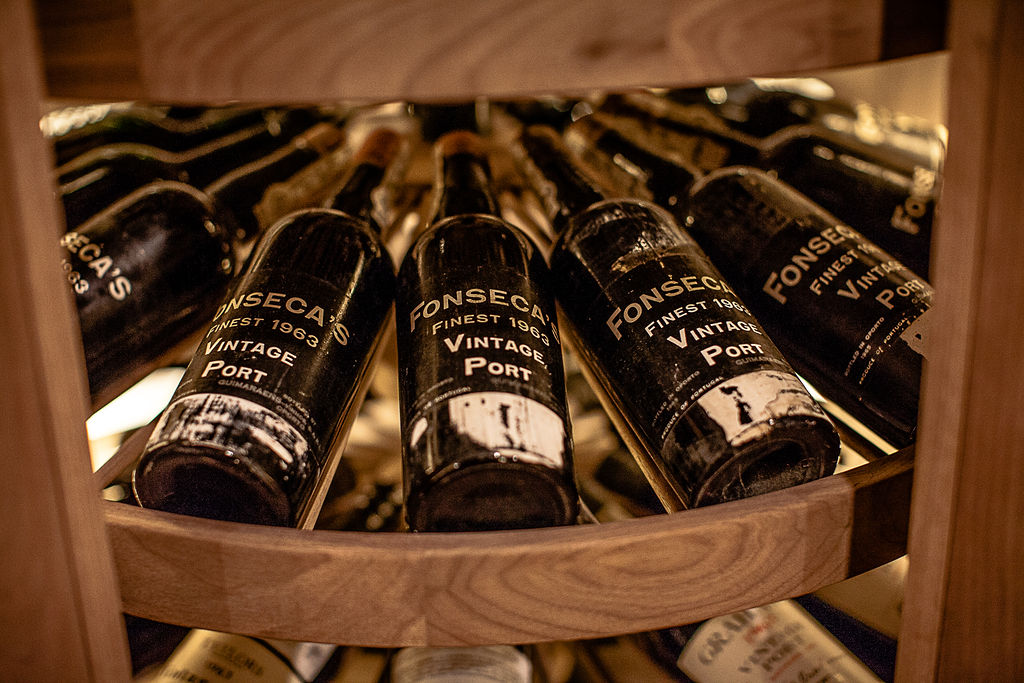
In most cellars, the corner is where bottles go to be forgotten: hard to reach and harder to see into. The Wine Wheel was designed for exactly that space. In Revel’s words, “this rotating tower wins on three levels — aesthetics, function and efficiency.”
How the Wine Wheel Rotating Wine Rack Works
The idea will feel familiar to anyone who has used a corner cabinet in a well-designed kitchen. Revel has “adapted the space-saving concept traditionally employed in corner kitchen cabinetry” and turned it into a corner rotating wine rack, the patented Wine Wheel™, “constructed with our proprietary dowel system.”
The tower is built in stacked levels. Rather than reaching into a deep corner, you turn the wheel by hand to bring the bottle you want around to you. There is no motor. According to Revel, the Wine Wheel “optimizes your storage capacity by utilizing otherwise wasted corner space,” and “with a turn of the wheel, you can make a wine selection without disturbing a single bottle.”
One distinction is worth making clearly. This revolving wine rack turns so you can reach a bottle. It is not a device for rotating bottles as part of aging. Each bottle stays in its place while the level turns, so you choose without shuffling its neighbors. Revel names the corner Wine Wheel™ towers, alongside its patented Sliding Pullout Drawers, as the cornerstones of its product line.
Capacity and Bottle Formats
Capacity on a Wine Wheel is described per level, and Revel’s figures are specific:
- Standard bottles: each level “can accommodate as many as eighteen standard-sized bottles.”
- At-a-glance visibility: of those eighteen, “seven of which are identifiable at a glance.”
- Other shapes and larger formats: Differently shaped and larger bottles, such as Cabernet, Champagne and Magnum bottles, can also be stored on the Wine Wheel, with slightly less capacity: usually around 15 bottles per wheel.
- Mixed shapes: “Multiple bottle shapes and sizes can be accommodated on each wine wheel.”
Revel’s FAQ adds that its systems “can store many bottle types and sizes, even within the same drawer or wine wheel,” and that Revel can create custom storage for large trophy bottles such as Jeroboams. A finished tower’s total capacity depends on your design, and Revel confirms bottle count during the design phase.
Considering a corner for a Wine Wheel? Tell us about your space and collection.
Configurations: Floor-to-Ceiling, Counter-Height, and Under-Counter
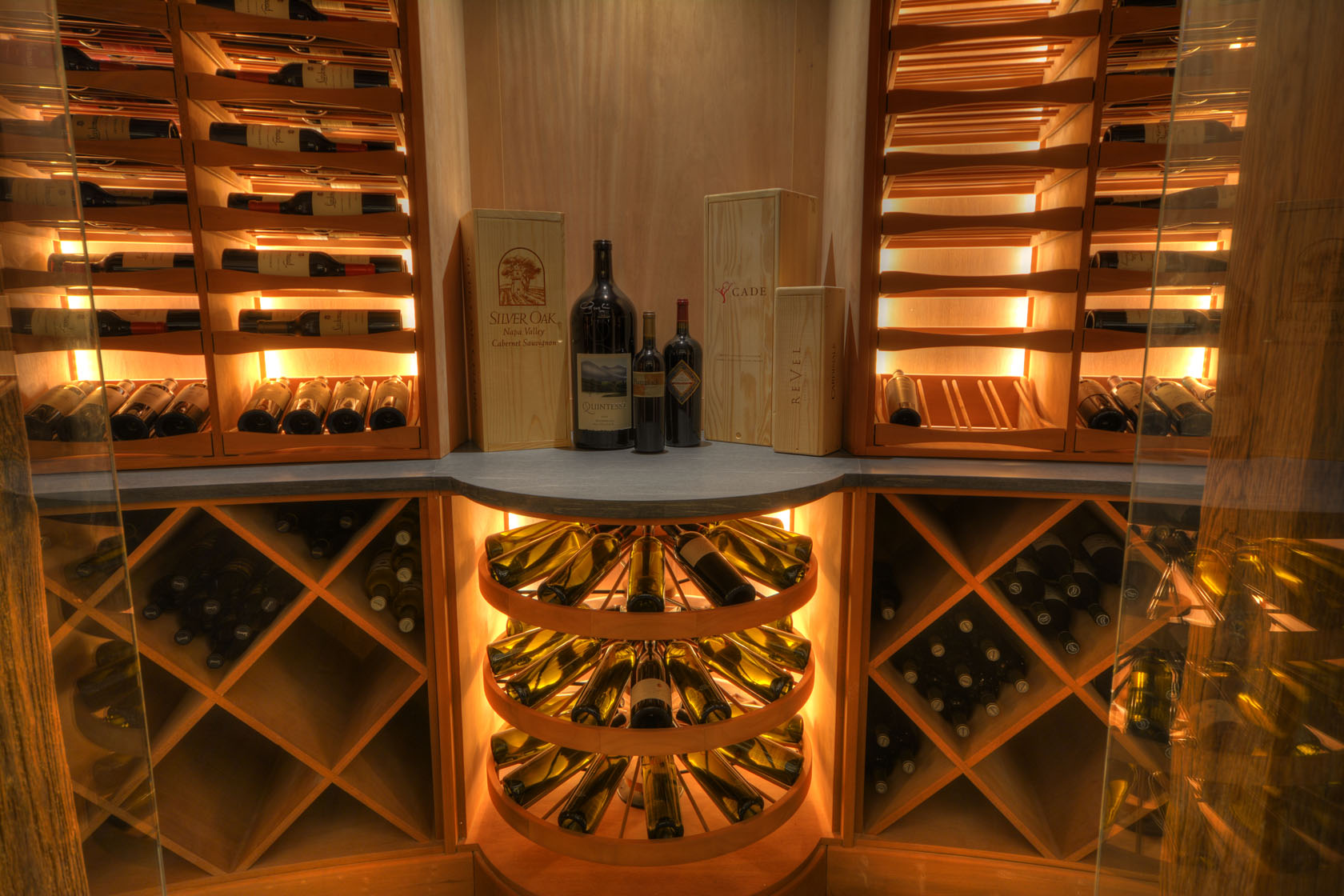
According to Revel, the Wine Wheel is “available in floor-to-ceiling or counter-height configurations.”
- Floor-to-ceiling: A full-height rotating wine cellar tower fills a corner from floor to ceiling. Revel’s product gallery includes a full-height Wine Wheel in Walnut in a rustic cellar.
- Counter-height: A shorter wheel brings the same corner access to counter level. Revel’s gallery includes a close-up of a counter-height Wine Wheel.
- Under-counter and island: Revel’s Houston project features under-counter wheels beneath a stone top. A Wine Wheel can also be built into a cellar island.
A Wine Wheel tower can stand up to 10 feet tall and weigh 300 to 400 pounds, so Revel plans its placement and support as part of the cellar design.
Revel also crafts wine furniture and bistro tables featuring rotating wine wheels.
Custom Rotating Wine Rack Craftsmanship: Woods and Finish
Revel’s Wine Wheel photography shows the tower crafted in Mahogany and in Walnut, and project pages describe wheels in Fijian Mahogany. More broadly, Revel’s FAQ names Mahogany, Walnut, Cherry, White Oak, Maple, and Hickory as “all excellent choices” for cellar cabinetry. It explains that the best cellar cabinetry is crafted from wood “that retains its integrity and beauty in a cool damp environment without needing an artificial finish.”
That is why Revel works mostly in unfinished hardwood. “Nearly all of our wine cellars are built from raw, unfinished wood to protect the integrity of the wine room atmosphere,” the FAQ explains. If a client chooses to apply a finish, Revel highly recommends VOC-free or water-based stains and lacquers.
Revel’s design approach moves from consultation to computerized 2-D drawings, including a floor plan and detailed elevations. Artisans at Revel’s millwork studio then build the cabinets “with the utmost precision and care,” and cellars ship fully assembled. The Grand Rapids Press once wrote that Revel was “positioning itself to be the Lamborghini of wine rack systems.”
Combining the Wine Wheel with Drawers and Towers
A Wine Wheel rack rarely works alone. It is one of several cellar elements that Revel designs to work together in a single room.
- Sliding Pullout Drawers orient each bottle on its side “with the entire bottle label facing out.” They hold multiple bottle sizes side by side, “from 350 mL bottles to magnums.”
- Rotating Revel-ution Towers use panels that “can rotate up to 360˚ and can come 3 or 4 bottles deep,” with access from either the front or the rear.
- Rotating Designer Series Towers offer a more contemporary look, using materials such as aluminum, bamboo, and acrylic. Each individually rotating plate holds 6 or 8 bottles, labels facing outward.
Together, drawers line the walls, a Wine Wheel takes the corner, and towers anchor a modern space. For the reasoning, see our guide to label-forward vs. neck-out racking.
Where a Wine Wheel Fits in a Home
Any room with a corner is a candidate. Revel has installed cellars in basements, kitchens, dining rooms, stairwells, and even a re-purposed pool house. The right location starts with good conditions: adequate ventilation, no direct sunlight or heat, and limited vibration.
In a basement cellar with long continuous walls, a floor-to-ceiling tower can resolve the corners where runs of drawers meet. In a kitchen-adjacent or dining-room cellar, a counter-height or under-counter wheel can sit beneath a service surface. If you are still deciding where the cellar should go, our room-by-room guide to the best place in a home for a wine cellar walks through the options.
Wine Wheel vs. a Wine Fridge or a Motorized Display
A wine fridge and a Wine Wheel solve different problems. A fridge is an appliance with a fixed capacity, suited to smaller everyday inventories or service wine near the kitchen. Its shelves often hide labels, so you end up reshuffling bottles to reach the one you want. A Wine Wheel is custom millwork for a conditioned cellar, designed to present labels rather than hide them. For a fuller comparison of climate, capacity, and access, read custom wine cellar vs. wine fridge.
Some collectors also look at motorized display systems. Those are a different category, and their features vary by product. The Wine Wheel has no motor; it turns by hand. The Wine Wheel’s case rests on Revel’s own design: a patented tower with a proprietary dowel system, crafted as custom cabinetry, that reclaims corner space and lets you choose a bottle without disturbing the others.
Projects Featuring the Wine Wheel

The Wine Wheel appears throughout Revel’s portfolio, in private homes and in hospitality settings:
- Houston, Texas Custom Wine Cellar: A semi-circular cellar crafted in Fijian Mahogany, partially surrounding a tasting room. The project features under-counter wine wheels beneath a stone top.
- Memphis, Tennessee Custom Wine Cellar: Fijian Mahogany, with Wine Wheel towers and drawers. As the client put it, “The sliding drawers and rotating wheels allow me to view my collection without ever actually touching a bottle.”
- Chicago High-Rise Custom Wine Cellar: Two Mahogany cellars on the 42nd and 43rd floors of a Gold Coast apartment, featuring Wine Wheels alongside Sliding Pullout Drawers.
- Natirar Wine Cellar and Event Space, New Jersey: A commercial Mahogany cellar in the cellar of Ninety Acres at Natirar Resort, combining a Wine Wheel with Sliding Pullout Drawers.
If you have a corner you would like to put to work, request a consultation with Revel.
Frequently Asked Questions About the Wine Wheel
The Revel Wine Wheel™ is a patented rotating tower for the corners of a wine cellar, built with Revel’s proprietary dowel system. It adapts the space-saving concept of corner kitchen cabinetry to wine storage, turning otherwise wasted corner space into label-forward storage that lets you select a bottle without disturbing the others.
The Wine Wheel is built in stacked levels, each holding bottles around a rotating wheel. Instead of reaching into a deep corner, you turn the wheel by hand to bring the bottle you want around to you; there is no motor. Revel says that with a turn of the wheel, you can make a wine selection without disturbing a single bottle.
Each level of the Revel Wine Wheel™ can hold as many as eighteen standard-sized bottles, seven of which are identifiable at a glance. Total capacity depends on the height and configuration of your tower, so Revel confirms your bottle count during the design phase, alongside the drawers and other elements in your cellar.
The wheel turns so you can reach a bottle. It is not designed to rotate bottles as part of aging, and each bottle stays in place on its level. Revel describes the design as letting you make a wine selection without disturbing a single bottle, so neighboring bottles aren’t pulled or shuffled.
Yes. Differently shaped and larger bottles, such as Cabernet, Champagne and Magnum bottles, can also be stored on the Wine Wheel, with slightly less capacity: usually around 15 bottles per wheel. Multiple bottle shapes and sizes can share each wheel, and Revel can also design custom storage for large trophy bottles such as Jeroboams elsewhere in the cellar.
Yes. The Wine Wheel is available in floor-to-ceiling or counter-height configurations. Revel’s Houston project features under-counter wheels beneath a stone top, and a Wine Wheel can also be built into a cellar island. Your design team will plan the configuration around your room and the surfaces you want above.
Start with a consultation. Revel’s design team reviews your space, collection, and how you use the cellar, then produces 2-D drawings, including a floor plan and elevations, that confirm your bottle count. Share your goals and floor plan through Revel’s inquire page, and the team will plan the corners with you.
Plan Your Corners with Revel
Revel’s design team works with you and your architect, builder, or interior designer to plan the corner layout and the mix of millwork, from Wine Wheels to Sliding Pullout Drawers and towers. When you’re ready, request a consultation and tell us about your space.