What Is the Best Temperature and Humidity for Wine Storage?
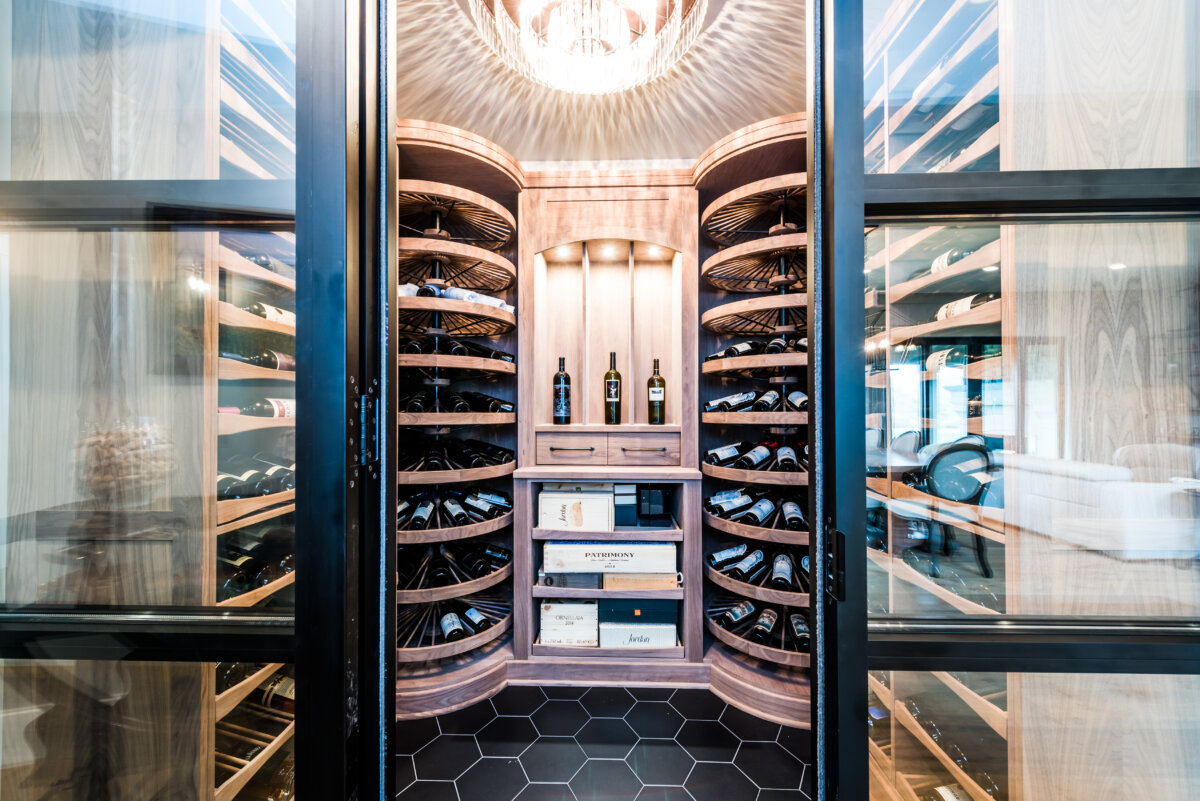
The best temperature to store wine is about a constant 55 degrees, with about 70 percent humidity, away from light, heat, vibration and temperature fluctuation. Consistency matters as much as the number, because temperature swings let air into the bottle. A properly built, mechanically cooled cellar helps hold those conditions steady, for reds and whites alike.
That’s the guidance Revel gives collectors in its FAQ, which notes that “variations within a certain range can be acceptable.” The same answer adds a rule that applies to every bottle: “All wine should be stored away from light, heat, vibration and temperature fluctuation.” This guide explains why each condition matters and how a well-built cellar holds all of them at once. For the bigger decisions around it, see our comparison of a custom wine cellar vs. a wine fridge and our guide to the best place in a home for a wine cellar.
Wine storage conditions at a glance
- Temperature: about a constant 55 degrees.
- Humidity: about 70 percent.
- Fluctuation: as little as possible, both in how often and how far the temperature moves.
- Light: kept low, with low-heat, low-UV LED fixtures.
- Vibration: kept to a minimum, so the wine can rest undisturbed.
- Reds and whites: stored at the same temperature.
The Best Temperature to Store Wine
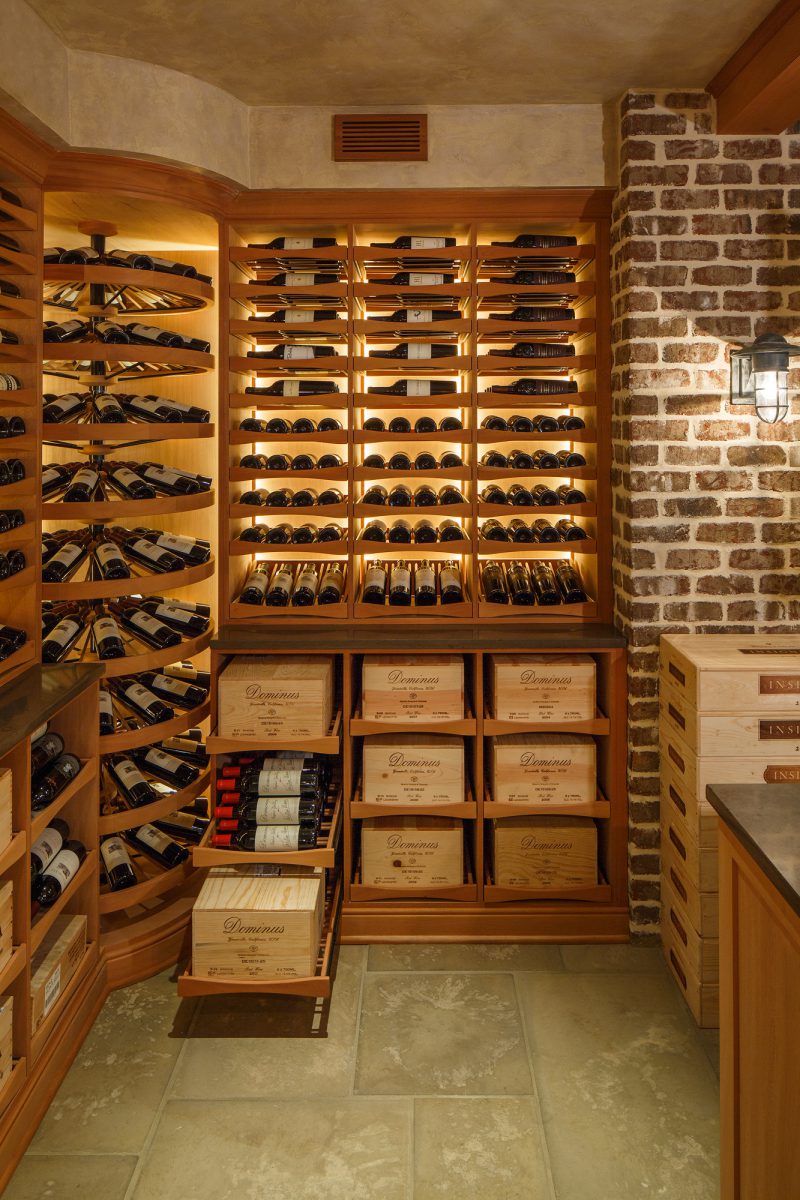
Why about a constant 55 degrees
Revel’s post on temperature and humidity control explains the reasoning behind that target: it’s considered the ideal wine storage temperature “to create balanced aging and still have a wine reach its peak within the average person’s lifespan.” In other words, the target isn’t simply cold. It’s a temperature at which wine can develop slowly and steadily over the years you plan to own it.
That’s also why a cellar is judged by how well it holds its temperature, not by how cold it can get. As our wine fridge comparison puts it, “The goal is stability—not just ‘cold.'”
Storage vs. serving temperature: reds and whites
Charts that list different temperatures for different wine types are describing how to serve wine, not how to store it. For storage, Revel’s advice is simple: “There is no reason for white wine to be stored at a different temperature than red wine.” Revel’s 10 things to avoid when designing a wine cellar adds the practical step: chill white wines for a short time before serving so they reach a crisp temperature.
One cellar, one storage temperature. Serving is a separate, last-minute decision.
Why Consistency Matters as Much as the Number
Revel’s 2016 post, citing an article on wine storage, notes that as important as the average storage temperature is, “temperature fluctuation is perhaps even more important.” The reason is physical. “The high end of a temperature cycle speeds up wine aging much more than the low end slows it down. Temperature swings allow air into the wine.”
What swings do to the cork and the fill level
As wine warms, it expands and presses against the cork. As it cools, the post explains, “the wine contracts, drawing air into the bottle. Over many temperature fluctuations, quite a bit of air replaces wine. This leads to the low ‘fill level’ seen in older bottles.” Because oxygen is “the single most damaging thing to wine,” bottles that go through repeated temperature cycling “tend to lose their freshness.”
How much fluctuation is too much?
There’s no magic number to aim for. The goal is to keep the temperature as steady as the room allows, and Revel’s guidance is to keep two things in mind at once: “Minimizing the frequency of fluctuation is just as important as minimizing the extent of fluctuation.” Small swings that repeat often can do as much harm over time as a larger one that happens rarely. A steady room protects against both.
Best Humidity for Wine Storage
Revel’s recommendation is about 70 percent humidity. Revel describes a wine cellar as a room “conditioned to be cool and damp,” and humidity is the “damp” half of that equation.
Too dry, too damp
Humidity protects the closure and the label. From the 2016 post: “Damage to wine labels may occur when the humidity is too high, and the cork can dry out when the humidity is too low. Wine should be kept in a humid environment to keep the cork moist and tight.”
How bottles rest matters too. Stored on its side, a bottle keeps wine in contact with the cork. Revel’s Sliding Pullout Drawers orient each bottle on its side, with the entire label facing out, so you can read labels without handling the bottles around them.
Damp shouldn’t mean musty. The wine cellar construction guide warns that warm, moist air entering a cellar “can cause mold,” and it’s blunt about finishes: “NEVER use carpet of any kind in a wine cellar.”
The vapor barrier holds humidity in
Humidity is held by the room’s construction. “A vapor barrier is critical to controlling the humidity inside your wine cellar,” the construction guide explains. “In humid climates, this prevents warm, moist air from entering the cellar, which can cause mold. In dry climates, this helps to maintain the humidity within the cellar.” A well-built envelope helps the room hold steady humidity instead of fighting the house around it.
Light, Heat and Vibration
Light
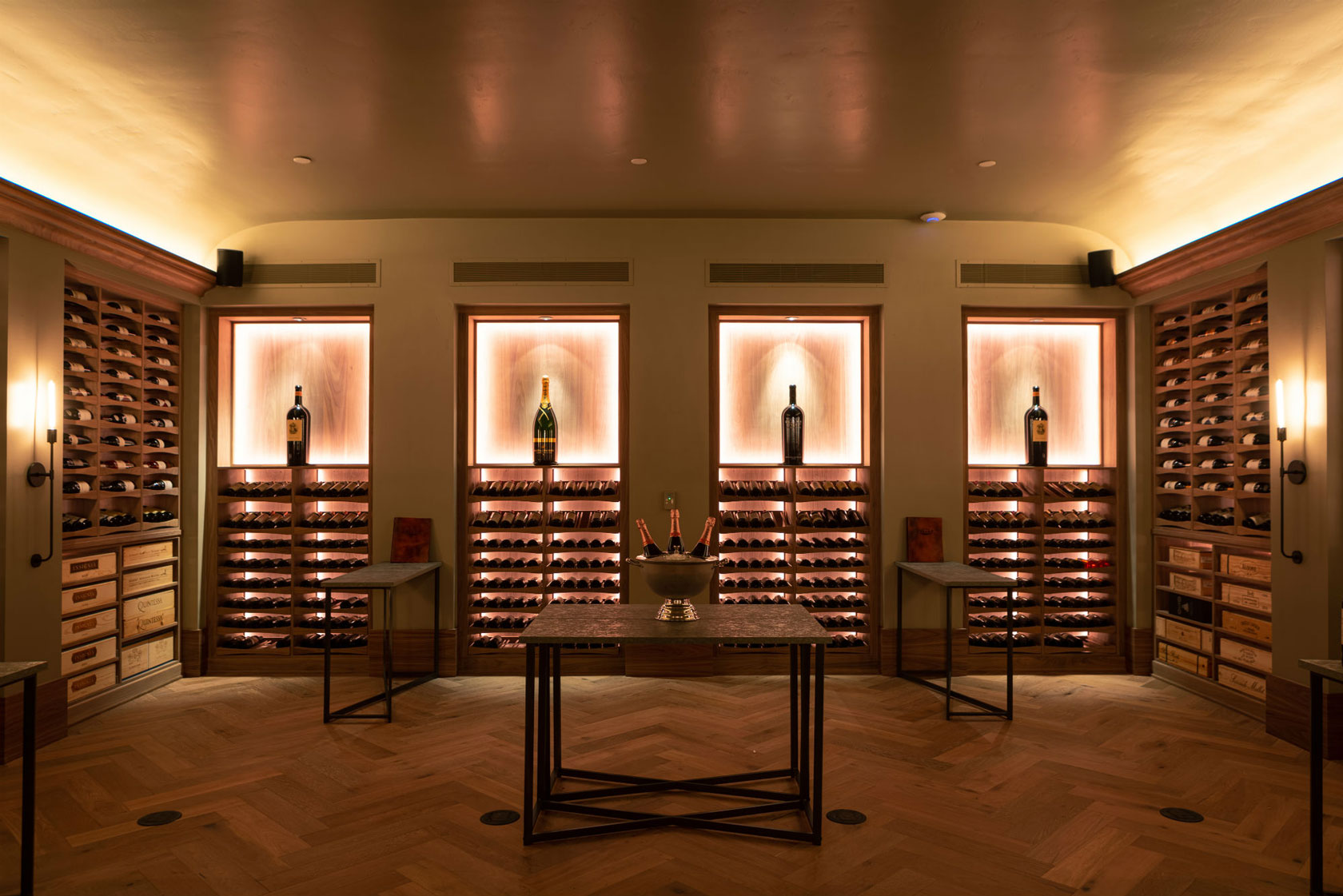
Revel’s Architect’s Guide states it plainly: “Light is the enemy of wine.” Revel’s FAQ explains why: “Wine is photo-sensitive and causes pigments to fade in red wines and darken in white wines.” Revel’s post on the role of lighting in a wine cellar adds that “Ultraviolet (UV) light can cause chemical reactions inside the bottle that alter a wine’s aroma, color, and flavor.”
The answer is low-heat, low-UV LED lighting. Revel often recommends “LED accent lighting to highlight architectural details while minimizing exposure to heat and UV,” and its FAQ advises that “low voltage fixtures should be used as well as dimmer switches to control brightness.” The result is a cellar that shows off the collection without exposing it.
Heat
Heat works against the cellar from every direction. Revel’s FAQ notes that “natural and bright light can cause excess heat and may require the cooling equipment to operate excessively.” The construction guide recommends a location with “Minimal direct exposure to sunlight or to heat.” And Revel warns against putting wine refrigerators and similar appliances inside the cellar: “These appliances generate heat, which works against the main cooling system.”
Vibration and odors
“Wine ages best when left undisturbed,” Revel’s FAQ explains. “Constant shifting and movement disturbs the natural settling process in the wine.” That’s why the construction guide lists “Limited vibration” among the qualities of a good cellar location.
The same FAQ answer covers a quieter threat: “Offending odors can come from the off-gassing of certain wood species and from vapors of finishing materials and stains.” Revel’s answer is in the millwork: “Nearly all of our wine cellars are built from raw, unfinished wood.” Our post on wood selection for wine cellars explains why.
Glass cellars
Glass and wine can work together when the glass is chosen well. Revel’s post on glass and light in wine cellars notes that glass “can also effectively filter damaging UV rays,” while cautioning that with the solid glass approach, “thermal performance may be diminished, both in terms of temperature and humidity control.” See Revel’s glass wine cellar work for how those cellars come together.
Wine Cellar Temperature and Humidity: How a Built Cellar Holds Them

Built the way refrigerators are built
Revel’s construction guide compares a wine cellar to a refrigerator: mechanical cooling working inside “a very efficient ‘enclosure.'” Fully passive cellars, the guide notes, “are not generally feasible,” so the room itself has to be built to hold the conditions the cooling creates.
The enclosure has to be sealed, and the door is where many cellars fall short. “A wine cellar should be a sealed environment, and in this respect, the cellar door is often the weakest link. When a wine cellar isn’t sealed, it is difficult to control the temperature and the humidity, which often leads to cooling units running continually (not a good thing!) and burning out prematurely.”
Cooling that fits the room
Revel’s FAQ is direct: “Unless you have a passive wine cellar environment able to keep the temperature and humidity at a consistent level, then including a cooling unit in your cellar is essential.” Revel’s guide to wine cellar cooling system types walks through the options. The construction guide points to a frequent problem: “Improper ventilation of the exhaust room is the most common mistake made in wine cellar construction.” Installation belongs with a licensed professional. The cooling system and the room’s construction are one design decision, not two. Tell us where the cellar will go, roughly how large the room is and what HVAC is already in place, and we’ll plan the cellar with you, your architect, builder and cooling professional.
Plan it early, with your design team
Conditions are easiest to hold when they’re designed in from the start. The Architect’s Guide advises that “Choosing a cooling system is a decision that must be made during the schematic design phase, as it dictates your ductwork and electrical requirements.” The construction guide recommends that the enclosure be finished first, so the racking and other cellar elements “can be based upon exact final finished interior dimensions.”
Revel’s design approach starts with consultation, then produces computerized 2-D drawings, including a floor plan and detailed elevations. Planning a new cellar? Start a consultation and we’ll design the millwork around the room your architect and builder are creating.
Cellar vs. Wine Fridge for Long-Term Storage
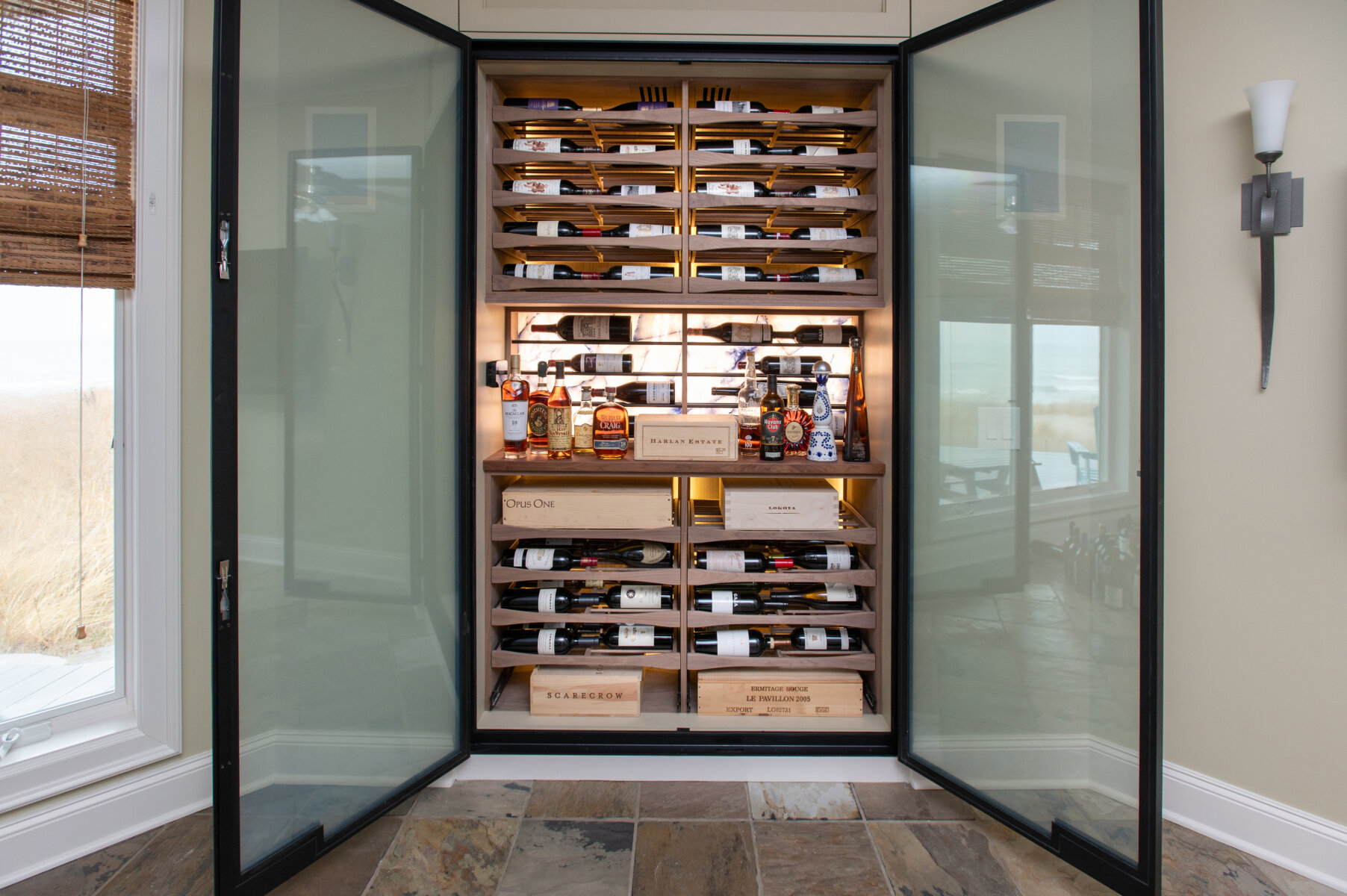
A wine fridge can hold bottles cool, but a built cellar is designed to hold every condition above together, for a collection that keeps growing. For the full comparison, read custom wine cellar vs. wine fridge. For homes without room for a walk-in cellar, Revel’s Wine Vault, which Revel describes as “a revolutionary self-contained wine vault designed for discriminating collectors,” offers a smaller-scale alternative.
Where the Cellar Goes Affects All of This
Location shapes how hard a room has to work to hold its conditions. The construction guide recommends a spot with “Adequate ventilation,” “Minimal direct exposure to sunlight or to heat,” and “Limited vibration.” Our guide to the best place in a home for a wine cellar walks through the options room by room.
Frequently Asked Questions About Wine Storage Temperature and Humidity
The best temperature to store wine is about a constant 55 degrees. Revel’s guidance is that this creates balanced aging while still letting a wine reach its peak within a lifetime. Just as important, keep the temperature steady and keep wine away from light, heat and vibration, so the bottle is not cycling warm and cool.
Revel recommends about 70 percent humidity for wine storage. Humidity keeps corks moist and tight. Too little humidity can dry the cork out, while too much can damage labels. A properly built cellar with a vapor barrier and a sealed door helps hold humidity steady instead of fighting the dry or damp air of the house around it.
No. Revel’s position is that there is no reason to store white wine at a different temperature than red wine, so a single cellar temperature works for the whole collection. Charts that list different temperatures by wine type usually describe serving, not storage. Revel suggests chilling white wines for a short time before serving instead.
Temperature swings let air into the bottle. As wine warms, it expands against the cork; as it cools, it contracts and draws air in. Over many cycles, air replaces wine and the fill level drops. Revel’s guidance is to minimize both how often and how far the temperature moves, because steadiness protects freshness.
A cellar that is too dry can let corks dry out, which lets air reach the wine. A cellar that is too damp can damage labels, and warm, moist air entering from outside can lead to mold. Revel recommends about 70 percent humidity, held by a vapor barrier and a sealed door, never carpet.
Light can harm wine. Revel notes that wine is photo-sensitive: light can fade pigments in red wines and darken white wines, and UV light can trigger chemical reactions that alter aroma, color and flavor. Bright light also adds heat. Revel recommends low-heat, low-UV LED lighting with dimmers to keep the cellar both beautiful and safe.
A wine cellar is built much like a refrigerator: a sealed, efficient enclosure with a vapor barrier and a well-sealed door, plus a mechanical cooling unit installed by a licensed professional. Planning cooling during schematic design, and building the millwork to the finished room, helps the cellar hold conditions steady.
Start with a consultation at revelcellars.com/inquire, ideally during schematic design, while cooling, ductwork and electrical are still being decided. Revel’s design team works with you and your architect, builder or interior designer, then produces computerized 2-D drawings, including a floor plan and detailed elevations, that confirm the bottle count. Have the room’s location, size and your bottle count ready.
Plan a Cellar That Holds Its Conditions
The right conditions come from the whole room working together: the enclosure, the door, the lighting, the cooling and the millwork. When you’re ready, request a consultation and choose Project Inquiry, with your approximate bottle count, where the cellar will go, the room’s dimensions or floor plans, the HVAC already in place and where the project stands. Architects and builders: send plans at schematic design, while cooling, ductwork and electrical can still be planned around the cellar.