Best Woods for Wine Cellars: Mahogany, Walnut, Cherry, Oak, Maple, and Hickory
The best wood for wine cellar cabinetry is a hardwood that keeps its integrity and beauty in a cool, damp room. Revel’s FAQ names mahogany, walnut, cherry, white oak, maple and hickory as “all excellent choices,” and nearly all Revel cellars are built from raw, unfinished wood to protect the integrity of the wine room atmosphere.
Wood is the material your collection lives in every day, so the choice matters for both the look of the room and the wine itself. This guide walks through why hardwoods suit a cellar, what each of Revel’s six hardwoods brings, why Revel prefers unfinished wood, and how to pair a species with your design style. For more depth, see Revel’s posts on why unfinished hardwoods matter and choosing the best materials for your wine cellar.
Why the Best Wood for Wine Cellar Cabinetry Is a Hardwood
Revel’s FAQ answers the question directly: “Hardwoods are the optimum choice for use in wine cellars. The best cellar cabinetry is crafted from wood, like mahogany, walnut, or cherry that retains its integrity and beauty in a cool damp environment without needing an artificial finish.”
A wine cellar holds about a constant 55 degrees and about 70 percent humidity, and the cabinetry lives in those conditions year after year. Revel’s materials guide explains, “Wine cellars need to maintain specific humidity and temperature levels. Hardwood can withstand these conditions better than many other materials, preventing warping and degradation.” Holding those conditions is the job of the room’s construction and cooling; our guide to wine cellar cooling systems covers the options, and split systems are installed by a licensed professional.
Revel’s Six Hardwoods
The FAQ’s list is short and specific: “Mahogany, walnut, cherry, white oak, maple and hickory are all excellent choices.” All six are offered, and Revel only uses furniture-grade hardwoods. Revel’s materials guide adds that “All the hardwoods mentioned above are durable, but each has different levels of resistance to moisture and wear.”
Mahogany
“Mahogany is renowned for its timeless beauty and superior durability. Its rich, reddish-brown color deepens with age, adding a sense of history and elegance to your wine cellar.” Revel’s wood post describes Fijian Mahogany as “Exceptionally dense; highly stable in damp conditions; natural rot resistance.”
Mahogany runs through Revel’s history. The Kedzie flagship cellar in East Lansing is described as “The very first custom Mahogany wine cellar designed by Revel founder Jim Cash.” The Memphis cellar “is constructed with Fijian Mahogany and is accented with solid mahogany beams,” and the Houston, Texas cellar is “in Fijian Mahogany with herringbone brick and natural stone.” Revel uses sustainably sourced Fijian mahogany, not Honduran. In hospitality, Revel’s Wine Wheel post describes Natirar as “A commercial Mahogany cellar.”

Walnut
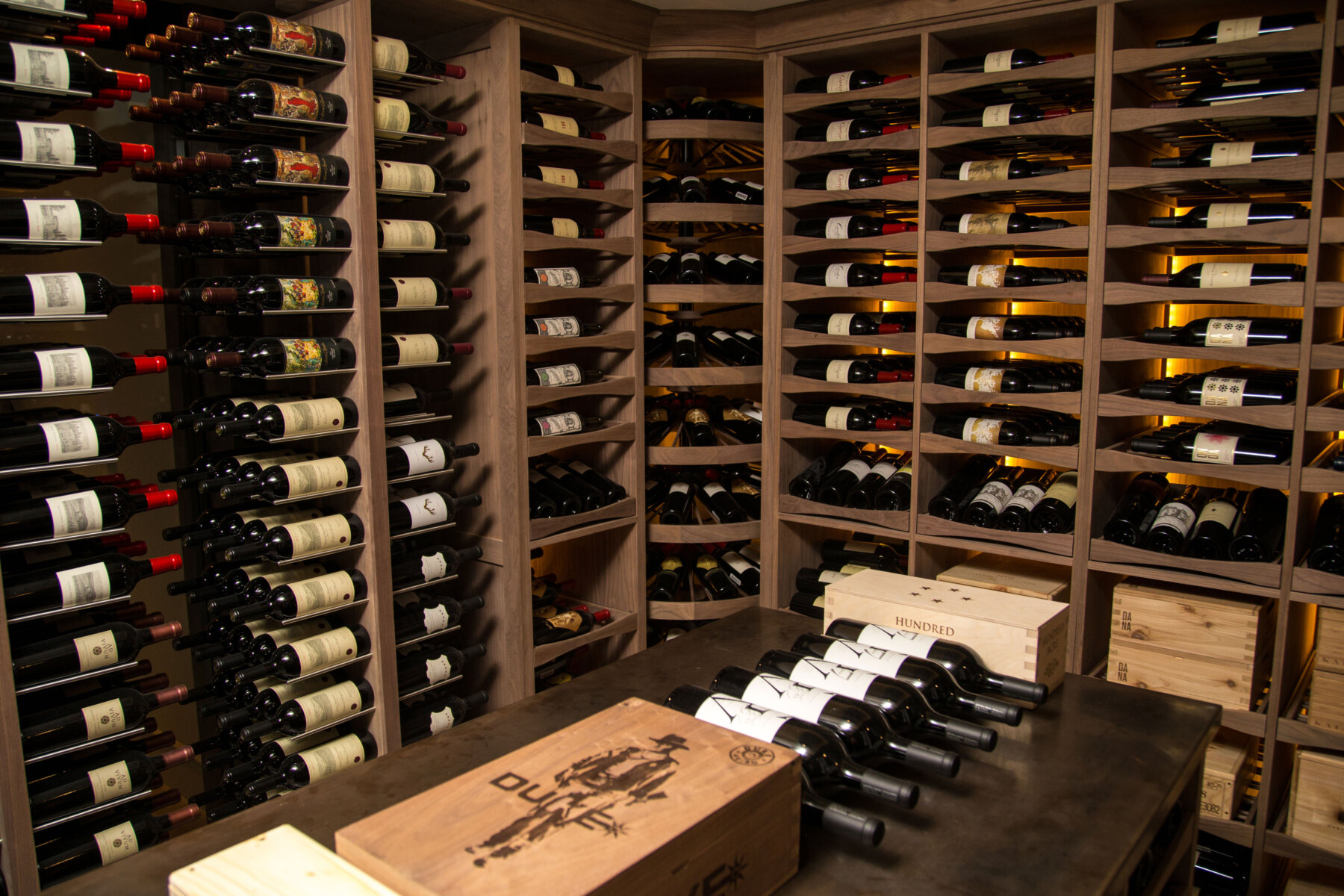
“With its deep, chocolate-brown hues and intricate grain patterns, walnut exudes warmth and opulence. This hardwood is not only visually appealing but also incredibly strong, ensuring that your wine cabinetry will stand the test of time.” The wood post calls it “Highly durable; excellent impact resistance.”
Walnut appears across many Revel projects. The Lokoya tasting room houses its collection in walnut Sliding Pullout Drawers, the West Bloomfield cellar pairs “frameless glass doors, and furniture-grade walnut cabinetry,” and the Macon, Georgia cellar is “Built from rich walnut.” At Charlevoix, “Revel-ution Towers comprised of walnut panels and stainless dowels line the front and back glass walls.”
White oak
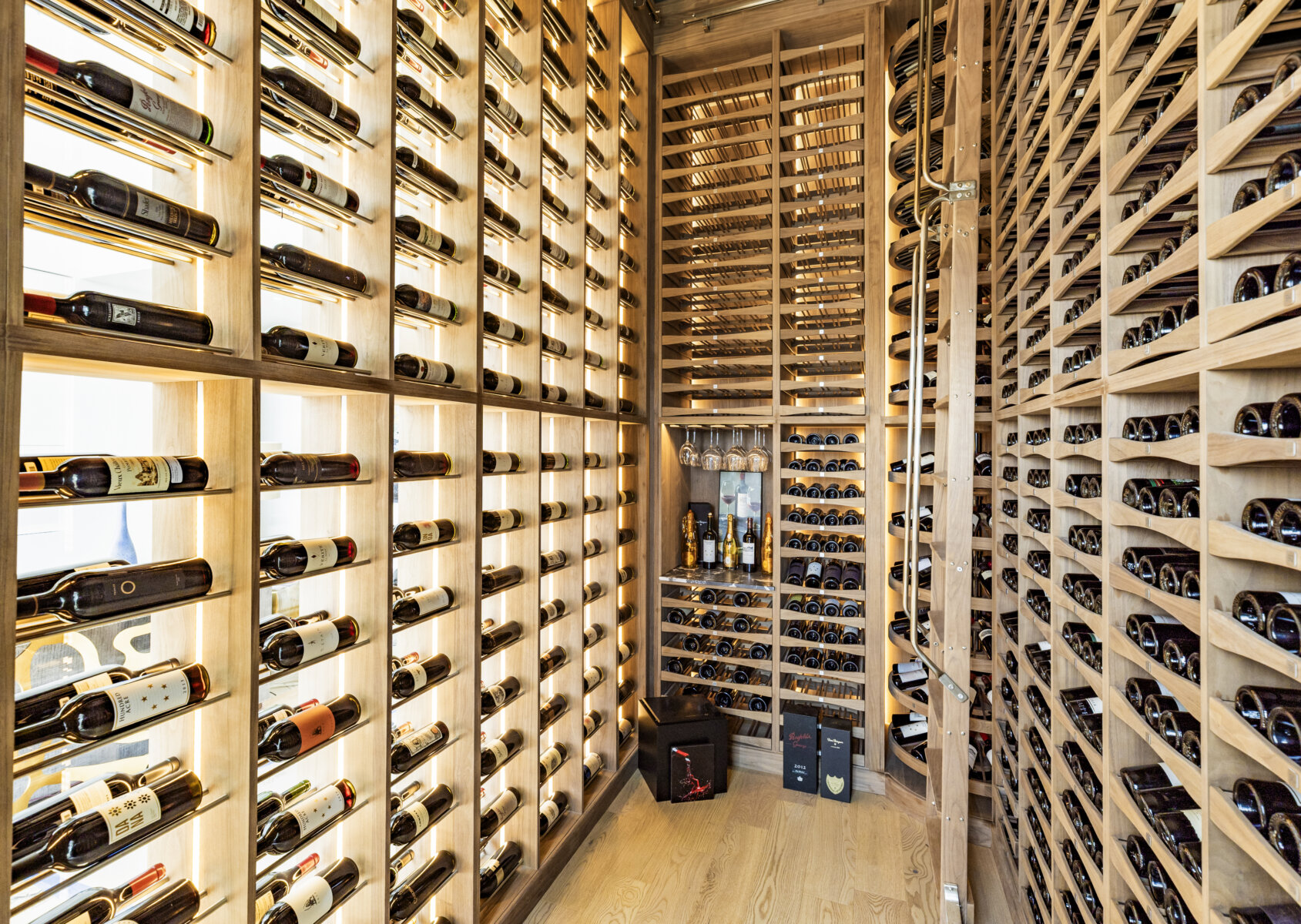
“Rift-cut white oak is prized for its unique grain pattern, characterized by long, straight lines that create a sleek and sophisticated look. This hardwood is exceptionally durable and resistant to moisture, making it an ideal choice for the humid environment of a wine cellar.” The wood post notes its “tight, straight linear grain patterns.”
The North Carolina cellar is “Crafted in Rift Cut White Oak,” and the Mountain Chic cellar in Missouri “is crafted from premium white oak.”
Cherry
“Cherry wood is celebrated for its smooth, reddish-brown finish that darkens with exposure to light, developing a lustrous patina over time.” The wood post describes “Warm, amber-red tones that develop a rich, lustrous patina over time.”
Maple
“Maple is a versatile hardwood with a clean, light color and subtle grain pattern. Its smooth, even texture lends itself well to modern and contemporary designs, providing a bright and airy feel to your wine cellar.” Revel’s guide adds, “Maple’s strength and resistance to abrasion make it a practical choice.”
Hickory
“Hickory is known for its strength and distinctive look. Its dramatic grain patterns and variations in color, ranging from pale cream to dark brown, give it a rustic charm that’s perfect for a more casual, country-style wine cellar.”

Choosing between species? The right wood depends on the room, the style of the house and how you’ll use the cellar. Choose Project Inquiry and share your floor plans or approximate square footage, and we’ll help you weigh the options with your designer.
Unfinished Wood vs VOC-Free and Water-Based Finishes
Revel’s default is to leave the wood bare. As the FAQ puts it, “Nearly all of our wine cellars are built from raw, unfinished wood to protect the integrity of the wine room atmosphere. Should you decide to apply finishes, the use of VOC-free or water-based stains and lacquers is highly recommended.”
Revel’s wood post explains the craft behind that choice: “Our precision craftsmanship ensures that the wood is sanded to a furniture-grade smoothness that looks spectacular on its own, relying on the natural beauty and grain of the timber rather than synthetic topcoats.” Revel’s 12 essential tips put it more playfully: “We also love the look of fine cabinetry in the nude!”
Sometimes a finish is part of the plan. Revel has full in-house finishing capabilities. The wood post notes, “There are times when an interior designer or architect needs to match the cellar cabinetry to existing woodwork in a home.” In that case, Revel’s guidance is water-based finishes only, VOC-free products, and extended curing in a well-ventilated space before the cabinetry is installed in the cellar.
If you’re matching existing woodwork, choose Project Inquiry and upload photos of the woodwork or your plans, and tell us in your message what the cellar needs to match.
Off-Gassing and Wine Integrity
Wine breathes through its cork, which is why the cellar’s air matters. Revel’s 10 things to avoid when designing a wine cellar explains, “Cork closures are designed to allow air to migrate into and out of the bottle, any materials or finish products that off-gas or have odors could end up affecting your wine.”
The FAQ adds that “Offending odors can come from the off-gassing of certain wood species and from vapors of finishing materials and stains.” The wood post is more specific: “The primary source of dangerous off-gassing in a wine cellar doesn’t actually come from the wood itself—it comes from the stains, oils, and lacquers used to finish it.” It closes with this: “Sourcing premium, sustainably managed hardwoods and leaving them unfinished protects your investment from the silent threat of off-gassing.”
What About Redwood, Pine or Cedar?
Softwoods come up often in wine cellar searches, but Revel’s wine cellar construction guide is clear: “If using wood racks, mahogany or other hardwoods are strongly advised as opposed to soft woods such as Redwood, which will show wear and tear very quickly.”
Aroma is the other concern. Revel’s wood post warns that “highly aromatic softwoods (like standard cedar) emit natural oils that can easily overpower the delicate aromatics of an aging wine.” Revel’s own list stays with the six hardwoods.
Matching the Best Wood for Wine Cellar Design to Your Style
Revel’s materials guide offers a simple starting point: “For a modern look, rift-cut white oak or maple might be best. For a more traditional or luxurious feel, walnut or mahogany could be ideal.” Color changes how a room feels, too: “Lighter woods like maple can make a small cellar feel more spacious, while darker woods like walnut can create a cozy, intimate atmosphere.”
Browse Revel’s modern, traditional and transitional galleries to see how different woods read in each style. Choosing the best wood for wine cellar design is as much about the house around the cellar as the cellar itself.
If you’re not sure which wood suits your home, choose Project Inquiry and tell us the style of the house, and send a floor plan or photos so we can help you weigh the options.
Wood Across Revel’s Systems
Wood shows up in every part of a Revel cellar, from Lokoya’s walnut Sliding Pullout Drawers to the Wine Wheel, which Revel’s photography “shows the tower crafted in Mahogany and in Walnut.” Revel-ution towers “can be outfitted with either wood or aluminum dowels,” and the wine ladder rack rungs “can be designed with stainless steel dowels, or convey a traditional look with wooden rungs.” The Reveal system is “Available in either all wood or a combination of steel and wood.” See every system on Revel’s elements page.
All Revel cellars are built in Holland, Michigan. The About page says, “All of our wine cellars are built in our state-of-the-art wood shop in Holland, Michigan, also known as the furniture capital of the world.”
Planning a cellar around a particular wood or system? Tell us where the cellar will go and roughly how large the room is, or send floor plans, and we’ll plan the cellar with you, your architect, builder and cooling professional.
Spec Your Wood with Revel’s Design Team
Wood choice is settled during design. Revel’s process explains that “The design will also confirm the bottle count and the molding and trim styles.” Architects, interior designers and builders are welcome to start a project on a client’s behalf. Choose Project Inquiry, upload floor plans, elevations or renderings, and in your message tell us the wood or style you have in mind, your role on the project and where it stands. For how wood choice fits into overall planning, see custom wine cellar cost factors.
Frequently Asked Questions About Wine Cellar Woods
Hardwoods. Revel’s FAQ names mahogany, walnut, cherry, white oak, maple and hickory as all excellent choices, because the best cellar cabinetry retains its integrity and beauty in a cool, damp environment without needing an artificial finish. Nearly all Revel cellars are built from raw, unfinished wood to protect the wine room atmosphere.
Yes. Revel’s materials guide calls mahogany renowned for its timeless beauty and superior durability, with a rich, reddish-brown color that deepens with age, and its wood post notes natural rot resistance. Revel’s first cellar, the Kedzie flagship in East Lansing, was a custom mahogany cellar designed by founder Jim Cash.
Yes. Revel describes walnut as incredibly strong, with deep, chocolate-brown hues and intricate grain patterns that create warmth and opulence. Revel projects in walnut include the Lokoya tasting room, with walnut Sliding Pullout Drawers, and a West Bloomfield cellar with furniture-grade walnut cabinetry behind frameless glass doors.
Yes. Revel’s materials guide says rift-cut white oak is exceptionally durable and resistant to moisture, making it an ideal choice for the humid environment of a wine cellar. Its long, straight grain suits modern cellars. Revel’s North Carolina cellar is crafted in rift cut white oak.
All three are on Revel’s list of excellent choices. Cherry darkens with exposure to light and develops a lustrous patina over time. Maple has a clean, light color and offers strength and resistance to abrasion. Hickory is known for its strength and distinctive look, with a rustic charm suited to casual cellars.
Usually unfinished. Nearly all Revel cellars are built from raw, unfinished wood to protect the integrity of the wine room atmosphere, sanded to a furniture-grade smoothness. If you decide to apply finishes, Revel highly recommends VOC-free or water-based stains and lacquers, so the finish does not compromise the air around the wine.
They can. Cork closures allow air to move into and out of the bottle, so materials or finishes that off-gas or have odors could affect your wine. Revel notes that odors can come from certain wood species and from finishing materials and stains, which is why it prefers raw, unfinished hardwoods.
Revel recommends hardwoods instead. Its wine cellar construction guide says that if you use wood racks, mahogany or other hardwoods are strongly advised as opposed to soft woods such as redwood, which will show wear and tear very quickly. Revel builds with mahogany, walnut, cherry, white oak, maple and hickory.
Revel advises against aromatic softwoods for cellar cabinetry. Its wood post warns that highly aromatic softwoods, like standard cedar, emit natural oils that can easily overpower the delicate aromatics of an aging wine. Revel’s list stays with six hardwoods: mahogany, walnut, cherry, white oak, maple and hickory.
Sometimes an interior designer or architect needs to match the cellar cabinetry to existing woodwork. In that case, Revel’s guidance is water-based finishes only, VOC-free products, and extended curing in a well-ventilated space before the cabinetry is installed. Talk with Revel’s design team early so the finish is planned with the wood.
Start with a consultation and choose Project Inquiry. Share the wood or style you have in mind, your approximate bottle count, the room’s square footage or floor plans, and where the project stands. Architects, interior designers and builders can reach out on a client’s behalf. The design stage confirms the bottle count and molding and trim styles.
Plan Your Wine Cellar Woods with Revel
When you’re ready, request a consultation and choose Project Inquiry. Tell us which woods or styles you’re drawn to, the style of the house, and whether you’re matching existing woodwork, and include your approximate bottle count and the room’s approximate square footage, or upload floor plans or images. Let us know where the project stands, whether that’s early planning, in design or under construction. Architects, interior designers and builders are welcome to reach out on a client’s behalf and send plans. To see how different woods read in a finished room, browse Revel’s traditional gallery.