Label-Forward Sliding Pullout Wine Drawers: How They Work and Who They’re For
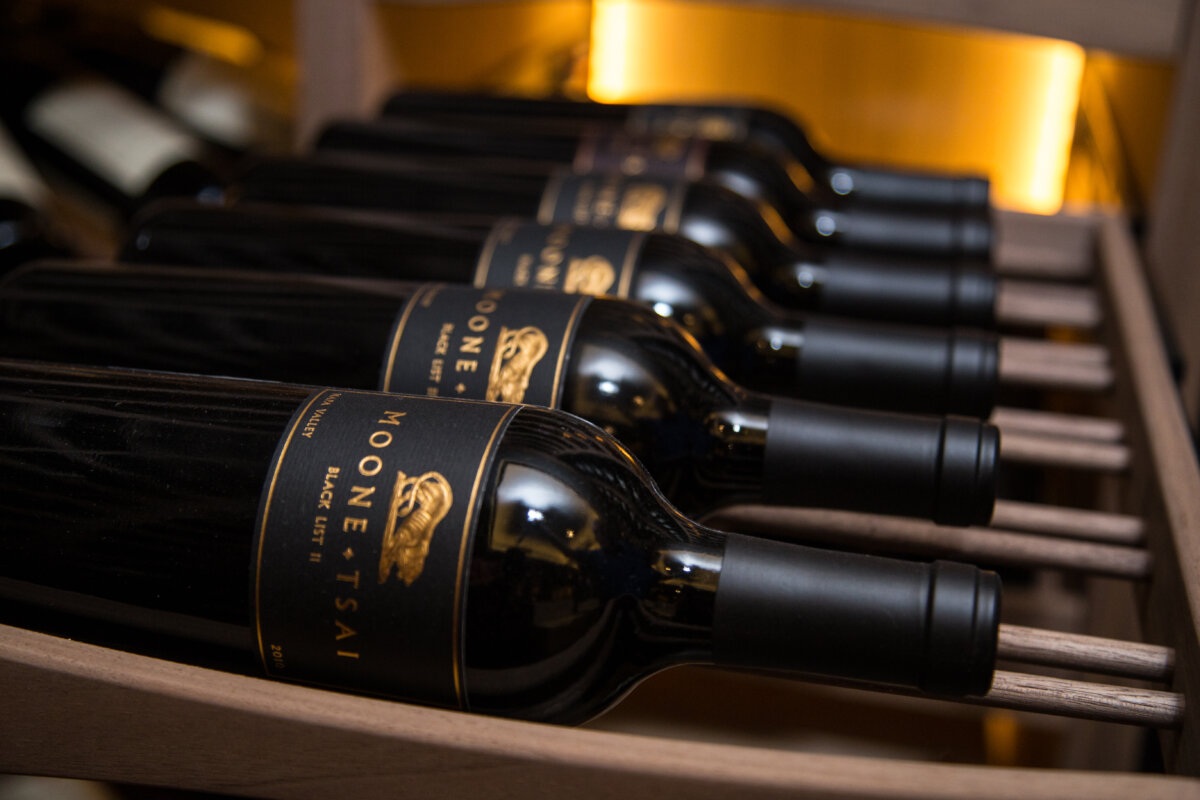
Label-forward wine cellar pullout drawers store each bottle on its side with the entire label facing out. Slide a drawer open and you can view the labels of your bottles without disturbing another. Revel builds them with a patented dowel system for bottles from 350 mL to magnums, in custom cellars designed around your collection.
Revel calls its version Sliding Pullout Drawers, and they sit at the heart of the Revel philosophy: the wine should be the star of the cellar. In Revel’s words, the drawers are designed so that “the visual drama of your cellar is maximized by putting the spotlight on your wines.” This guide explains how label-forward wine drawers work, what they hold, and which collectors they suit best.
What “Label-Forward” Means
Most traditional racks store bottles neck-out, or “cork out”: each bottle points straight at you, and all you see is a wall of capsules. Finding one wine means pulling several, turning them to read the label, and sliding them back. Revel’s guide to label-forward vs. neck-out racking calls this “wine cellar archaeology.”
Label-forward storage turns the bottle so it lies parallel to the front of the cabinet, label outward. According to Revel’s product page, this “significantly improves your ability to see and access your collection over traditional ‘cork out’ methods.”
The idea came from a collector’s frustration. Revel founder Jim Cash spent years pulling bottles from a cork-out rack, rotating them to read the label and often scraping it in the process. As he told Core77, he wanted “a drawer that I can pull out” that would reveal bottles “already right side up.” In its label-forward post, Revel puts it this way: “collectors shouldn’t have to choose between density and visibility. This is why we pioneered the Sliding Wine Drawer.”
How Revel’s Sliding Pullout Drawers Work
Bottles on their side, the entire label facing out
Revel’s drawers are “designed with our patented dowel system.” In the product page’s words, “Revel’s configuration orients the bottle on its side, with the entire bottle label facing out.”
One smooth motion, without disturbing another bottle
The product page describes the experience simply: “You can access any wine in your cellar in one smooth motion…simply slide out the drawer, and you can instantly view the labels of your bottles without ever disturbing another bottle.” There’s no need to lift out neighboring bottles to find the one you want.
Open-bottom drawers above eye level
Drawers higher than eye level work differently. “With our open-bottom construction, all drawers higher than eye level can be stocked with labels facing downward, allowing them to be easily seen when viewing from below.” Upper rows stay easy to browse.
Each drawer pulls out to full extension on soft-close slides, both standard. Your design team can walk through the drawer details for your cellar during consultation.
What Wine Cellar Pullout Drawers Hold
Mixed sizes, 350 mL to magnums
Revel’s drawer design “enables you to store multiple bottle sizes side-by-side, from 350 mL bottles to magnums, and also enhances label identification.” Revel’s FAQ adds that its systems “can store many bottle types and sizes, even within the same drawer or wine wheel,” and that Revel can “create custom wine storage that will fit large trophy bottles such as Jeroboams and more.”
Case storage pullouts
Collectors who buy by the case often want to keep the original wood boxes. Jim Cash wrote that for his own cellar, “I designed sliding pullout drawers to fit nearly all case sizes.” Revel’s 12 Essential Tips notes that “features such as case storage pullouts and dedicated shelving for large format bottles allow all types of bottles to be stored.” The Wine and Port Collector’s Dream Wine Cellar shows Sliding Pullout Drawers designed for original wood wine case storage.
Trophy and angled display drawers
Some bottles deserve a stage. Revel’s product gallery includes angled pullout display drawers, and the West Bloomfield cellar pairs “Revel’s signature pullout drawer technology” with angled displays that “showcase prized bottles.”
Depending on the case width and depth, a Revel Sliding Pullout Drawer typically holds 4 to 9 bottles, and custom-width drawers hold up to 11. Revel’s drawer configurations break down this way:
| Case width | 17″ deep | 24″ deep |
|---|---|---|
| 17.5″ | 4 bottles | 6–7 bottles |
| 21″ | 5 bottles | 7–9 bottles |
| 25″ (custom) | 6–7 bottles | 8–11 bottles |
Every width also offers a pullout shelf option. Drawers are configured to your collection, and Revel’s design phase confirms the bottle count for the whole cellar.
Planning the drawer mix for your collection? Tell us about your space and your bottles.
Protecting Labels, Provenance and Value
Every time a bottle is pulled, turned and pushed back into a rack, the label takes wear. Revel’s drawers are designed to prevent that. “This protects your wines’ labels from rips, tears or other damage caused from over handling, ultimately maintaining your collection’s impeccable provenance and long-term value,” the product page explains. Revel’s label-forward post adds, “Our precision-fit drawers cradle the bottle.”
Clients notice the difference. At the Cardinale Estate wine library in Napa Valley, estate director Erik Ackerman recalled, “We found Revel had a racking system featuring shelving with a soft close gliding drawer feature making it possible to not have to touch a bottle of wine until the day you would like to drink it.”
Density vs. Visibility: Do You Give Up Capacity?
It’s a fair question. Revel’s own label-forward post acknowledges that “historically, label-forward racking meant you could store significantly fewer bottles because they took up more ‘wall real estate.'” Revel’s answer is the drawer. As the post puts it, “Our drawers allow you to store bottles multiple layers deep,” and its comparison table rates Revel drawers “High” for density, while neck-out racking remains the densest option.
In practice, capacity is a design question. Revel works from your collection size and growth plans, confirms the bottle count in the design drawings, and mixes drawers with other elements where density matters most.
Who Label-Forward Wine Drawers Are For
Revel’s label-forward post is candid. If you are a “set it and forget it” collector who is aging wine for 20+ years and rarely opens a bottle, “neck-out might suffice.”
Drawers shine for collectors who use their cellars. Per Revel, if you are a modern enthusiast who “hosts tastings, manages a diverse inventory, and treats your collection as a focal point of your home, label-forward sliding systems are the gold standard.” They also suit collectors with mixed bottle formats and cellars built as showpieces, where the collection itself is the display.
Custom Cellar Drawers vs. Kitchen Pull-Out Inserts
Search for “sliding pullout wine racks” and you’ll mostly find kitchen cabinet inserts: retrofit trays sized to fit a standard base cabinet. They solve a different problem.
Revel’s drawers are custom millwork, designed as part of a conditioned cellar and built to the room’s exact dimensions. They integrate with the cabinetry, lighting and other cellar elements around them. Revel’s cellars are built in its wood shop in Holland, Michigan, and “shipped to your door, fully assembled.”
Woods and Design
Revel’s projects show pullout drawers in Walnut, at Lokoya, where “over 1,000 bottles are housed in walnut sliding pullout drawers that allow label-forward orientation,” and at West Bloomfield. Project imagery also shows drawers in Mahogany and White Oak. Revel’s FAQ notes that “Mahogany, walnut, cherry, white oak, maple and hickory are all excellent choices.”
Revel’s position on finish is clear: “Nearly all of our wine cellars are built from raw, unfinished wood to protect the integrity of the wine room atmosphere.” If finishes are applied, Revel highly recommends VOC-free or water-based stains and lacquers. For more on why, see Revel’s post on wood selection and unfinished hardwoods.
Mixing Wine Cellar Pullout Drawers with Other Revel Elements
Drawers are one of several cellar elements designed to work together. Revel calls its “patented Sliding Pullout Drawers and the corner Wine Wheel™ towers” the cornerstones of its product line.
- Wine Wheel: a rotating tower that puts corner space to work. See how it works in our guide to the Wine Wheel custom rotating wine rack.
- Reveal System: presents bottles at a 15-degree angle and “has no moving components,” which suits more constrained spaces.
- Rotating Revel-ution Towers: panels that “can also be made to either slide or rotate.”
- Wine Ladder Rack: label-forward storage for magnums, double magnums and prized bottles.
- Cigar Drawer: Revel says it “can be easily interchanged with our signature Pull Out Wine Drawers.”
Planning Drawers into Your Cellar
Wine cellar pullout drawers are only as good as the room around them. Revel’s wine cellar construction guide advises that the cellar “should be constructed to exact dimensions of the wine cabinetry or racking to go inside,” and that, where possible, the enclosure is completed first so the cabinetry “can be based upon exact final finished interior dimensions.” The Architect’s Guide puts it plainly for design teams: “When specifying cabinetry, look for sliding, label-forward systems.”
Revel’s design approach starts with consultation, then produces computerized 2-D drawings, including a floor plan and detailed elevations, that “confirm the bottle count.” If you’re still choosing a room, our guide to the best place in a home for a wine cellar walks through the options. Architects and builders specifying a cellar are invited to start a consultation with Revel’s design team.
Cellar Drawers vs. a Wine Fridge
A wine fridge holds bottles on shelves inside an appliance, where labels are often hidden. A custom cellar with label-forward drawers is built to display and protect a growing collection. For the full comparison, read custom wine cellar vs. wine fridge. For homes without room for a walk-in cellar, Revel’s Wine Vault is a smaller-scale option.
Frequently Asked Questions About Wine Cellar Pullout Drawers
Label-forward wine drawers store each bottle on its side with the entire label facing out, instead of neck-out with only the cork or capsule showing. Revel’s Sliding Pullout Drawers use a patented dowel system, so you can slide out a drawer and view the labels of your bottles without disturbing another bottle.
Because you slide the drawer out instead of pulling bottles from a rack, neighboring bottles stay put. Revel says this protects labels from rips, tears or other damage caused by over-handling, which helps maintain your collection’s provenance and long-term value. The bottles rest on their sides, labels outward, until you choose one.
Yes. Revel’s drawer design stores multiple bottle sizes side by side, from 350 mL bottles to magnums. Revel’s FAQ adds that its systems can store many bottle types and sizes, even within the same drawer, and Revel can create custom storage for large trophy bottles such as Jeroboams elsewhere in the cellar.
Yes. Revel’s drawers use open-bottom construction, so drawers higher than eye level can be stocked with labels facing downward. That lets you easily see the labels when viewing from below, so upper rows stay as easy to browse as the drawers at hand height, without pulling a single bottle.
Revel’s own comparison rates neck-out racking highest for density, and label-forward storage historically held fewer bottles. Revel says its drawers let you store bottles multiple layers deep while keeping labels visible, and rates their density as high. Each Sliding Pullout Drawer typically holds 4 to 9 bottles, depending on case width and depth; custom widths hold up to 11.
Yes. Revel designs case storage pullouts alongside bottle drawers. Founder Jim Cash designed sliding pullout drawers to fit nearly all case sizes in his own cellar, and Revel projects include drawers designed for original wood wine case storage. That keeps cases accessible without blocking bottles or taking up counter space.
Kitchen pull-out inserts are retrofit trays sized for standard base cabinets. Revel’s Sliding Pullout Drawers are custom millwork, designed as part of a conditioned wine cellar and built to the room’s exact finished dimensions. They integrate with the surrounding cabinetry, lighting and other cellar elements, and ship fully assembled.
Plan Your Label-Forward Cellar with Revel
The right mix of wine cellar pullout drawers depends on your collection: how many bottles you keep, which formats, how often you pull them, and how you want the cellar to look when guests walk in. Revel’s design team works with you, your architect, builder or interior designer to plan drawers, case storage and display elements around your space. When you’re ready, request a consultation as a Project Inquiry, and have your approximate bottle count, approximate square footage and any floor plans or images of the space on hand to share.